Naoshima is a small island in Japan’s Seto Inland Sea that has been transformed into one of the world’s most remarkable destinations for contemporary art and architecture. Through a partnership between the Benesse Corporation and architect Tadao Ando beginning in the 1990s, this once-declining fishing community became home to world-class museums, site-specific installations, and art-integrated architecture embedded directly into the island’s landscape. Iconic works include Yayoi Kusama’s yellow pumpkin sculpture, Ando’s Chichu Art Museum built entirely underground to preserve the natural scenery, and the Art House Project, which converted abandoned village homes into permanent art installations. Naoshima demonstrates how art, architecture, and nature can revitalize a community while creating spaces for contemplation and wonder.

The Island Where Art Is the Landscape
Most art destinations put artwork inside buildings. Naoshima (直島) put an entire island inside a work of art.
This small island in Japan’s Seto Inland Sea—home to roughly three thousand residents—has been transformed over three decades into one of the most extraordinary art destinations on earth. Underground museums designed by Tadao Ando. Abandoned fishing houses converted into immersive installations. Yayoi Kusama’s polka-dotted pumpkins perched on piers. James Turrell’s light chambers carved into hillsides. The entire island operates on a single, radical premise: art does not belong in white-walled galleries separated from life. Art belongs in life—in the landscape, in the architecture, in the space between the sea and the sky.
Related guide: Tadao Ando in Japan: 7 Zen-Inspired Buildings You Can Visit
What makes Naoshima different from any other art island or sculpture park is the depth of intention behind it. The Benesse Art Site project, initiated by the Benesse Corporation and its visionary chairman Soichiro Fukutake, was not conceived as a tourist attraction. It was conceived as an experiment: can art revitalize a declining community? Can a museum buried underground teach people to see differently? Can an entire island become a space for the kind of attention and presence that Zen Buddhism has cultivated for centuries?
The answer, after thirty years, is yes—and visiting Naoshima is one of the most compelling experiences available to anyone interested in art, architecture, or the question of how beauty can transform a place.
This guide covers everything you need to plan a meaningful visit: the essential art sites, where to stay, how to get there, and itineraries for both day trips and overnight stays.
The Art: What to See
Chichu Art Museum (地中美術館)
The Chichu—meaning “inside the earth”—is Naoshima’s masterpiece. Designed by Tadao Ando and completed in 2004, the entire museum is buried underground, invisible from the surface. You descend through narrow concrete corridors open to the sky, gradually leaving the outside world behind.
Inside, three artists are presented in spaces designed specifically for their work:
Claude Monet. Five Water Lilies paintings displayed in a white room lit entirely by natural light. No artificial lighting. The paintings shift in appearance with the weather and time of day—sometimes luminous, sometimes subdued. The floor is made of small white marble cubes, creating a shimmering surface that echoes the water in the paintings. You experience Monet not as a historical artifact but as a living presence that responds to the sky above.
James Turrell. Two installations that use light itself as the medium. Afrum, Pale Blue projects a cube of light into a corner that appears solid until you approach it. Open Sky is a room with a rectangular opening in the ceiling through which you watch the sky change color—a work that makes you aware of perception itself.
Walter De Maria. A single large sphere of polished granite in a concrete room, flanked by gold-leafed wooden columns. As daylight shifts through the room, the sphere’s reflections transform the entire space. De Maria’s work operates on a scale that makes you conscious of your own body in relation to geometry, light, and gravity.
Visiting: Open 10:00–18:00 (March–September), 10:00–17:00 (October–February). Closed Mondays. Admission ¥2,100. Online reservation required—book 2–4 weeks ahead in peak season.

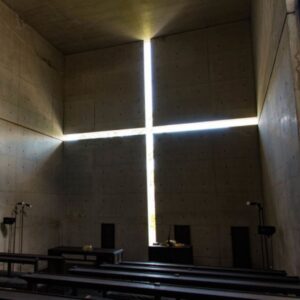
Chichu Art Museum by Tadao Ando, Naoshima
This image captures a central corridor within Tadao Ando’s Chichu Art Museum, where smooth, exposed concrete channels visitors deeper into the earth. Ando meticulously controls natural light, allowing only a small window to reveal the presence of art at the end of the passage. The minimalist design emphasizes the contrast between shadow and sun, guiding the journey toward the museum’s profound subterranean spaces.
Benesse House Museum (ベネッセハウス ミュージアム)
Also designed by Ando, Benesse House is simultaneously a museum and a hotel—one of the few places in the world where you can sleep surrounded by the art collection. The museum wing holds works by Andy Warhol, Jean-Michel Basquiat, Richard Long, and many others, displayed in spaces where concrete, glass, and the Inland Sea views are inseparable from the art.
The museum’s philosophy—that art should exist alongside daily life, not separated from it—is the organizing principle of the entire Naoshima project. Artworks are installed not only inside the building but throughout the surrounding landscape: Bruce Nauman’s neon pieces glow in outdoor alcoves, and Shinro Ohtake’s massive assemblages stand in the garden.
Visiting: Open 8:00–21:00 (last entry 20:00). Admission ¥1,300. No reservation required for the museum; hotel reservations essential (see “Where to Stay”).

Lee Ufan Museum (李禹煥美術館)
A collaboration between the Korean-born, Japan-based artist Lee Ufan and architect Tadao Ando. The museum presents Lee’s minimalist paintings and sculptures—works that explore the relationship between making and not-making, the painted mark and the empty canvas, the placed stone and the surrounding space.
Comprehensive guide: Japanese Zen Garden Design
The building itself is half-buried in a valley, its entrance marked by a single tall column and a large natural stone. The gallery sequence moves from outdoor sculpture through a narrow concrete corridor into intimate interior rooms—a journey from nature into contemplation that mirrors the Chichu’s approach but in a more personal, quieter register.
Visiting: Open 10:00–18:00 (March–September), 10:00–17:00 (October–February). Closed Mondays. Admission ¥1,050.
Art House Project (家プロジェクト)
The most unique element of the Naoshima experience. Seven abandoned houses in the Honmura village district have been converted into permanent art installations by different artists. You walk through the village streets—past working homes, small shops, neighborhood shrines—and enter what appears to be an ordinary house. Inside, the space has been completely transformed.
Kadoya by Miyajima Tatsuo: a dark room filled with a pool of water in which 125 LED counters flicker at different speeds—each set by a different resident of Naoshima. The community’s time, made visible.

Go’o Shrine by Sugimoto Hiroshi: a functioning Shinto shrine with a glass staircase descending underground into a chamber of rough stone. Sacred architecture meeting contemporary art.
Minamidera by Turrell and Ando: an entirely dark building where you sit in complete blackness for several minutes before your eyes adjust and a faint, otherworldly glow becomes visible. A work about perception, patience, and the difference between looking and seeing.
The Art House Project transforms the act of visiting art from a museum experience into a village experience. Between installations, you encounter daily life—laundry drying, cats sleeping, the smell of someone cooking lunch. This integration of art and ordinary existence is Naoshima’s deepest teaching.
Visiting: Open 10:00–16:30. Admission ¥1,050 (single ticket for all houses except Kinza, which requires separate reservation). Closed Mondays.

Outdoor Sculptures
Yayoi Kusama’s Pumpkins. The yellow pumpkin on the Miyanoura pier and the red pumpkin near Benesse House are Naoshima’s most photographed artworks. Kusama’s polka-dotted sculptures are playful and immediately accessible—the contrast between their pop energy and the island’s meditative architecture is part of Naoshima’s charm.
Naoshima Pavilion by Fujimoto Sou: a floating mesh structure near the ferry terminal that appears to dissolve into the sky. Free to visit, open 24 hours.
Where to Stay
Staying overnight on Naoshima transforms the experience. Day-trippers rush between museums; overnight guests have the island to themselves in the evening and early morning, when the art and landscape are at their most powerful.
Benesse House (ベネッセハウス)
The ultimate Naoshima accommodation. Four wings—Museum, Oval, Park, and Beach—offer rooms where Ando’s concrete architecture frames sea views and the art collection is steps away. Oval, accessible only by monorail, is the most exclusive and atmospheric. Museum wing guests have after-hours access to the gallery. Rates from ¥30,000–¥80,000+ per person including dinner and breakfast.
Guesthouses and Minshuku
For a more local experience, several family-run guesthouses and minshuku (民宿) operate in the Honmura village area. These offer simple Japanese-style rooms, shared baths, and the chance to eat at village restaurants alongside residents. Rates typically ¥5,000–¥10,000 per person.
Naoshima Ryokan Roka
A beautifully designed small ryokan offering a traditional Japanese inn experience on the island. Natural materials, ocean-facing rooms, and Japanese-style bathing. A middle ground between Benesse House’s luxury and the simplicity of village guesthouses.
Staying on the Mainland
If Naoshima accommodation is fully booked, Uno Port (Okayama side) and Takamatsu (Kagawa side) offer abundant hotels with frequent ferry connections. This works for day trips but misses the magic of being on the island after the day-trippers leave.
Getting There
From Osaka or Kyoto
Take the Shinkansen to Okayama (45 minutes from Shin-Osaka, 75 minutes from Kyoto). From Okayama, take the JR Uno Line to Uno Station (50 minutes). Walk 5 minutes to Uno Port and take the ferry to Naoshima’s Miyanoura Port (20 minutes, ¥300).
Total journey: approximately 2.5 hours from Osaka, 3 hours from Kyoto.
From Tokyo
Shinkansen to Okayama (3.5 hours), then JR Uno Line + ferry as above. Alternatively, fly to Takamatsu (Kagawa) and take the ferry from Takamatsu Port to Naoshima (60 minutes).
Total journey: approximately 5 hours via Okayama, or 3 hours via Takamatsu with a flight.
From Takamatsu
Ferry from Takamatsu Port directly to Naoshima (Miyanoura or Honmura port). The high-speed ferry takes approximately 30 minutes; the standard ferry takes 50–60 minutes.
On the Island
Naoshima is small—roughly 8 km from north to south. The main transport options:
Town Bus. A shuttle bus connects Miyanoura Port, Honmura village, and the Benesse House area. Runs approximately every 30 minutes. ¥100 per ride.
Bicycle. The best way to experience Naoshima. Rental bikes are available at Miyanoura Port (¥300–500/day for a regular bike, ¥1,000+ for an electric bike). The island has gentle hills and most art sites are connected by quiet coastal roads. Cycling between installations—with the sea beside you and the hills of Shikoku across the water—is itself one of Naoshima’s best experiences.
Walking. Possible for the Honmura village area and Art House Project. The walk from Miyanoura to Benesse House area (approximately 3 km, 40 minutes) is pleasant but hilly.

Suggested Itineraries
One-Day Itinerary (Day Trip)
A day trip is possible but tight. Prioritize ruthlessly.
9:30 — Arrive at Miyanoura Port. Rent a bicycle. 10:00 — Chichu Art Museum (book in advance). Allow 90 minutes. 11:30 — Lee Ufan Museum (15 minutes by bike from Chichu). Allow 45 minutes. 12:15 — Benesse House Museum + outdoor sculptures. Allow 60 minutes. Lunch at the Benesse House café or Terrace Restaurant. 13:30 — Cycle to Honmura village. 14:00 — Art House Project (select 3–4 houses based on available time). Allow 90 minutes. 15:30 — Return to Miyanoura. Visit Naoshima Bath “I♥湯” (Ōtake Shinro’s art bathhouse—a functional public bath as art installation). 16:30 — Ferry departure.
What you miss on a day trip: The evening light on Benesse House’s outdoor sculptures. The quiet morning when the island belongs to residents and overnight guests. The unhurried pace that Naoshima’s art demands.
Two-Day Itinerary (Overnight — Recommended)
Day 1 — Afternoon arrival: 13:00 — Arrive at Miyanoura. Check into accommodation. 14:00 — Honmura village: Art House Project at a leisurely pace. All seven houses. 17:00 — Walk the village streets as the light softens. Visit the Go’o Shrine if you missed it. 18:00 — Dinner at a village restaurant or at your accommodation. Evening — If staying at Benesse House: after-hours museum access. Otherwise, walk to the nearest beach and watch the stars—Naoshima has minimal light pollution.
Day 2 — Full day: 8:30 — Benesse House Museum (opens before most tourists arrive from the mainland). 10:00 — Chichu Art Museum (pre-booked). 12:00 — Lee Ufan Museum. 13:00 — Lunch. Cycle the southern coast. 14:30 — ANDO MUSEUM in Honmura (a converted traditional house redesigned by Ando—concrete inside a wooden shell). 15:30 — Naoshima Bath “I♥湯” or revisit a favorite Art House. 16:30 — Return bicycle. Ferry departure.
Related guide: Tadao Ando in Japan
Beyond Naoshima: The Art Islands
Naoshima is the largest and most developed of the Seto Inland Sea art islands, but two neighboring islands extend the experience:
Teshima (豊島). Home to the Teshima Art Museum—a single, shell-like concrete structure by architect Nishizawa Ryue containing a single work by artist Naitō Rei. Water droplets emerge from the polished concrete floor, pool, and evaporate in a space open to the wind and sky. Many visitors consider this the single most beautiful art experience in the region. Ferry from Naoshima: 25 minutes.
Inujima (犬島). A former copper refinery converted into an art museum and a series of house installations in the village. The Seirensho Art Museum uses the industrial ruins as both structure and subject. Smaller and quieter than Naoshima. Ferry from Naoshima: 30 minutes (seasonal).
The Setouchi Triennale—held every three years (next edition: check the official website for dates)—activates additional islands and installations across the region. If your visit coincides with the festival, plan for extended exploration.
Practical Information
Tickets and Reservations. Chichu Art Museum requires online advance booking. Other museums sell tickets at the door. The Art House Project offers a combined ticket. In peak season (March–May, October–November), book Chichu at least 2–4 weeks ahead.
Closed Days. Most museums close on Mondays. If Monday is a national holiday, they close Tuesday instead. Plan accordingly—a Monday visit to Naoshima is largely wasted.
Food. Options are limited. The Benesse House area has a café and restaurant. Honmura village has several small restaurants and a cafe. Miyanoura Port area has a few eateries. Bring snacks if you are cycling between sites. There is one convenience store (7-Eleven) near Miyanoura.
Weather. The Seto Inland Sea has a mild climate. Spring (March–May) and autumn (October–November) are ideal. Summer is hot and humid. Winter is quiet and cool—fewer visitors, but all museums remain open.
Budget. Museum admissions total approximately ¥4,500–5,500 for all major sites. Add ferry (¥300–600 each way), bike rental (¥300–1,000), and food. A day trip budget is approximately ¥8,000–10,000 per person excluding transport to Okayama/Takamatsu. Overnight stays range from ¥5,000 (guesthouse) to ¥80,000+ (Benesse House Oval).
FAQ
Q: Is Naoshima worth visiting?
A: Naoshima is one of the most unique cultural destinations in the world—there is nothing else quite like it. If you have any interest in contemporary art, architecture, or the question of how beauty can transform a community, Naoshima rewards the effort of getting there many times over. Even travelers with no particular art background consistently describe it as a highlight of their Japan trip.
Q: How many days do you need on Naoshima?
A: One day covers the highlights if you arrive early and prioritize. Two days allow a complete, unhurried experience of all major sites plus the neighboring island of Teshima. If you include Inujima as well, plan three days across the island group.
Q: How do I get to Naoshima from Osaka?
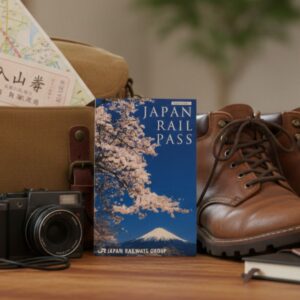
A: Shinkansen to Okayama (45 minutes from Shin-Osaka), then JR Uno Line to Uno Station (50 minutes), then ferry to Naoshima Miyanoura Port (20 minutes). Total approximately 2.5 hours. The journey is covered by JR Pass except for the ferry.
Q: Where should I stay on Naoshima?
A: Benesse House offers the ultimate art-hotel experience—rooms surrounded by the collection, with after-hours museum access. For a more local feel, guesthouses in Honmura village provide simple Japanese-style rooms and proximity to the Art House Project. Budget travelers can stay on the mainland at Uno Port (Okayama) with easy ferry access. Book well in advance regardless—Naoshima’s accommodation is limited.
Q: Can I visit Naoshima as a day trip from Kyoto?
A: Yes, though it requires an early start. Depart Kyoto by 7:00 AM Shinkansen, and you can be on Naoshima by 10:00. The last ferry back to Uno departs around 17:00–18:00 (check seasonal schedules). This gives 6–7 hours on the island—enough for the Chichu, one or two other museums, and part of the Art House Project. An overnight stay is recommended if possible.
Q: Do I need to book tickets in advance?
A: The Chichu Art Museum requires advance online reservation and sells out in peak season. Other museums sell tickets on-site. The Art House Project occasionally has queues for popular houses (especially Minamidera) but does not require advance booking. Benesse House hotel rooms should be booked months in advance.
The Island Teaches Slowly

Naoshima does not give itself up quickly. The day-tripper sees the highlights. The overnight guest begins to understand. The visitor who returns a second time discovers that what makes Naoshima extraordinary is not any individual artwork or building but the relationship between them—the way the Chichu’s buried concrete makes you see the island’s surface differently when you emerge, the way cycling between installations forces you to notice the sea, the hills, the quality of the air, the ordinary beauty of a fishing village going about its daily life.
Comprehensive guide: Wabi Sabi : The Japanese Philosophy of Finding Beauty in Imperfection
This is what Soichiro Fukutake meant when he said Naoshima was not about bringing art to an island. It was about using art to help people see what was already there.
Comprehnesive guide: What Is Zen Buddhism?
The island is waiting. Bring comfortable shoes, a reserved Chichu ticket, and the willingness to move slowly enough to see.