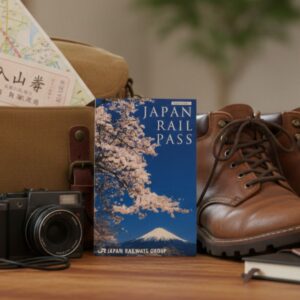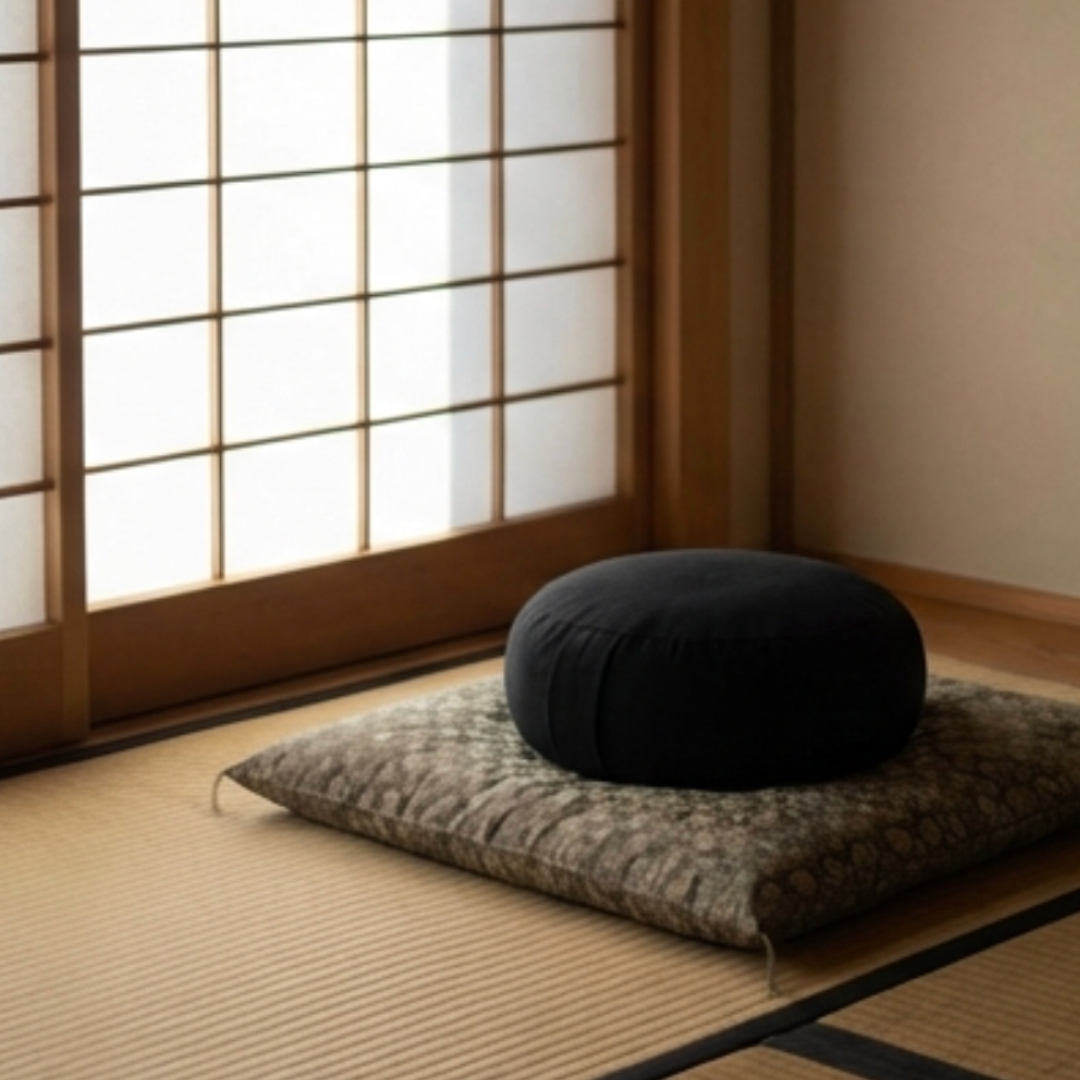
Shukubō (宿坊) is the Japanese practice of overnight lodging at Buddhist temples, offering visitors an immersive experience of monastic life. Originally established to accommodate pilgrims traveling to sacred sites, temple stays have evolved into a way for both Japanese and international travelers to experience zazen meditation, sutra chanting, shōjin ryōri (vegetarian cuisine), and early morning rituals. The most renowned shukubō destination is Mount Kōya (高野山) in Wakayama Prefecture, where over fifty Shingon Buddhist temples welcome overnight guests. Zen temple stays at monasteries such as Eihei-ji in Fukui Prefecture offer a more rigorous experience, following the daily schedule of practicing monks. A temple stay is not a hotel—it is a brief entry into a living spiritual tradition.

Sleeping Where Monks Have Practiced for Centuries
There is a moment, just before dawn, when a wooden mallet strikes a bell somewhere deep inside the temple. The sound moves through the darkness like a ripple across still water. You are lying on a futon spread over tatami mats, beneath a ceiling that has sheltered Buddhist monks for four hundred years. In a few minutes, you will rise, wash your face with cold water, and walk through dim corridors to join the morning chanting.
This is shukubō (宿坊)—the tradition of temple lodging in Japan—and it is one of the most profound travel experiences available anywhere in the world.
Shukubō is not a hotel with Buddhist décor. It is an invitation to step, however briefly, into the rhythm of monastic life. You sleep in the same rooms where pilgrims have rested for generations. You eat the same plant-based cuisine that monks prepare as a form of spiritual practice. You sit in meditation halls where the air holds centuries of silence.
Comprehensive guide: What Is Zen Buddhism?
Yet despite its depth, shukubō remains remarkably accessible. You do not need to be Buddhist, speak Japanese, or have any meditation experience. Temples across Japan welcome foreign guests with warmth and patience—and increasingly with English-language support. What they ask in return is simple: openness, respect, and a willingness to follow the temple’s rhythm for the duration of your stay.
This guide covers everything you need to know—from understanding what shukubō is and what a typical stay looks like, to choosing the right temple, booking your visit, and preparing for an experience that many travelers describe as the single most memorable night of their time in Japan.
What Is Shukubō? Understanding Temple Lodging
Origins: From Pilgrim Shelters to Cultural Experience
Shukubō has roots stretching back over a thousand years. Originally, temples offered lodging to Buddhist pilgrims traveling between sacred sites—particularly along mountain pilgrimage routes where no other accommodation existed. Kōya-san (高野山), the sacred mountain headquarters of Shingon Buddhism, has hosted overnight visitors since the 9th century, making it one of the oldest continuously operating lodging traditions in the world.
Over time, shukubō evolved from purely utilitarian shelter into a recognized cultural experience. Today, approximately 300 temples across Japan offer overnight stays to the public, ranging from austere mountain hermitages to elegantly appointed temple guesthouses with gardens that rival any luxury ryokan.

Shukubō vs. Ryokan: What Makes It Different?
While both shukubō and ryokan (traditional inns) offer tatami rooms, futon bedding, and Japanese hospitality, the similarities end there. A ryokan exists to pamper its guests. A shukubō exists to share monastic life with them.
The key differences are the daily schedule (early rising, morning services), the cuisine (shōjin ryōri—Buddhist vegetarian food served as a spiritual practice, not a dietary preference), and the atmosphere of contemplative quiet. Television, alcohol, and late nights are typically absent. In their place, you find something far more valuable: the rare experience of genuine stillness.
This does not mean shukubō is uncomfortable. Many temple guesthouses offer beautifully maintained rooms, private gardens, hot baths, and exquisite multi-course vegetarian meals. The experience is rich—but its richness is measured in presence rather than luxury.
What to Expect: A Typical Temple Stay
The Daily Flow
Every temple has its own schedule, but the rhythm of shukubō follows a remarkably consistent pattern across Japan. Here is what a typical overnight stay looks like:
Afternoon (3:00–5:00 PM) — Arrival and Settling In
You arrive and are shown to your room—typically a tatami room with sliding fusuma or shōji screens, a low table, and a futon that will be laid out for you in the evening. A monk or temple staff member explains the schedule, meal times, and any rules (shoes off here, silence after this hour, bath available until this time). Green tea and a small sweet are often waiting.
Evening (5:30–6:30 PM) — Dinner: Shōjin Ryōri
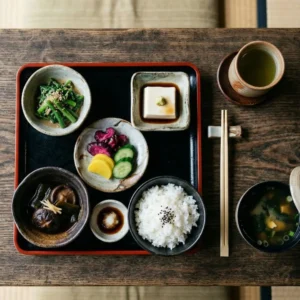
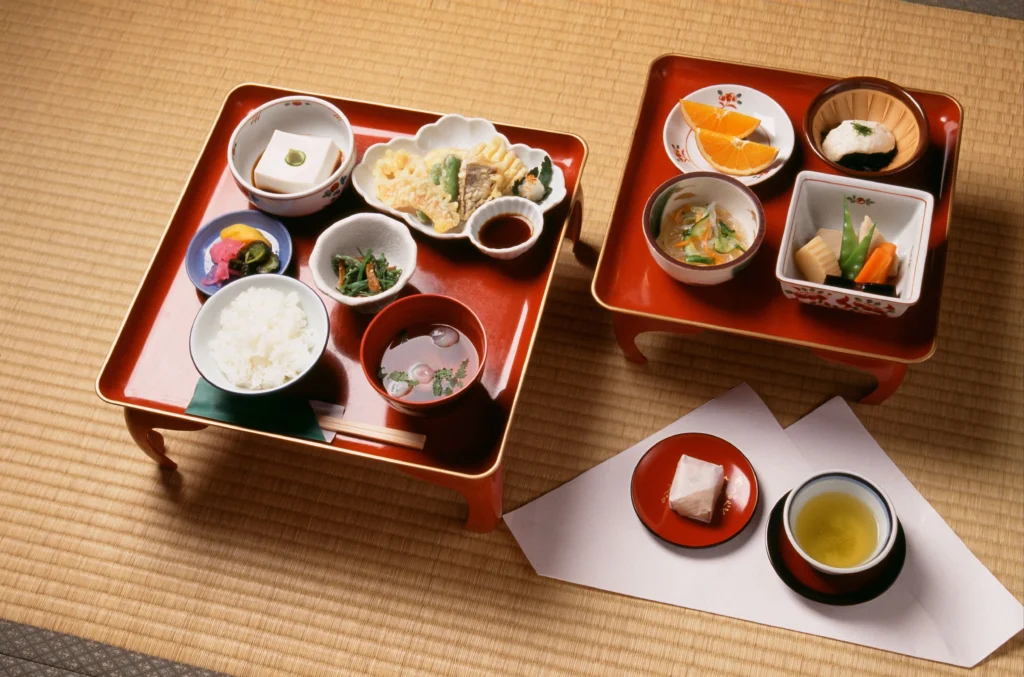
The evening meal is a highlight. Shōjin ryōri (精進料理)—Buddhist vegetarian cuisine—is served in your room or a communal dining hall. Expect multiple small dishes: sesame tofu (goma-dōfu), simmered vegetables, pickled preparations, miso soup, and rice. Every ingredient is plant-based, every preparation deliberate. Eating in silence, or at least in quiet conversation, is customary.
Evening (7:00–9:00 PM) — Free Time and Bath
Some temples offer evening meditation or sutra-copying (shakyō) sessions. Otherwise, this is your time for the temple bath (often a simple but deeply relaxing ofuro), journaling, or simply sitting with the silence. Most temples expect quiet after 9:00 PM.
Early Morning (5:30–6:30 AM) — Morning Service
This is the heart of the experience. A bell or wooden clapper signals the start of morning prayers (otsutome). You are welcome—often expected—to attend. The service typically includes sutra chanting, incense offering, and sometimes a brief dharma talk. Understanding the words is unnecessary; the experience is visceral and communal.
Comprehensive guide: How to Practice Zazen at Home
Morning (7:00–8:00 AM) — Breakfast
Another shōjin ryōri meal, typically simpler than dinner: rice porridge (okayu), pickles, nori, and miso soup. Eaten in mindful quiet.
Morning (8:00–10:00 AM) — Departure
After breakfast, you are free to explore the temple grounds before checking out. Some temples offer morning garden tours or additional meditation sessions.
Related guide: Shojin Ryori: The Zen Philosophy Behind Buddhist Cuisine
What You Do Not Need
Many travelers hesitate to book a shukubō because they worry about what they lack—Japanese language ability, Buddhist knowledge, meditation experience, or the physical flexibility to sit on the floor for hours. Let these concerns go.
Temples that accept overnight guests are accustomed to hosting foreigners with no Buddhist background. Instructions are given clearly (increasingly in English or with written guides). Chairs are often available for those who cannot sit in seiza. And the monks understand that you are a visitor, not a novice—they expect curiosity, not perfection.
Where to Stay: Japan’s Best Temple Lodging by Region
Kōya-san (Wakayama Prefecture) — The Essential Shukubō Experience

If you visit only one temple stay in Japan, make it Kōya-san. This mountaintop monastery complex, founded in 816 by the monk Kūkai, houses over 50 temples offering shukubō—the largest concentration in Japan. The atmosphere is unlike anywhere else: ancient cedar forests, candlelit halls, and the vast Okunoin cemetery where over 200,000 memorial stones line a path to Kūkai’s mausoleum.
Recommended temples:
- Ekō-in (恵光院): English-friendly, offers guided meditation and night cemetery tours. Popular with international visitors.
- Fukuchi-in (福智院): The only Kōya-san shukubō with its own onsen (hot spring bath). Beautiful garden designed by renowned landscape architect Shigemori Mirei.
- Rengejō-in (蓮華定院): Quieter and more traditional, with a deep connection to samurai history.
Kyoto — Zen and Refinement
Kyoto’s shukubō options tend to be smaller and more intimate than Kōya-san’s, often attached to sub-temples within larger complexes. The advantage is combining your temple stay with Kyoto’s extraordinary density of Zen gardens, tea houses, and cultural sites.
Recommended temples:
- Shunkō-in (春光院): Myōshin-ji sub-temple known for English-speaking head priest and meditation sessions tailored for international guests.
- Myōshin-ji Temple Complex (妙心寺): Several sub-temples offer lodging within this vast Rinzai Zen headquarters.
- Chishaku-in (智積院): Shingon temple near Sanjūsangen-dō with elaborate screen paintings and serene gardens.
Related guide: 10 Must-Visit Zen Temples in Kyoto
Nara — Ancient Roots, Fewer Crowds
Nara—Japan’s first permanent capital—offers a quieter alternative to Kyoto with equally ancient temples. Shukubō options here are fewer but often more affordable and less touristed.
Recommended:
- Guesthouse temples in the Yoshino area: Connected to the Shugendō mountain ascetic tradition, offering a distinctly different Buddhist atmosphere.
Other Notable Options
- Eiheiji (永平寺), Fukui Prefecture: The headquarters of Sōtō Zen, founded by Dōgen in 1244. Eiheiji offers one of the most rigorous shukubō experiences—closer to actual monastic training than tourism. Best for those with some meditation experience.
- Zenkō-ji (善光寺), Nagano: One of Japan’s most important pilgrimage temples, welcoming visitors of all Buddhist sects—and none.
Related guide: Kamakura temples: A Guide to Japan’s Ancient Warrior Capital


How to Book and What It Costs
Booking Methods
Shukubō booking is less straightforward than hotel reservations, but it is not difficult once you know where to look:
Direct temple websites: Many temples, especially at Kōya-san, now have English-language booking pages. This is often the best option for securing your preferred dates and room type.
Shukubo.net: A dedicated booking platform for temple lodging in Japan, with English support and detailed descriptions of participating temples.
Local tourism offices: For less well-known temples, contacting the regional tourism office (in English) can help arrange stays that are not listed online.
Japanese Guesthouses (Japaneseguesthouses.com): A curated platform specializing in traditional accommodation including selected shukubō.
Costs
Temple stays are surprisingly affordable compared to ryokan or hotels of comparable cultural richness:
- Kōya-san: ¥10,000–¥15,000 per person per night (approximately $65–$100 USD), including dinner and breakfast
- Kyoto: ¥8,000–¥20,000 depending on the temple and room type
- Other regions: ¥6,000–¥12,000
These rates include two meals—shōjin ryōri dinner and breakfast—which alone would cost ¥5,000–¥8,000 at a restaurant. The value is exceptional.
What to Bring
- Comfortable clothing for sleeping and morning services (many temples provide yukata robes)
- Warm layers in winter—temple buildings can be cold, especially at mountain locations like Kōya-san
- A small towel (some temples provide these, some do not)
- Cash — many temples do not accept credit cards
- An open mind — the most essential item
Etiquette and Preparation
Temple Manners
The rules of shukubō are few but important:
Remove shoes at every entrance. Slippers are provided for corridors; remove slippers when stepping onto tatami.
Observe quiet hours. Most temples expect silence after 9:00 PM. Keep voices low throughout your stay—the hushed atmosphere is not a restriction but a gift.
Attend morning services. While rarely mandatory, attendance is strongly encouraged and considered respectful. You are a guest in a living monastery, not a museum.
Respect shared spaces. Baths, meditation halls, and dining areas are communal. Leave them as you found them.
Ask before photographing. Some temple areas—particularly main halls during services—prohibit photography. When in doubt, ask.
Preparing Your Mind
The greatest preparation for a temple stay is not logistical but psychological. You are entering a space where the normal pace of travel—rushing between sights, checking phones, filling every moment with stimulation—gives way to something slower and quieter.
Comprehensive guide: Zen Mindfulness in the Modern Workplace
This can be uncomfortable at first. Without Wi-Fi (many temples have limited or no connectivity), without entertainment, without the constant motion of sightseeing, you may find yourself face to face with your own restlessness. This is not a problem—it is the beginning of the experience.
Let the boredom come. Let the silence settle. You may discover, as many travelers do, that a single night in a temple teaches you more about stillness than months of trying to meditate at home.
Comprehensive guide: How to Practice Zazen at Home
FAQ
Q: Do I need to be Buddhist to stay in a temple? A: Not at all. Temples welcome guests of all faiths and no faith. You are asked to respect the temple’s customs and schedule, but no religious participation or belief is required. Many guests describe the experience as spiritual without being religious.
Q: Can I stay at a temple with children? A: Some temples accept families, though the early schedule and quiet atmosphere can be challenging for young children. Kōya-san temples tend to be the most family-friendly. Contact the temple directly to ask—many are flexible and welcoming.
Q: Is temple food enough? Will I be hungry? A: Shōjin ryōri meals are typically generous—multiple courses of beautifully prepared vegetarian dishes. Most guests are pleasantly surprised by both the quantity and quality. However, if you have a very large appetite, consider bringing a small snack for the evening.
Q: Do temples have Wi-Fi? A: Some larger, tourist-oriented temples (especially at Kōya-san) now offer Wi-Fi in guest areas. Smaller temples often do not. Consider this a feature rather than a bug—disconnecting from screens is part of the experience.
Q: What if I cannot sit on the floor? A: Temples are accustomed to accommodating guests with mobility limitations. Chairs are usually available for morning services, and some temples offer rooms with beds rather than futons. Communicate your needs when booking.
Q: Can I do a temple stay in Japan with meditation included? A: Yes. Many shukubō offer optional meditation sessions—particularly zazen (seated Zen meditation) at Zen temples and ajikan meditation at Shingon temples. Ekō-in and Shunkō-in are especially well-known for guided meditation in English.
More Than a Night’s Sleep
A temple stay in Japan is not a checkbox on an itinerary. It is, for many travelers, a turning point—the moment when Japan shifts from a destination to an experience that reshapes how they see the world.
You will remember the sound of the morning bell long after you have forgotten the name of your Tokyo hotel. You will think about the taste of sesame tofu prepared by monks’ hands when expensive restaurant meals have blurred together. And you may find, weeks or months later, that the silence you encountered in a temple corridor has followed you home.
Comprehensive guide: Wabi-Sabi Philosophy
References
- Covell, S. G. (2005). Japanese Temple Buddhism: Worldliness in a Religion of Renunciation. University of Hawai’i Press.
- Reader, I. (2005). Making Pilgrimages: Meaning and Practice in Shikoku. University of Hawai’i Press.
- Tanaka, K. K. (1999). Opening a Mountain: Kōkai and the Creation of a Japanese Sacred Space. Oxford University Press.
- Suzuki, D. T. (1959). Zen and Japanese Culture. Princeton University Press.
- Nicoloff, P. L. (2008). Sacred Kōyasan: A Pilgrimage to the Mountain Temple of Saint Kōbō Daishi and the Great Sun Buddha. SUNY Press.