Shōjin ryōri (精進料理) is the traditional vegetarian cuisine of Japanese Zen Buddhist monasteries. Developed from the dietary precepts established by the 13th-century Zen master Dōgen at Eihei-ji temple, shōjin ryōri prohibits meat, fish, and pungent vegetables (garlic, onion, leeks), transforming these restrictions into a refined culinary art. Every meal follows the principle of harmony across five colors (go shiki), five flavors (go mi), and five preparation methods (go hō), creating dishes that nourish body and spirit equally. The practice of cooking and eating is considered an extension of zazen—an act of mindfulness in which no ingredient is wasted. Today, shōjin ryōri can be experienced at Zen temples throughout Kyoto, Kamakura, and Mount Kōya.
Cooking as Prayer
In most kitchens around the world, cooking is a means to an end—a task performed to produce a meal. In a Zen Buddhist monastery, cooking is the practice.
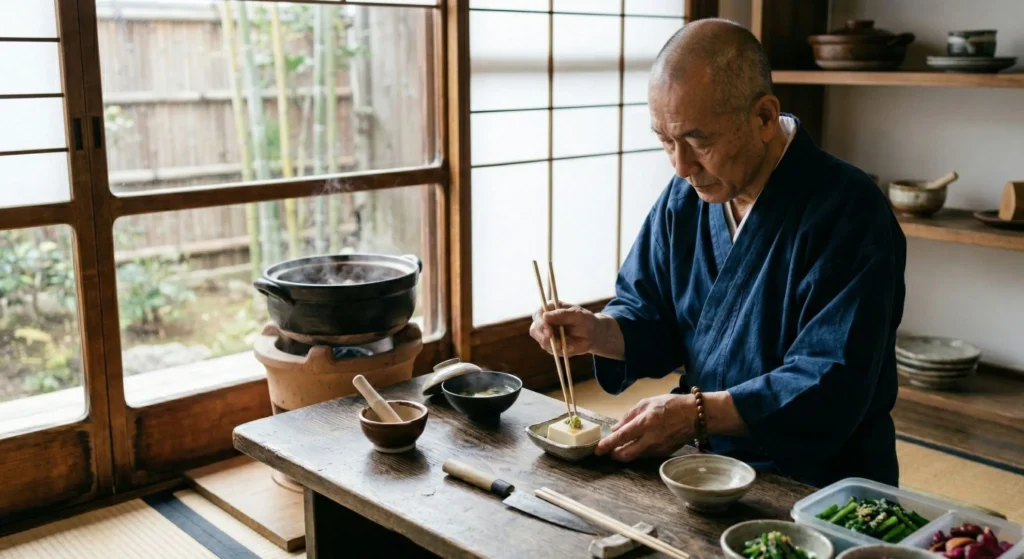
Shojin ryori (精進料理) is the traditional vegetarian cuisine of Japanese Buddhism. The name itself reveals its purpose: shojin (精進) means “devotion” or “zealous practice,” and ryori (料理) means “cuisine.” This is not vegetarian food that happens to be served at temples. It is food prepared as a form of spiritual discipline—every act of washing, cutting, and cooking performed with the same quality of attention a monk brings to seated meditation.
The roots of this tradition run eight centuries deep. In 1237, the Zen master Dōgen (道元) wrote Tenzo Kyōkun (典座教訓, “Instructions for the Cook”), a text that elevates the monastery cook (tenzo) to one of the most important positions in the temple. Dōgen’s message was radical and simple: there is no separation between spiritual practice and the preparation of food. Washing rice is zazen. Chopping vegetables is zazen. Feeding others is an expression of awakening.
Comprehensive guide: How to Practice Zazen at Home
This guide explores the Zen philosophy that makes shojin ryori far more than a diet—from Dōgen’s teachings and the aesthetic principles that govern every meal, to where you can experience it in Japan and how to bring its spirit into your own kitchen.
The Zen of the Kitchen: Dōgen’s Tenzo Kyōkun
Why the Cook Matters
In a Zen monastery, the tenzo (典座)—the head cook—holds one of the six senior administrative positions. This is not a minor kitchen role. The tenzo is responsible for nourishing the entire community, and Dōgen considered this responsibility a direct expression of Buddhist compassion.
In Tenzo Kyōkun, Dōgen writes that the tenzo should handle even a single leaf of green with the care one would give to a sacred object. He instructs the cook to approach every ingredient—no matter how humble—with respect, gratitude, and full attention. A turnip is not inferior to an elaborate dessert. Water used for washing rice is not waste. Everything has value; nothing is discarded carelessly.
Comprehensive guide: What Is Zen Buddhism?
This philosophy produces a distinctive approach to cooking. The tenzo does not follow recipes mechanically—they respond to what is available, what the season offers, and what the community needs. Creativity emerges not from abundance but from constraint. A skilled tenzo can transform three simple ingredients into a meal of extraordinary depth, precisely because the practice demands attention rather than luxury.
Three Minds of the Cook
Dōgen describes three essential qualities of mind that the tenzo must cultivate:
Kishin (喜心) — Joyful Mind. Approaching the work of cooking with gratitude and delight, regardless of how mundane the task appears. Joy in peeling a potato. Joy in stirring a pot.
Rōshin (老心) — Parental Mind. Caring for the ingredients and the people who will eat them with the tenderness a parent shows a child. This means wasting nothing, seasoning thoughtfully, and considering the health and needs of each person.
Daishin (大心) — Magnanimous Mind. Maintaining a broad, unbiased perspective—not clinging to personal preferences or rejecting ingredients one dislikes. The cook serves what is needed, not what flatters the ego.
These three minds transform cooking from labor into practice. They are also, not coincidentally, the same qualities that Zen cultivates through meditation—presence, compassion, and equanimity.
The Rule of Five: Principles of Shojin Ryori
Shojin ryori is governed by an elegant system known as the Rule of Five—a set of aesthetic and nutritional principles that ensures every meal is balanced in color, flavor, preparation method, and sensory experience.
Five Colors (Goshiki 五色)
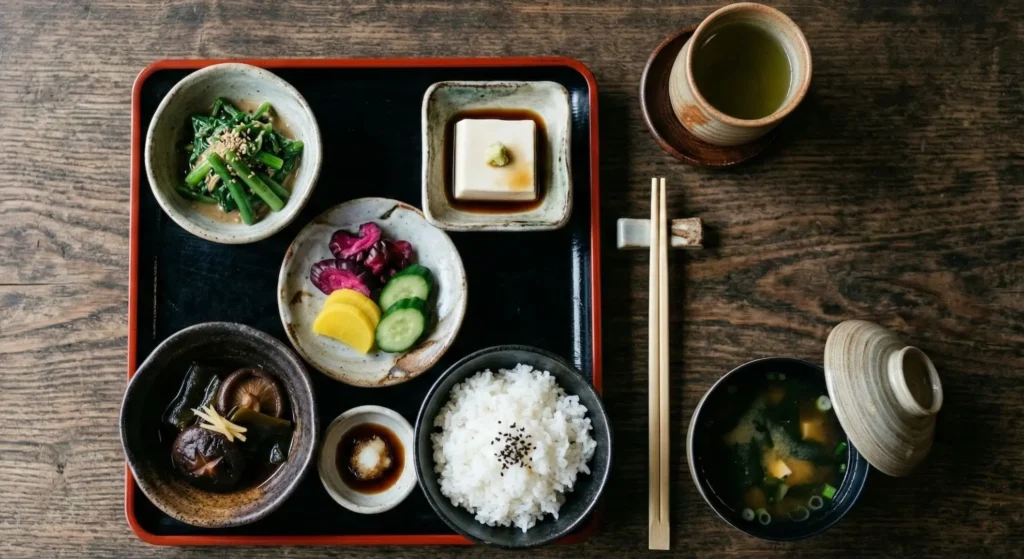
Every shojin ryori meal aims to include five colors: white (rice, tofu, daikon), black (sesame, seaweed, shiitake), red (pickled plum, carrots, azuki beans), green (leafy vegetables, edamame, matcha), and yellow (pumpkin, yuzu, miso). This is not decoration—it reflects the Buddhist understanding that visual harmony supports physical and spiritual health.
Five Flavors (Gomi 五味)
The five tastes—sweet, sour, salty, bitter, and umami—must all be present across the courses of a meal. No single flavor dominates. The result is a meal that feels complete without heaviness—each dish balancing and complementing the others in a way that satisfies deeply despite the absence of meat or fish.
Five Methods (Goho 五法)
Five cooking techniques are represented: raw (nama), simmered (niru), grilled (yaku), steamed (musu), and fried (ageru). This variety of preparation creates textural contrast—the crispness of tempura beside the softness of simmered vegetables, the freshness of raw garnish beside the depth of slow-cooked broth.
The Sixth Sense: Simplicity
Beyond the formal Rule of Five lies an unspoken principle that connects shojin ryori directly to the aesthetic tradition of wabi-sabi (侘び寂び). The beauty of a shojin ryori meal is not in elaboration but in restraint. Ingredients are presented close to their natural state. Seasoning enhances rather than masks. Portions are modest. The plate itself—often rough-textured pottery or simple lacquerware—participates in the aesthetic of humble beauty.
Comprehensive guide: Wabi Sabi : The Japanese Philosophy of Finding Beauty in Imperfection
This convergence of balance, seasonality, and simplicity makes shojin ryori one of the most sophisticated cuisines in the world—not despite its restrictions, but because of them. The absence of meat is not a limitation. It is the creative constraint that produces extraordinary refinement.
Essential Dishes: What You Will Eat
A typical shojin ryori meal consists of ichijū sansai (一汁三菜)—one soup and three side dishes, served with rice and pickles. At more elaborate temple meals, this expands to five, seven, or even more courses. Here are the dishes you are most likely to encounter:
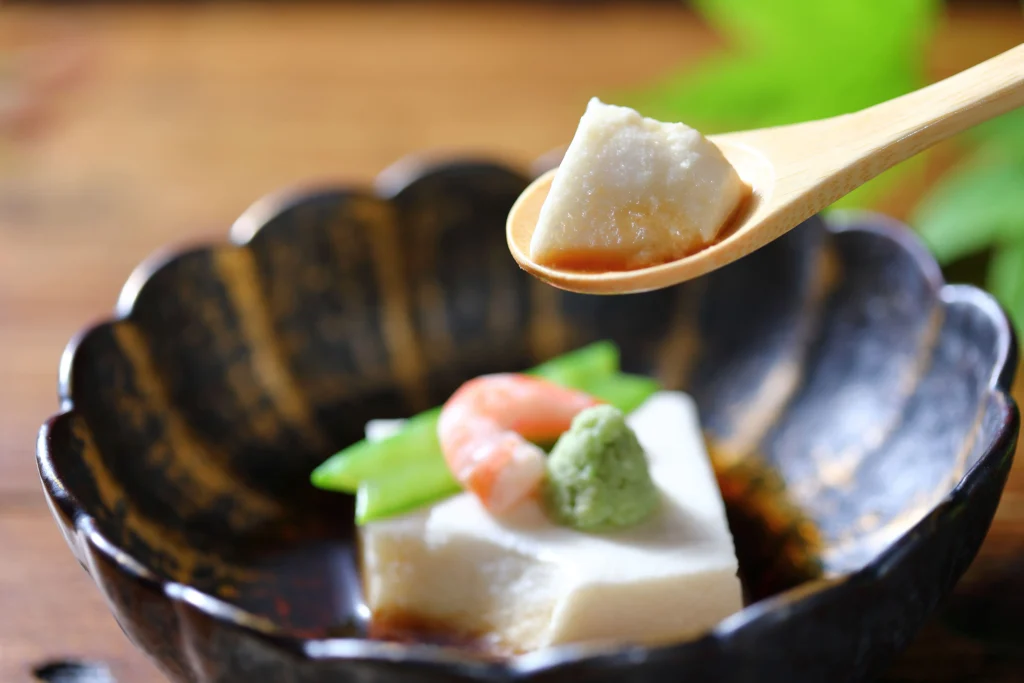
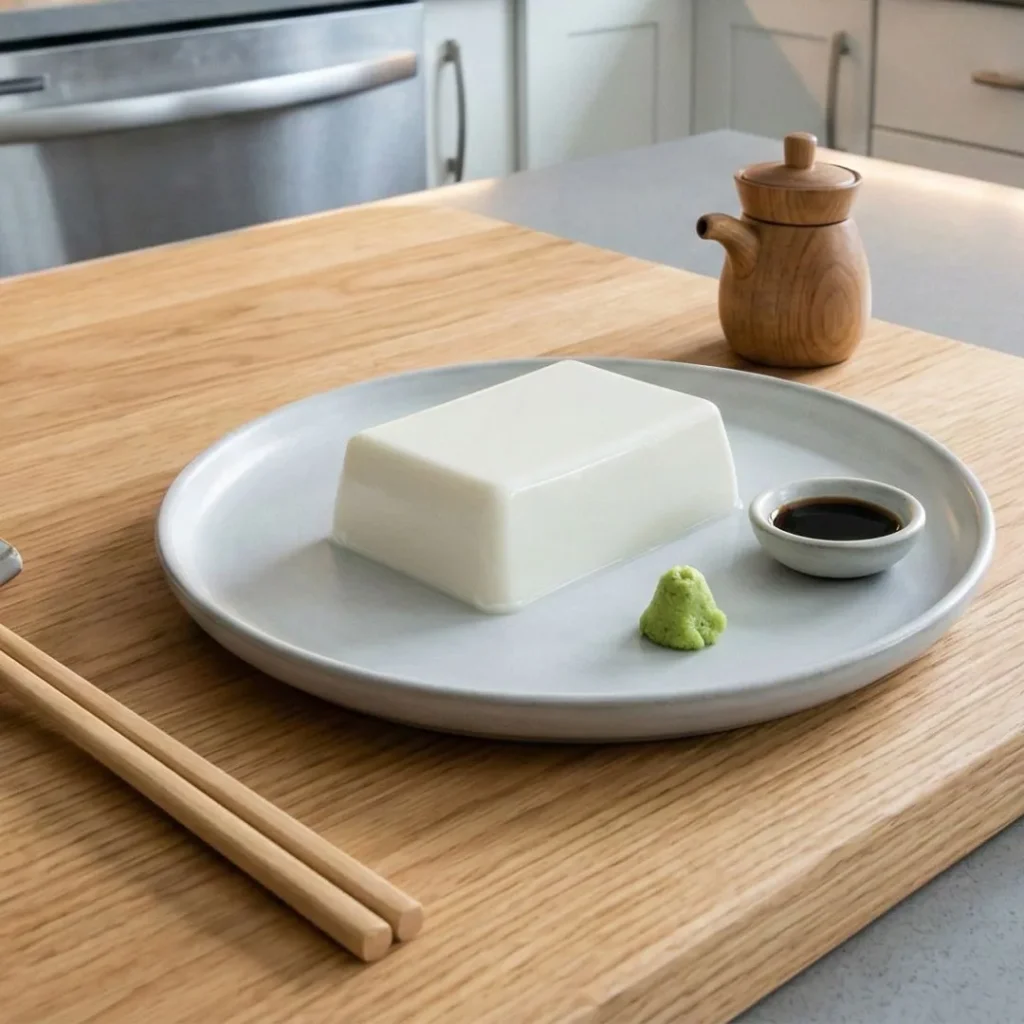
Goma-dōfu (胡麻豆腐) — Sesame Tofu. Not made from soybeans but from ground sesame paste and kuzu starch, creating a silky, custard-like texture. Often served chilled with a dab of wasabi and a drizzle of soy sauce. This is the signature dish of shojin ryori and the one most visitors remember.
Kenchinjiru (けんちん汁) — Root Vegetable Soup. A clear or miso-based soup filled with daikon, burdock root, taro, carrots, and tofu, all sautéed briefly in sesame oil before simmering. Named after Kenchō-ji temple in Kamakura, where it originated.
Shōjin-age (精進揚げ) — Temple Tempura. Seasonal vegetables and sometimes shiso leaves, lightly battered and fried. The Zen approach to tempura emphasizes the natural shape and color of each ingredient—the batter is thin, almost translucent.
Nasu Dengaku (茄子田楽) — Miso-Glazed Eggplant. Halved eggplant topped with sweet miso paste and broiled until caramelized. The interplay of sweet, salty, and smoky flavors in a single dish.
Takiawase (炊き合わせ) — Simmered Vegetables. An assortment of seasonal vegetables—bamboo shoots in spring, pumpkin in autumn—each simmered separately in dashi to maintain distinct flavors, then arranged together on a single plate. The care taken to cook each ingredient individually reflects the tenzo’s respect for the nature of each food.
[IMAGE 3: Dishes] Placement: After the dishes section Recommended: Close-up of goma-dōfu (sesame tofu) on a ceramic plate—the smooth, pale surface of the tofu with a small amount of wasabi and soy sauce, on handmade pottery Alt text: “Goma dofu sesame tofu signature dish of shojin ryori on handmade ceramic plate” Caption: Goma-dōfu—sesame tofu—the most iconic dish of shojin ryori, where simplicity reveals depth.
Where to Experience Shojin Ryori in Japan
Kyoto: The Heart of Temple Cuisine
Kyoto’s long history as the center of Japanese Buddhism makes it the natural home of shojin ryori. Options range from centuries-old temple restaurants to modern interpretations.
Shigetsu (篩月) at Tenryū-ji Temple. Located within one of Kyoto’s great Zen temples, Shigetsu offers shojin ryori overlooking the stunning Sōgenchi garden designed by Musō Soseki. The setting alone—eating temple food while gazing at a 14th-century Zen garden—is unforgettable. Reservations recommended.
Izusen (泉仙) at Daitoku-ji Temple. A beloved institution serving shojin ryori inside the vast Daitoku-ji complex. Multiple courses arrive on red lacquered trays, and the atmosphere of the surrounding temple grounds deepens every bite.
Ajiro (阿じろ). A refined restaurant near Myōshin-ji specializing in Kyoto-style shojin ryori with seasonal kaiseki influences. More expensive but exquisitely presented.
Related guide: 10 Must-Visit Zen Temples in Kyoto
Tokyo: Modern Shojin Ryori
Tokyo’s shojin ryori scene is smaller but growing, with several restaurants offering both traditional and contemporary approaches.
Daigo (醍醐). A two-Michelin-starred shojin ryori restaurant near Tokyo Tower. Daigo represents the pinnacle of the tradition—a multi-course experience that rivals any haute cuisine meal in the world, entirely plant-based. Reservations essential; expect to spend ¥10,000–¥20,000 per person.
Sougo (宗胡). A more accessible option in Roppongi offering creative shojin ryori courses at moderate prices. The chef trained at temples before opening this restaurant, bringing authentic spiritual grounding to a modern setting.
At a Temple Stay
If you are planning an overnight temple stay (shukubō), shojin ryori is included—typically a multi-course dinner and simpler breakfast. Eating in a temple guest room, surrounded by centuries of quiet, transforms the meal into something closer to Dōgen’s original vision than any restaurant can replicate.
Related guide: Temple Stays in Japan
Bringing Shojin Ryori Home
The Spirit, Not Just the Recipe
You do not need a temple kitchen or a monk’s training to practice shojin ryori at home. What you need is Dōgen’s attitude: treat ingredients with respect, waste nothing, and give your full attention to the process.
Start with a simple meal: rice, miso soup, one simmered vegetable dish, and pickles. Use seasonal, local ingredients wherever possible. Approach each step—washing, cutting, stirring—as if it were the only thing happening in the world.
This is not a restrictive diet. It is a way of relating to food that transforms both the cooking and the eating. Many people who try shojin ryori at home discover that the practice of preparing a simple, intentional meal is itself calming—a form of kitchen meditation that requires no special equipment or expertise.
Comprehensive guide: Zen Mindfulness in the Modern Workplace
A Beginner Shojin Ryori Recipe: Goma-dōfu (Sesame Tofu)
Ingredients:
- 50g white sesame paste (neri-goma)
- 50g kuzu starch (kuzuko)—not cornstarch; kuzu gives the distinctive smooth texture
- 400ml water
- Wasabi and soy sauce for serving
Method:
- Combine sesame paste, kuzu starch, and water in a saucepan. Stir thoroughly until the kuzu is fully dissolved—no lumps should remain.
- Place over medium heat, stirring continuously with a wooden spatula. The mixture will begin to thicken after several minutes.
- When it becomes thick and pulls away from the sides of the pan (approximately 10–15 minutes of continuous stirring), it is ready. The stirring is the meditation—do not rush it.
- Pour into a moistened mold or container. Smooth the surface and allow to cool to room temperature, then refrigerate until firm (at least 2 hours).
- Cut into portions. Serve chilled with a small mound of fresh wasabi and a drizzle of good soy sauce.
The result is unlike any tofu you have encountered—closer to a savory panna cotta, with the deep, nutty fragrance of sesame and a texture that is both firm and yielding.
20[IMAGE 4: Recipe] Placement: After the recipe Recommended: Step-by-step or finished goma-dōfu—a clean, elegant presentation showing the smooth white surface of the sesame tofu on a simple plate with wasabi and soy sauce Alt text: “Homemade goma dofu sesame tofu shojin ryori recipe served with wasabi and soy sauce” Caption: Goma-dōfu at home—three ingredients, fifteen minutes of mindful stirring, and a taste of temple cuisine.
Recommended Cookbooks
For deeper exploration of shojin ryori at home, these cookbooks provide authentic recipes with cultural context:
FAQ
Q: Is shojin ryori the same as vegan food?
A: Shojin ryori is entirely plant-based and predates the modern vegan movement by many centuries. However, it differs from veganism in motivation—the dietary restrictions come from Buddhist precepts against taking life, not from health or environmental concerns. Traditional shojin ryori also avoids the five pungent roots (gokun: garlic, onion, leek, chive, and green onion) because they were believed to stimulate desire and aggression—a restriction most vegan cooking does not observe.
Q: How much does a shojin ryori meal cost in Japan?
A: Prices vary significantly. At temple restaurants like Shigetsu (Tenryū-ji) or Izusen (Daitoku-ji) in Kyoto, expect ¥3,000–¥5,000 per person for a multi-course lunch. At high-end establishments like Daigo in Tokyo, meals run ¥10,000–¥20,000. Shojin ryori included with a temple stay (shukubō) is typically part of the overnight rate (¥10,000–¥15,000 per person, dinner and breakfast included).
Q: Can I find shojin ryori outside Japan?
A: Dedicated shojin ryori restaurants outside Japan are rare, though some exist in major cities with significant Japanese communities (New York, London, San Francisco). However, the principles and recipes translate well to any kitchen—several English-language cookbooks make home preparation accessible regardless of location.
Q: Is shojin ryori suitable for people with allergies?
A: Shojin ryori is naturally free of meat, fish, dairy, and eggs. However, soy (tofu, soy sauce, miso) and sesame are central ingredients, and wheat appears in some dishes. Gluten-free and soy-free modifications are possible but require adaptation. If dining at a temple or restaurant, communicate allergies when booking.
Q: What is the difference between shojin ryori and kaiseki?
A: Kaiseki (懐石) cuisine also has Buddhist roots—the name originally referred to the warm stone monks held against their stomachs to suppress hunger. However, kaiseki evolved into a secular haute cuisine that includes fish and meat. Shojin ryori remains strictly plant-based and spiritually grounded. Both share an emphasis on seasonality, presentation, and the Rule of Five, but their purposes differ: kaiseki aims to delight; shojin ryori aims to nourish body and spirit equally.
Every Meal Is Practice
There is a chant recited before meals in Zen monasteries, the Gokan no Ge (五観の偈, “Five Reflections”):
First, let us reflect on the effort that brought us this food. Second, let us be worthy to receive it. Third, let us practice moderation and guard against greed. Fourth, let us take this food as medicine to sustain our health. Fifth, let us accept this food to fulfill our path of practice.
These five lines transform eating from consumption into contemplation. They remind the practitioner that food connects them to everything—to the earth that grew it, to the hands that prepared it, to the community that shares it, and to the practice that gives their life direction.
You do not need to recite this chant to live its message. The next time you sit down to eat, pause for a single breath before the first bite. Consider where the food came from. Notice its colors, its textures, its warmth. Eat slowly. Taste deliberately.
Comprehensive guide: Wabi Sabi : The Japanese Philosophy of Finding Beauty in Imperfection
In that moment of attention, you are practicing shojin ryori—whether your bowl holds temple cuisine or a simple meal you made at home. The ingredients do not matter as much as the quality of awareness you bring to them.
As Dōgen taught: a grain of rice contains the entire universe. The question is whether you notice.
References
- Fujii, M. (2005). The Enlightened Kitchen: Fresh Vegetable Dishes from the Temples of Japan. Kodansha International.
- Chu, D. (2019). Shojin Ryori: A Japanese Vegetarian Cookbook. Vertical Inc.
- Shunmyo Masuno. (2019). Zen: The Art of Simple Living. Penguin Life.
- Okakura, K. (1906). The Book of Tea. Putnam’s Sons.
- Suzuki, D. T. (1959). Zen and Japanese Culture. Princeton University Press.