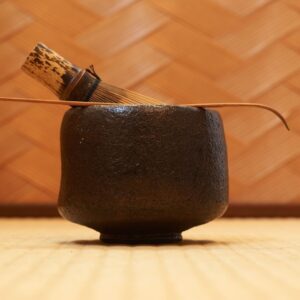
Japanese woodworking (木造, mokuzo) is a building and craft tradition spanning over 1,300 years that achieves structural integrity entirely through interlocking wood joinery—without nails, screws, or adhesive. Developed by miyadaiku (宮大工, temple carpenters) who train for decades in methods passed down through master-apprentice lineages, Japanese joinery encompasses over a hundred distinct joint designs that accommodate wood’s natural expansion and contraction across seasons. The tradition produced Hōryū-ji in Nara, the world’s oldest surviving wooden structure, and continues in the geometric lattice art of kumiko (組子). Rooted in the same Zen philosophy that informs tea ceremony and garden design, Japanese woodworking treats craftsmanship as spiritual practice—working with the wood’s nature rather than imposing the builder’s will upon it.
1,300 Years Without a Nail
Hōryū-ji temple in Nara is the oldest surviving wooden structure in the world. Built in the seventh century, it has endured earthquakes, typhoons, fires in neighboring buildings, and thirteen centuries of Japanese weather. It is still standing. Not a single nail holds it together.
This is not a curiosity of ancient engineering. It is the expression of a philosophy—one that runs through every aspect of Japanese woodworking, from the construction of temples to the making of a tea chest. The philosophy says: do not force the material. Understand it. Work with its nature, not against it. Join it in ways that allow it to move, breathe, and age—and the result will outlast anything held together by metal.
Japanese woodworking (mokuzo, 木造) is one of the most sophisticated building traditions in human history. Its joinery techniques—hundreds of interlocking joint designs developed over more than a millennium—achieve structural integrity without nails, screws, or adhesive. Its tools are designed to cut with the grain rather than against it. Its practitioners, the miyadaiku (宮大工, temple carpenters), train for decades in a tradition that treats craftsmanship as a spiritual discipline indistinguishable from Zen practice.
Comprehensive guide: Wabi Sabi : The Japanese Philosophy of Finding Beauty in Imperfection
This guide explores the philosophy behind Japanese woodworking, its extraordinary joinery techniques, the geometric art of kumiko, the tools that make it possible, and how this ancient tradition is finding new life in the modern world.
The Philosophy: Working With the Wood
Wood Is Alive
The foundational principle of Japanese woodworking is that wood is not an inert material to be shaped to the builder’s will. Wood is a living substance—even after it is cut, dried, and milled, it continues to respond to its environment. It expands in humidity. It contracts in dry air. It moves with the seasons, shifting fractions of a millimeter that, over decades, become centimeters.
Western construction typically fights this movement. Nails and screws pin wood rigidly in place, and when the wood inevitably moves, the joints crack, the nails loosen, and the structure degrades. The Western solution is to replace and repair.
Japanese joinery takes the opposite approach. Instead of fighting wood’s movement, it designs joints that accommodate it—interlocking connections that tighten as the wood swells and relax as it contracts, allowing the entire structure to breathe with the seasons. A Japanese temple does not resist earthquakes. It flexes with them. It does not resist humidity. It absorbs and releases it. The building and its environment are in continuous dialogue.
This principle—working with the nature of the material rather than imposing your will upon it—is not merely engineering. It is the same insight that Zen Buddhism applies to the human mind: resistance creates suffering; acceptance creates resilience.
The Carpenter as Practitioner
The master carpenter Nishioka Tsunekazu (西岡常一, 1908–1995), who led the restoration of Hōryū-ji and Yakushi-ji temples, expressed this philosophy in a famous teaching: “First, know the trees. Then, know the wood. Then, forget everything and let the wood speak.”
Nishioka described his work in language indistinguishable from Zen instruction. He spoke of listening to the wood, of understanding each timber’s individual character—where it grew on the mountainside, which direction it faced, how it responded to wind and sun. A beam from the south side of a tree, he taught, should be placed on the south side of a building. The wood remembers its orientation, and honoring that memory produces a structure in harmony with itself.
Related guide: The Philosophy of Zen Architecture: What Makes Temples Sacred
This level of attention—studying each piece of wood as an individual, not as an interchangeable unit—requires the same quality of presence that Zen cultivates through meditation. The carpenter does not impose a design onto passive material. The carpenter discovers the design that the material is already suggesting.
Joinery: The Art of Invisible Connection
Why No Nails?
The question every Westerner asks about Japanese woodworking is: why no nails? The answer is both practical and philosophical.
Practically: Nails create points of rigidity in a flexible material. As wood moves seasonally, nailed joints become stress points that weaken over time. In a seismically active country like Japan, rigid connections are a liability—they transfer earthquake forces directly through the structure, causing catastrophic failure. Interlocking joints, by contrast, distribute forces across larger surfaces and allow controlled movement that absorbs seismic energy.
Philosophically: A nail is an intrusion—a piece of foreign metal driven into wood by force. Japanese joinery achieves connection through the wood itself, using only the material’s own properties. Nothing is added that does not belong. The joint is wood meeting wood, shaped to fit so precisely that the connection becomes invisible. This is the same aesthetic that governs Zen garden design, ikebana, and calligraphy—the elimination of everything unnecessary.
Essential Joint Types
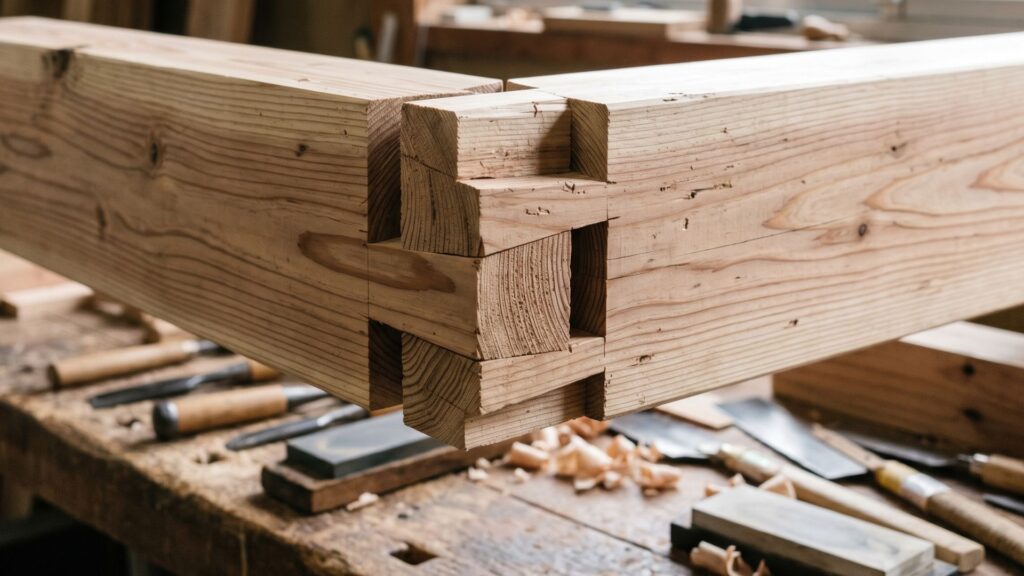
Japanese joinery encompasses over a hundred distinct joint designs, each developed for a specific structural purpose. Three categories illustrate the range:
Tsugi (継) — Splicing Joints. These extend the length of a timber by joining two pieces end to end. The okkake daisen tsugi (追掛大栓継) is among the most elegant—a complex interlocking shape where two beams slide together from opposite directions and are locked by a single wooden pin (sen). The joint resists pulling, twisting, and bending forces simultaneously, and can be disassembled for repair without damaging either timber.
Shiguchi (仕口) — Connecting Joints. These join timbers meeting at angles—typically beams to posts. The watari ago (渡り腮) is a classic example: the beam sits in a notch cut into the top of the post, with interlocking shoulders that prevent the beam from rolling or lifting. The weight of the structure above presses the joint tighter over time—gravity becomes the fastener.
Ari (蟻) — Dovetail Joints. The ari tsugi (蟻継) uses a flared, wedge-shaped tenon that slides into a matching mortise and locks by expanding slightly. Named for the shape of an ant’s body (蟻, ari), these joints resist pulling forces with extraordinary tenacity. Variations appear in everything from temple construction to furniture making.
The Principle of Controlled Imperfection
Japanese joinery is not about achieving machine-level precision. It is about achieving the right precision—tight enough to hold, loose enough to move. A joint cut too tightly will split as the wood swells. A joint cut too loosely will rattle and weaken.
The master carpenter cuts to a tolerance that accounts for future movement—leaving deliberate allowances where the wood will expand and deliberate tightness where it will contract. This is craftsmanship that thinks in decades, not in the moment of assembly. The joint that seems slightly loose on the day of construction will be perfectly tight five years later, when the wood has settled into its new environment.
Kumiko: Geometry as Meditation
The Art of Lattice
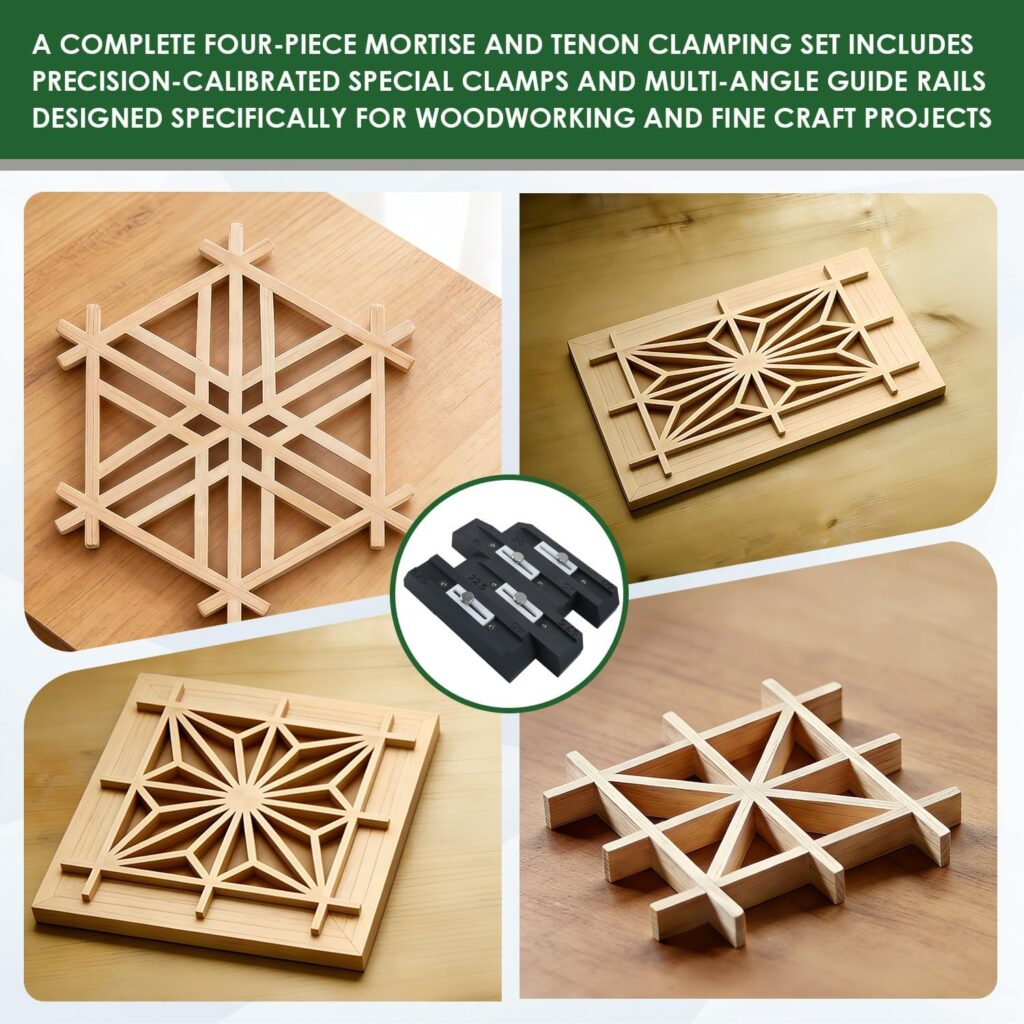
Kumiko (組子) is the Japanese art of creating geometric lattice patterns by assembling small, precisely cut pieces of wood without nails or glue. The pieces interlock through tiny notches and friction alone, building up complex patterns from the repetition of simple elements.
Kumiko panels appear in traditional Japanese architecture as shōji (障子, sliding screens), ranma (欄間, transom panels above doors), and decorative screens. When light passes through a kumiko panel, the geometric pattern casts intricate shadows that shift throughout the day—the panel becomes a sundial of beauty, marking time through the movement of light.
Patterns and Their Meanings
Like sashiko stitching, kumiko patterns carry cultural symbolism. The geometric designs are not arbitrary—each has a name, a history, and a meaning.
Related guide: Sashiko: The Japanese Art of Stitching, Mending, and Finding Beauty in Repair
Asanoha (麻の葉) — Hemp Leaf. The same six-pointed star pattern used in sashiko, here rendered in wood. Symbolizes healthy growth. One of the most popular kumiko patterns for its visual complexity and structural integrity.
Yarai (矢来) — Bamboo Fence. A diagonal lattice pattern representing the bamboo fences that surround Japanese gardens. Simple to construct but visually striking—a traditional first project for kumiko beginners.
Sakura (桜) — Cherry Blossom. Five-petaled flower shapes created by the intersection of overlapping circles. Among the most difficult kumiko patterns, requiring precise angle cuts at multiple points.
Izutsu (井筒) — Well Frame. A square grid pattern named for the wooden frame around a traditional well. Symbolizes depth and stability. The simplest kumiko pattern and the recommended starting point for beginners.
The Meditation of Assembly
Building kumiko is a profoundly meditative activity. Each piece is cut to exact dimensions—errors of less than a millimeter prevent the pattern from assembling correctly. The pieces are then fitted together one by one, each tiny joint requiring focused attention and steady hands. A single kumiko panel may contain hundreds of individual pieces, assembled over hours of concentrated, repetitive work.
The process demands the same quality of attention as sashiko stitching or zazen—the mind quiets, the hands work, and the pattern emerges from the accumulated effect of many small, precise actions. There is no shortcut. There is no way to rush. The work teaches patience not as a virtue you bring to it but as a state the work produces in you.

The Tools: An Extension of the Hand
Japanese woodworking tools differ from their Western counterparts in one fundamental way: they cut on the pull stroke rather than the push stroke. Where a Western saw pushes through the wood with the carpenter’s weight behind it, a Japanese saw (nokogiri) pulls through the wood with a controlled drawing motion. The result is a thinner blade, a narrower cut (less waste), and far greater precision.
This pull-stroke principle runs through the entire tool set and reflects the broader philosophy of the craft: work with the material’s nature, not against it.
Kanna (鉋) — The Plane
The Japanese hand plane is arguably the most refined woodworking tool in the world. A simple wooden body holds a blade at a fixed angle. The carpenter pulls the plane toward themselves across the wood surface, producing shavings so thin they are translucent—sometimes less than 10 microns thick.
Setting a kanna correctly is itself a skill that takes years to develop. The blade must be sharpened to a mirror finish on waterstones, the chip breaker adjusted within fractions of a millimeter, and the sole of the plane body trued to absolute flatness. Japanese carpenters consider kanna adjustment a daily meditation—a practice that attunes the hands and the mind before the day’s work begins.
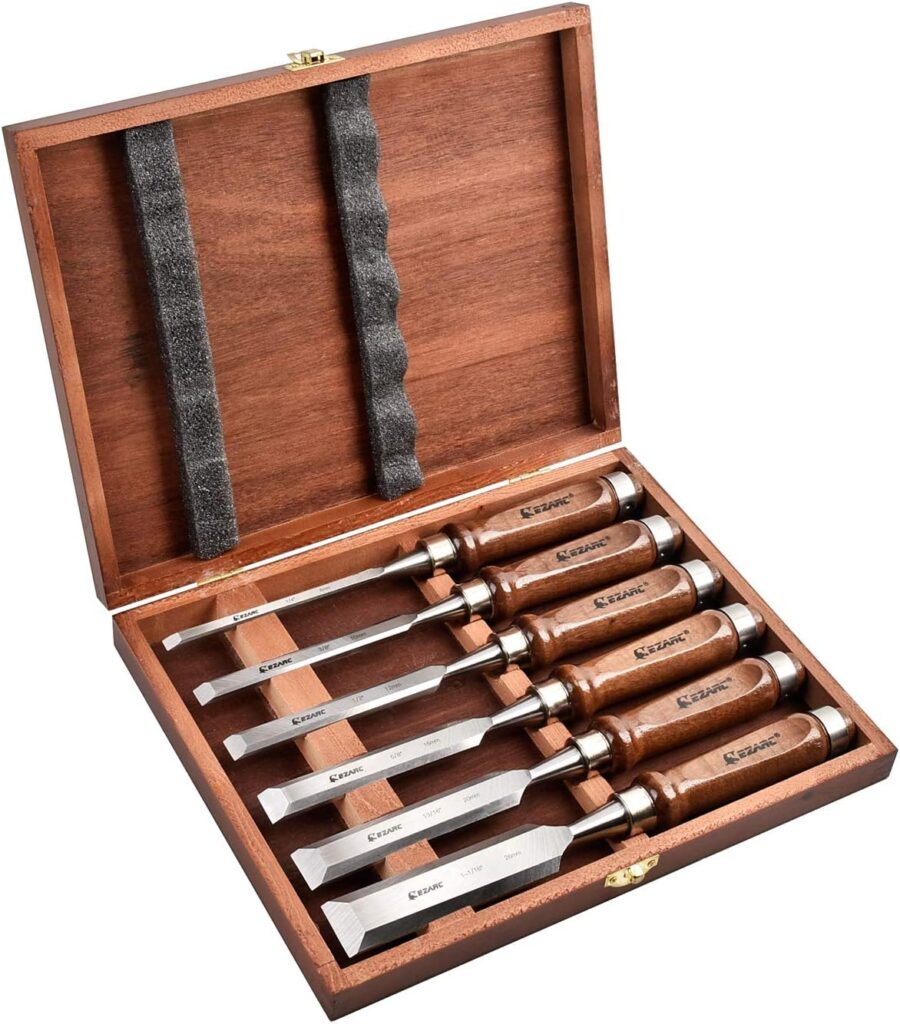
Nomi (鑿) — The Chisel
Japanese chisels are forged from laminated steel—a hard cutting edge backed by a softer body that absorbs impact. They are used primarily for cutting mortises (the female half of a joint) and for fine paring work. Like the kanna, they are sharpened on waterstones to an edge that can pare end grain cleanly.
Nokogiri (鋸) — The Saw
Japanese saws cut on the pull stroke, which keeps the blade in tension and allows it to be much thinner than a Western push-saw. The ryōba (両刃) is a double-edged saw with crosscut teeth on one side and rip teeth on the other—one tool for two types of cut. The dozuki (胴付) is a thin-bladed back-saw used for fine joinery cuts.
The Ritual of Maintenance
In Japanese woodworking, tool maintenance is not a chore. It is part of the practice. Sharpening a blade on a progression of waterstones—coarse to medium to fine to polishing—is a repetitive, meditative process that produces both a sharper edge and a calmer mind. Many carpenters describe the daily sharpening ritual as the most centering part of their work—a transition from the ordinary mind to the craftsman’s mind, similar to the way incense marks the threshold between daily life and meditation.
Related guide: Japanese Incense and Kōdō: The Ancient Art of Listening to Fragrance
The Living Tradition
Miyadaiku: The Temple Carpenters
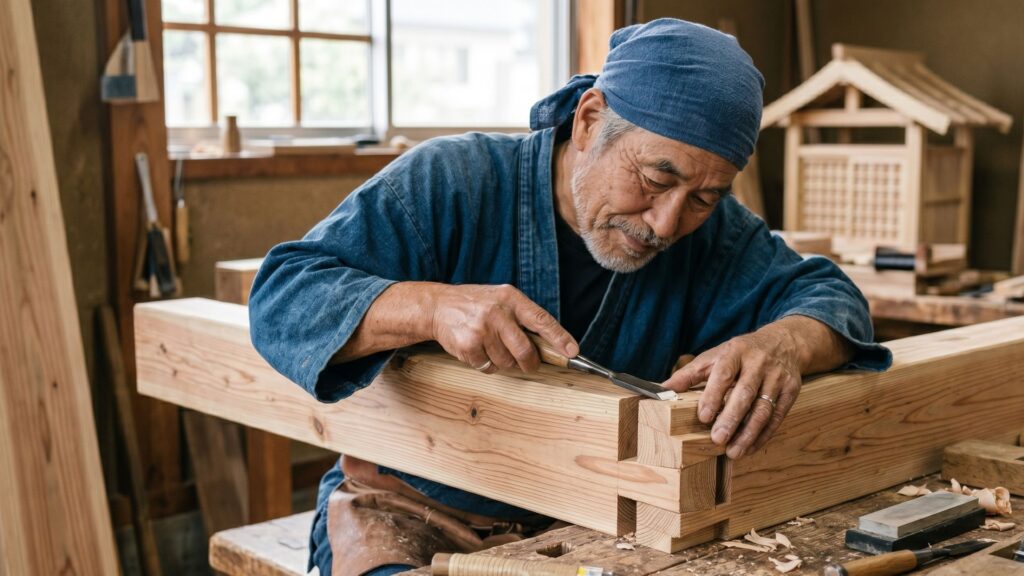
The miyadaiku (宮大工) are Japan’s temple carpenters—an elite lineage of craftspeople who maintain and restore the country’s most important wooden structures. Their training lasts a minimum of ten years, often twenty, and encompasses not only technical skill but an understanding of wood science, structural engineering, and the philosophical principles that inform every design decision.
There are currently fewer than a hundred active miyadaiku in Japan. They work without power tools—every cut is made by hand, using techniques that have been transmitted from master to apprentice for over a thousand years. When Yakushi-ji temple’s West Pagoda was reconstructed in 1981, the miyadaiku used the same tools and methods that built the original in the seventh century.
Related guide: Japanese Zen Garden Design: Principles, Symbolism, and How to Create Your Own
Modern Revival
Japanese woodworking is experiencing a global renaissance. YouTube channels demonstrating joinery techniques attract millions of views. Kumiko kits allow beginners to experience the craft without a full workshop. Woodworking schools in Japan—including programs in Kyoto, Gifu, and Hida-Takayama—now accept international students.
The appeal is not merely aesthetic. In an era of mass production and disposable goods, Japanese woodworking offers something that factory-made furniture cannot: the knowledge that a human being understood a piece of wood, respected its nature, and shaped it with tools that were themselves handcrafted. The result is not just a joint or a panel or a building. It is evidence of attention—the same evidence that defines every Japanese art form this site explores.

FAQ
Q: What is Japanese woodworking called?
A: Japanese woodworking encompasses several traditions. Miyadaiku (宮大工) refers specifically to temple carpentry. Sashimono (指物) is the tradition of furniture and box making using joinery without nails. Kumiko (組子) is the art of geometric lattice work. The broader term mokuzo (木造, “wood construction”) covers all wooden building traditions. Each tradition has its own tools, techniques, and philosophical principles, but all share the fundamental commitment to working with the wood’s natural properties rather than against them.
Q: Why does Japanese joinery use no nails?
A: Japanese joinery avoids nails for both practical and philosophical reasons. Practically, wood expands and contracts with humidity changes—nails create rigid points that resist this natural movement, leading to cracking and structural weakening over time. Interlocking joints accommodate wood movement, becoming tighter or looser with the seasons without losing integrity. Philosophically, Japanese joinery aims to connect wood using only wood—nothing foreign to the material is introduced. The result is a structure that is entirely honest about what it is made from.
Q: Can I learn Japanese woodworking without a master?
A: The fundamental techniques—basic joints, tool sharpening, kumiko patterns—can be learned through books, video instruction, and practice. Kiyosi Seike’s The Art of Japanese Joinery and Toshio Odate’s Japanese Woodworking Tools are essential references. Kumiko kits provide structured entry points. However, the subtlety of advanced joinery—reading wood grain, compensating for seasonal movement, achieving the right tolerance—traditionally requires years of apprenticeship. Many modern woodworkers combine self-study with periodic workshops or short courses at Japanese woodworking schools.
Q: What tools do I need to start Japanese woodworking?
A: A minimal starting set includes a ryōba (double-edged pull saw) for crosscuts and rip cuts, a set of nomi (chisels) in 3-4 sizes for cutting joints, a kanna (hand plane) for surface finishing, and a set of waterstones for sharpening. A marking gauge, square, and pencil complete the essential toolkit. Start with a quality ryōba saw—it is the tool you will use most, and a good Japanese saw transforms the experience of cutting wood.
Q: What is kumiko and how do I start?
A: Kumiko (組子) is the art of assembling geometric lattice patterns from small, precisely cut pieces of wood that interlock without nails or glue. Patterns range from simple grids (izutsu) to complex interlocking stars (asanoha). Starter kits are available with pre-cut pieces and pattern guides—these allow you to experience the assembly process without needing to make the precision cuts yourself. Once you understand how the patterns work, you can progress to cutting your own pieces with a dozuki saw and a simple jig.
The Joint You Cannot See
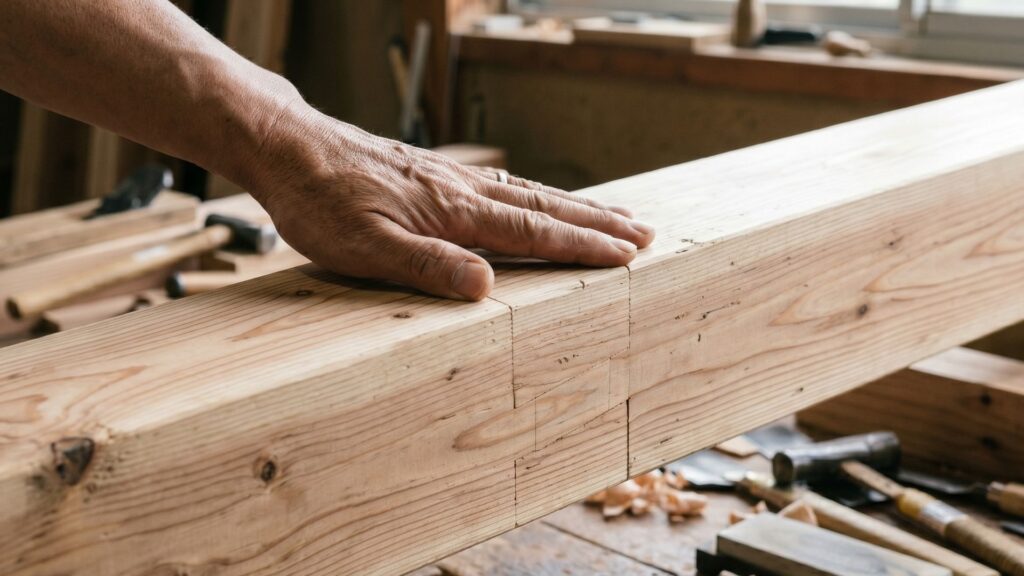
The best Japanese joinery is invisible. Two pieces of wood meet so precisely that the joint vanishes—what was separate becomes whole, and you cannot see where one timber ends and the other begins. The carpenter’s skill is measured not by what you can see but by what you cannot.
This is the same principle that runs through every art form explored on this site. The best ikebana arrangement looks like the flowers placed themselves. The best sashiko stitching becomes part of the fabric’s character. The best tea ceremony feels not like a performance but like a natural unfolding. In each case, the craft disappears into the result—and what remains is something that feels inevitable, as though it could not have been any other way.
Comprehensive guide: Wabi Sabi : The Japanese Philosophy of Finding Beauty in Imperfection
Japanese woodworking teaches this through a medium that is unforgiving and patient in equal measure. The wood does not lie. A joint cut carelessly will show its carelessness for centuries. A joint cut with attention—with the quality of listening that Nishioka described—will hold for a thousand years.
Pick up a piece of wood. Study its grain. Ask it what it wants to become.
Then put down everything unnecessary and begin.
References
- Seike, K. (1977). The Art of Japanese Joinery. Weatherhill.
- Odate, T. (1998). Japanese Woodworking Tools: Their Tradition, Spirit and Use. Linden Publishing.
- Brown, A. (1995). The Genius of Japanese Carpentry: Secrets of an Ancient Craft. Kodansha International.
- Nishioka, T., & Kohara, J. (2005). Ki ni Manabe [Learn from the Trees]. Shogakukan.
- Sumiyoshi, T., & Matsui, G. (1991). Wood Joints in Classical Japanese Architecture. Kajima Institute Publishing.
- Coaldrake, W. H. (1990). The Way of the Carpenter: Tools and Japanese Architecture. Weatherhill.