A Universe in a Bowl of Tea
Four hundred years ago, a tea master knelt in a room no larger than two tatami mats. The walls were rough clay. The only ornament was a single flower in a bamboo vase. The tea bowl in his hands was not fine porcelain from China but a simple, irregular piece of Raku pottery—dark, uneven, deliberately imperfect.
That tea master was Sen no Rikyū (千利休, 1522–1591), and the ceremony he refined would transform a Chinese drink into one of Japan’s most profound spiritual practices. What Rikyū understood—and what most descriptions of the Japanese tea ceremony fail to convey—is that chadō (茶道, “the Way of Tea”) is not primarily about tea. It is about awakening.
Every element of the ceremony—the architecture of the tea room, the choice of utensils, the precise sequence of movements, the silence between host and guest—is an expression of Zen Buddhist philosophy made tangible. The tea ceremony is, in essence, Zen you can taste.
Comprehensive guide: What Is Zen Buddhism?
This guide explores why the Japanese tea ceremony is inseparable from Zen, how Sen no Rikyū’s revolution created one of the world’s most refined art forms, what actually happens during a ceremony, and where you can experience it yourself—whether in Kyoto, Tokyo, or your own home.
From China to Zen: A History of Tea as Spiritual Practice
Tea Comes to Japan
Tea arrived in Japan from China in the early 9th century, brought by Buddhist monks returning from study abroad. The monk Eisai (栄西, 1141–1215)—who also introduced Rinzai Zen to Japan—is credited with popularizing tea cultivation and consumption. In his treatise Kissa Yōjōki (“Drinking Tea for Health”), Eisai argued that tea was not merely a pleasant beverage but a medicine for body and mind, essential to the discipline of Zen practice.
This link between tea and Zen was present from the very beginning. Chinese Chan (Zen) monks drank tea to maintain alertness during long meditation sessions. When tea culture crossed to Japan, it carried this contemplative DNA with it.
The Birth of Wabi-Cha: Rikyū’s Revolution
For centuries after its introduction, Japanese tea culture followed Chinese aesthetics—prizing elaborate Chinese tea wares, formal gatherings, and displays of wealth and connoisseurship. The turning point came in the 15th and 16th centuries, when a succession of tea masters—Murata Jukō, Takeno Jōō, and finally Sen no Rikyū—radically reimagined tea through the lens of Zen.
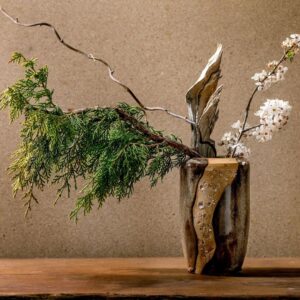
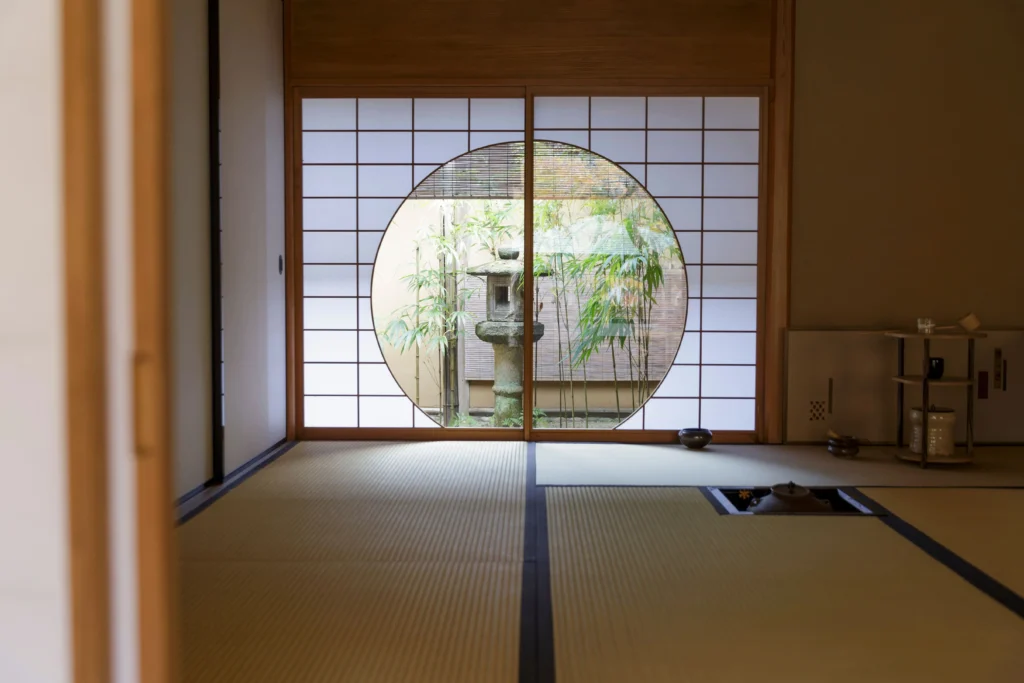
Rikyū’s innovation was wabi-cha (侘び茶)—tea infused with the spirit of wabi, the aesthetic of rustic simplicity, poverty, and the beauty found in what is humble and imperfect. Where his predecessors had served tea in grand rooms with imported Chinese ceramics, Rikyū built tiny tea rooms (sōan, grass huts) with low entrances that forced even samurai lords to bow. He replaced Chinese porcelain with rough, hand-shaped Raku bowls. He reduced the flower arrangement to a single stem. He stripped away everything that was not essential.
Comprehensive guide: Wabi-Sabi Philosophy
What remained was not emptiness but intensity. By eliminating distraction, Rikyū created a space where every gesture, every sound, every silence carried meaning. The act of preparing and sharing a bowl of tea became, in his hands, a complete Zen practice—a living expression of presence, impermanence, and the sacredness of the ordinary moment.
Four Principles: The Zen Heart of Tea
Rikyū distilled the spirit of the tea ceremony into four principles, each rooted in Zen teaching:
Wa (和) — Harmony
Harmony between host and guest, between the utensils and the season, between the human and the natural. Nothing in the tea room should clash or compete for attention. The scroll in the alcove reflects the season. The flowers echo the mood. The tea bowl complements the sweets. This principle extends beyond aesthetics into human relationship—host and guest creating something together that neither could create alone.
Kei (敬) — Respect
Mutual respect pervades every aspect of the ceremony. The host respects the guest through meticulous preparation—cleaning the tea room, selecting each utensil with care, preparing the tea with full attention. The guest respects the host by arriving with openness, admiring the utensils, and receiving the tea with gratitude. The low entrance (nijiriguchi) of a traditional tea room embodies this principle physically: everyone, regardless of social rank, must bow to enter.
Sei (清) — Purity
Purity here is not sterile cleanliness but a clearing of the mind. The ritual of purifying the tea utensils at the beginning of each ceremony is an outer expression of an inner act—letting go of preoccupation, judgment, and distraction. When the host wipes the tea scoop and rinses the bowl, they are also wiping and rinsing the mind.
Comprehensive guide: How to Practice Zazen at Home
Jaku (寂) — Tranquility
The deepest principle, and the most Zen. Jaku does not mean mere quietness—it points to the profound stillness that arises when harmony, respect, and purity are fully realized. It is the silence that remains after the last sip of tea, the stillness in which host and guest share something beyond words. In Zen terms, jaku is the direct experience of the present moment, unmediated by thought.
These four principles are not rules imposed from outside. They are qualities that emerge naturally when tea is prepared and received with complete attention—which is precisely what makes the tea ceremony a form of Zen practice rather than mere cultural performance.
Related guide: Ikebana: The Japanese Art of Flower Arrangement and Its Zen Roots
Inside the Tea Room: What Happens During a Ceremony
The Steps of Temae
The formal procedures of preparing tea are called temae (点前). While there are hundreds of variations depending on the school (Urasenke, Omotesenke, Mushanokōjisenke), season, and occasion, the essential flow follows a consistent pattern. Understanding these steps transforms observation from confusion into appreciation.
Entering the tea room. Guests enter through the nijiriguchi—a small, low doorway requiring everyone to bow and crawl through. This act of humbling oneself marks the transition from the outside world into the sacred space of tea. Inside, guests admire the hanging scroll (kakejiku) in the tokonoma alcove and the flower arrangement, both chosen specifically for this gathering.
Purification of utensils. The host enters carrying the tea utensils and performs a precise sequence of cleansing—wiping the tea container (natsume or chaire) and tea scoop (chashaku) with a silk cloth (fukusa), rinsing the tea whisk (chasen) and bowl (chawan) with hot water. Every movement is deliberate, unhurried, and performed with meditative attention.
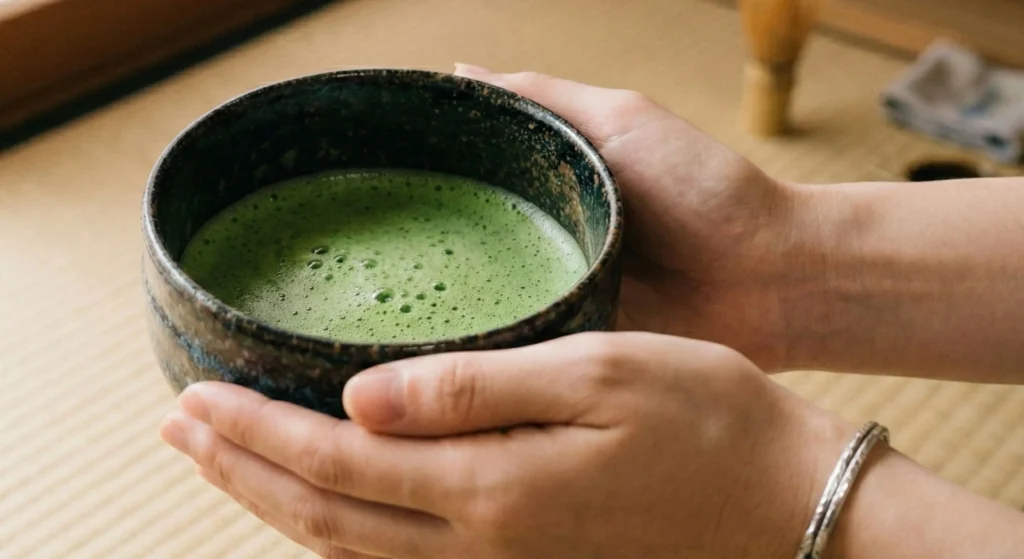
Preparing the tea. The host places powdered matcha into the warmed bowl, ladles hot water from the iron kettle (kama), and whisks the tea with the bamboo chasen until a fine, jade-green froth forms. The sound of whisking in a quiet room is one of the ceremony’s most distinctive sensory moments.
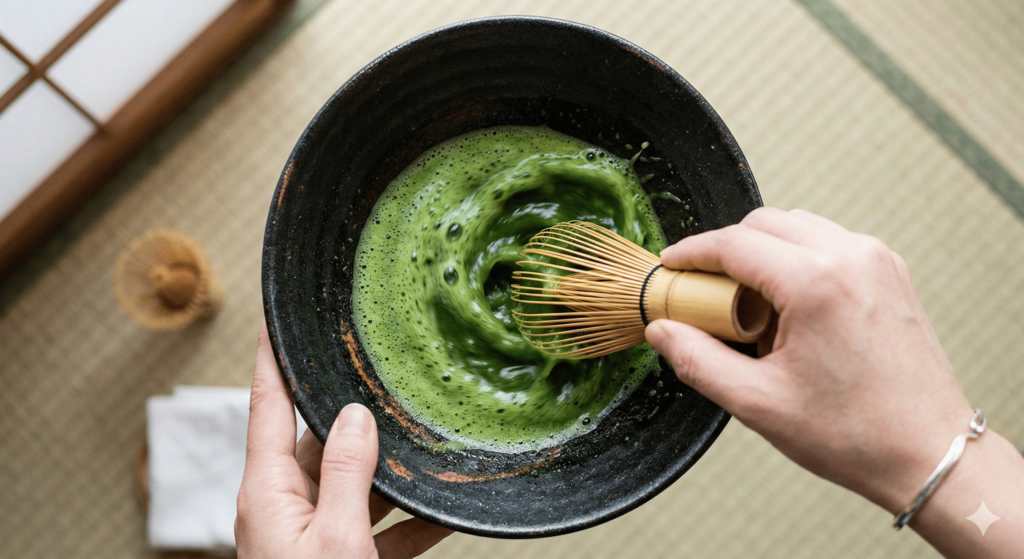
Receiving the tea. The host places the bowl in front of the main guest (shōkyaku) with its front facing the guest. The guest bows, picks up the bowl with the right hand, places it on the left palm, and rotates it clockwise two or three turns to avoid drinking from its “front” face—an act of humility. The guest drinks the tea in several sips, wipes the rim, and rotates the bowl back before returning it.
Admiring the utensils. After drinking, guests may ask to examine the tea bowl, tea container, and scoop more closely. This is not idle curiosity—it is an expression of kei (respect) for the host’s selections and the craftsmanship of each piece. The tea bowl, in particular, is often the ceremony’s aesthetic centerpiece, chosen for its texture, glaze, and the way it feels in the hands.
Closing. The host cleans the utensils once more, and guests express appreciation. The gathering ends as quietly as it began.
Ichigo Ichie: One Time, One Meeting
Perhaps the most important concept underlying every tea ceremony is ichigo ichie (一期一会)—”one time, one meeting.” This phrase, attributed to the tea master Ii Naosuke, captures the Zen awareness that this particular gathering of these particular people in this particular moment will never occur again. Even if the same host serves the same guest in the same room tomorrow, it will be a different gathering—because the moment is different, the weather is different, and the people themselves have changed.
This awareness transforms the ceremony from ritual into something alive. It is impermanence made not sorrowful but luminous.
Related guide: Kintsugi: The Art of Golden Repair and Finding Beauty in Broken Things
Experiencing Tea Ceremony in Japan
Kyoto: The Spiritual Home of Tea
Kyoto is where Rikyū lived, where the great tea schools were founded, and where the tradition remains most deeply rooted. Options range from formal multi-hour ceremonies to accessible introductory experiences.
For depth:
- Urasenke Chadō Research Center (Kyoto): The headquarters of Japan’s largest tea school occasionally offers observation opportunities and special programs.
- Tai-an Tea Room (Myōki-an Temple, Yamazaki): The only surviving tea room attributed to Rikyū himself—a National Treasure. Visits require advance reservation and are limited, but seeing this tiny, two-mat room is a pilgrimage for tea enthusiasts.
For accessible experiences:
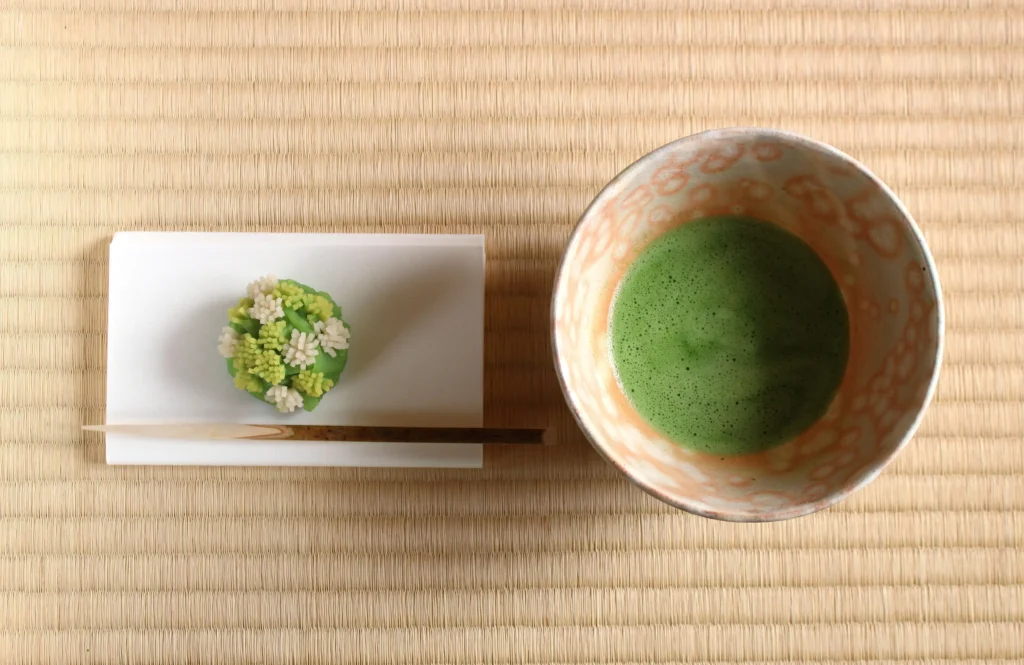
Tourist-friendly tea ceremony experiences are offered throughout Kyoto, typically lasting 45–90 minutes and including English explanation, participation in whisking your own matcha, and sampling traditional sweets (wagashi).
Related guide: 10 Must-Visit Zen Temples in Kyoto
Tokyo: Tradition in the Modern Capital
Tokyo’s tea ceremony scene is smaller than Kyoto’s but offers excellent options, particularly for visitors with limited time.
Recommended:
- Happo-en Garden (Shirokanedai): A stunning traditional garden with a tea house offering accessible ceremonies in English.
- Shinjuku Gyoen area: Several private tea rooms offer intimate experiences by reservation.
Related guide: Shojin Ryori: The Zen Philosophy Behind Buddhist Cuisine
Starting Your Own Practice at Home
You do not need a tea room, a kimono, or years of training to bring the spirit of the tea ceremony into your daily life. The essence of chadō is attention—and attention can be practiced anywhere.
What You Need
At minimum: powdered matcha, a bowl, hot water, and a bamboo whisk (chasen). The chasen is worth investing in—it transforms the preparation from stirring into whisking, creating the froth that defines properly made matcha.
A Simple Daily Tea Practice
- Prepare your space. Clear a small area of clutter. This act of clearing is itself a practice—sei (purity) in miniature.
- Heat the water. Not boiling—approximately 80°C (175°F). Listen to the kettle. Notice the shift from silence to the first whisper of bubbling.
- Sift the matcha. Place 1–2 scoops (about 2 grams) of matcha into your bowl through a small sieve. This removes clumps and creates a smoother tea.
- Pour and whisk. Add about 70ml of hot water. Whisk briskly in a W-shaped motion until a fine foam forms on the surface.
- Drink. Hold the bowl in both hands. Feel its warmth. Take three sips. Notice the taste—vegetal, slightly bitter, lingering sweetness.
The entire process takes three minutes. But if those three minutes are given your full attention, they become something larger—a small ceremony of your own, a daily encounter with the Zen spirit of tea.
Comprehensive guide: Zen Mindfulness in the Modern Workplace
FAQ
Q: What is the relationship between Zen and the tea ceremony?
A: The Japanese tea ceremony developed directly under Zen Buddhist influence. Zen monks brought tea from China, and Zen aesthetics—simplicity, presence, impermanence, finding depth in the ordinary—shaped the ceremony’s evolution. Sen no Rikyū, the most influential tea master, studied Zen and infused the practice with Zen philosophy through his concept of wabi-cha. The ceremony is considered a form of moving Zen meditation.
Q: How long does a traditional Japanese tea ceremony last?
A: A full formal tea ceremony (chaji) lasts approximately four hours and includes a multi-course kaiseki meal, thick tea (koicha), thin tea (usucha), and a break in a garden. More common is a shorter chakai gathering, lasting 45 minutes to one hour, which includes thin tea and sweets. Tourist experiences typically run 60–90 minutes.
Q: What is the difference between matcha and regular green tea?
A: Matcha is made from shade-grown tea leaves that are stone-ground into a fine powder. Unlike regular green tea (sencha), where leaves are steeped and removed, matcha powder is whisked directly into the water—meaning you consume the entire leaf. This gives matcha a more concentrated flavor and higher levels of L-theanine, the amino acid associated with calm alertness.
Q: Can I experience a tea ceremony without speaking Japanese?
A: Absolutely. Many tea ceremony experiences in Kyoto and Tokyo are designed specifically for international visitors and conducted in English. Even at traditional ceremonies in Japanese, the experience is primarily visual and sensory—language is secondary to the direct experience of the ritual.
Q: What should I wear to a tea ceremony?
A: Modest, comfortable clothing in muted colors is appropriate. Avoid strong perfume (it interferes with the subtle scent of tea and incense), remove watches and jewelry that could scratch the tea bowl, and wear clean socks—you will be removing your shoes.
The Last Sip
There is a Zen saying: Nichi nichi kore kōjitsu (日日是好日)—”Every day is a good day.” It does not mean that every day is pleasant. It means that every day, fully met, is complete.
The tea ceremony teaches this through the body rather than the mind. When you hold a warm bowl in your palms, taste the bright bitterness of matcha, and sit in shared silence with another person, you are not thinking about impermanence or non-attachment or Zen philosophy. You are living them.
Rikyū was once asked to summarize the essence of tea. His answer was disarmingly simple: “Boil water. Make tea. Drink it.” His student protested that anyone could understand that. Rikyū replied: “If you truly can, I will become your student.”
The invitation of the tea ceremony is the same invitation that Zen has always offered: nothing extraordinary. Just this moment, fully received.
Comprehensive guide: How to Practice Zazen at Home
References
- Okakura, K. (1906). The Book of Tea. Putnam’s Sons.
- Sen, S. XV. (1979). Tea Life, Tea Mind. Weatherhill.
- Tanaka, S. (1998). The Tea Ceremony. Kodansha International.
- Suzuki, D. T. (1959). Zen and Japanese Culture. Princeton University Press.
- Hirota, D. (1995). Wind in the Pines: Classic Writings of the Way of Tea as a Buddhist Path. Asian Humanities Press.
- Koren, L. (1994). Wabi-Sabi for Artists, Designers, Poets & Philosophers. Imperfect Publishing.
- Plutschow, H. E. (1986). Historical Chanoyu. The Japan Times.