Introduction
Imagine standing before a sea of white gravel, fifteen ancient stones rising like islands from its carefully raked surface. No sound but wind through pine branches. No movement but shadows shifting across weathered rock. This is Ryōan-ji—perhaps the world’s most famous Zen garden—and just one of the extraordinary temple experiences awaiting you in Kyoto.
Kyoto served as Japan’s imperial capital for over a thousand years, and during this time it became the epicenter of Zen Buddhism in Japan. Today, the city preserves over 1,600 Buddhist temples, with dozens representing the Zen tradition that has profoundly shaped Japanese culture, aesthetics, and philosophy.
Comprehensive guide : the Zen philosophy that shaped Japanese culture
But these aren’t just architectural monuments or historical artifacts. Zen temples are living spaces designed for awakening—each stone placed with intention, each garden raked in meditation, each hall built to cultivate presence. Walking through them offers something no book can provide: direct, embodied experience of Zen’s essence.
Comprehensive guide : the wabi-sabi aesthetic of finding beauty in imperfection
This guide explores ten essential Zen temples in Kyoto, carefully selected for their historical significance, architectural beauty, and contemplative power. You’ll discover what makes each temple unique, practical visiting information, and insider tips for the most meaningful experience.
Whether you seek spiritual practice, architectural beauty, or cultural understanding, these temples offer profound encounters with Zen tradition. Let’s begin your journey.
Ryōan-ji Temple (龍安寺)
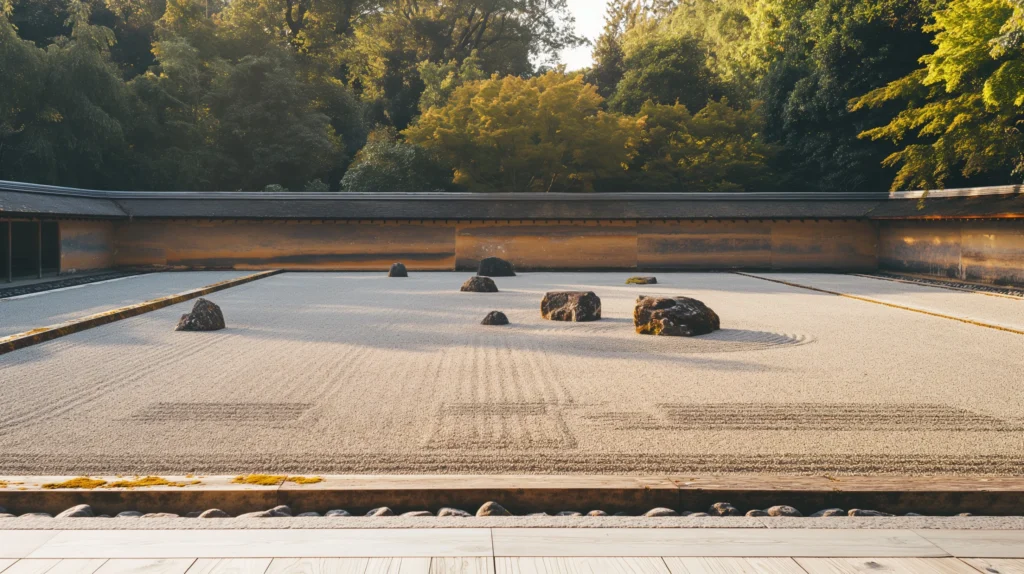
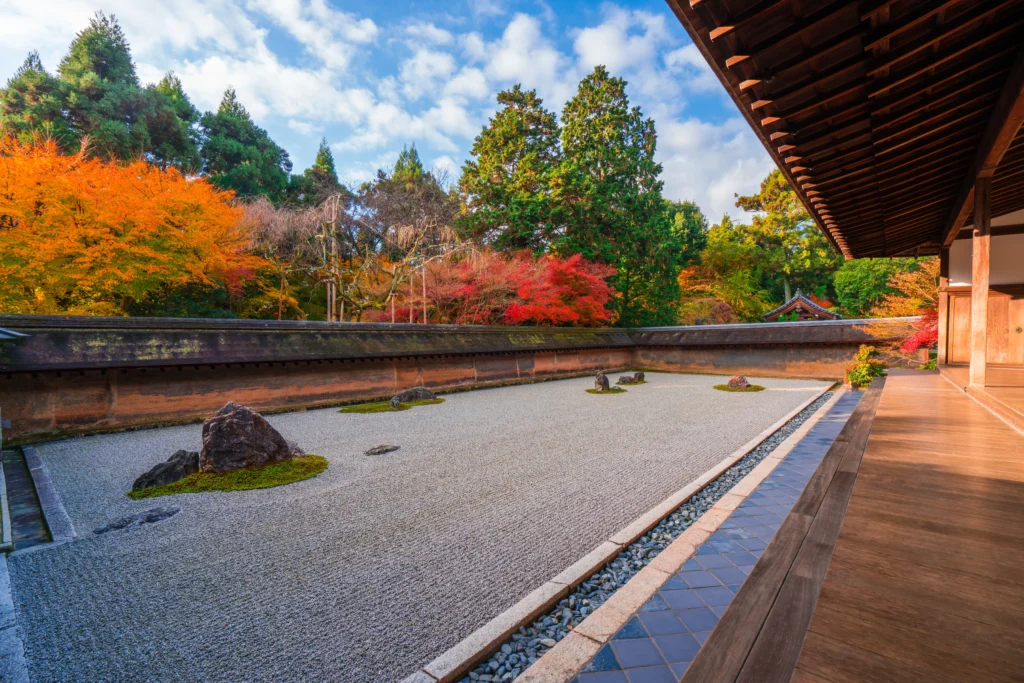
Ryōan-ji’s enigmatic rock garden: 15 stones in 5 groups that have inspired contemplation for 500 years
Founded: 1450
Best for: The world’s most iconic Zen rock garden
Visit Duration: 45-60 minutes
Admission: ¥500
What Makes It Special
Ryōan-ji’s rock garden stands as Zen art’s ultimate expression of simplicity. Fifteen stones arranged in five groups across a rectangle of white gravel, surrounded by an earthen wall—nothing more. Yet this stark composition has captivated viewers for five centuries.
Comprehensive guide : the sophisticated principles of Zen stone arrangement
The garden’s genius lies in what it doesn’t show. From any viewing position on the wooden veranda, at least one stone remains invisible—a deliberate design creating perpetual incompleteness. Is it a tiger carrying cubs across a river? Islands in an ocean? Mountain peaks through clouds? The designer left no explanation, and this ambiguity is precisely the point.
What to See
The Rock Garden: Sit on the veranda and simply observe. Notice how raked patterns create visual flow, how stones seem to float on gravel, how shadows shift with the sun. The garden changes with each viewing—different times of day, different seasons, different states of mind.
The Tsukubai: Behind the main temple, find the stone water basin inscribed with four characters teaching profound wisdom: 吾唯足知 “I know only contentment.”
Visiting Information
- Address: 13 Ryoanji Goryonoshitamachi, Ukyo Ward, Kyoto 616-8001
- Hours: 8:00-17:00 (Dec-Feb: 8:30-16:30)
- Access: Bus #59 from Kyoto Station to Ryoanji-mae (50 min)
- Best time: Opening hour (8:00 AM) for minimal crowds
- Photography: Allowed in garden area
Insider Tip: Visit late November through January—autumn crowds gone, occasional snow creates magical scenery, yet temperatures remain manageable.
Related guide: Famous Zen Gardens in Kyoto: A Visitor’s Guide to Sacred Landscapes
Daitoku-ji Temple Complex (大徳寺)
Founded: 1319
Best for: Multiple sub-temples with diverse garden styles
Visit Duration: 2-3 hours
Admission: ¥400-600 per sub-temple
What Makes It Special
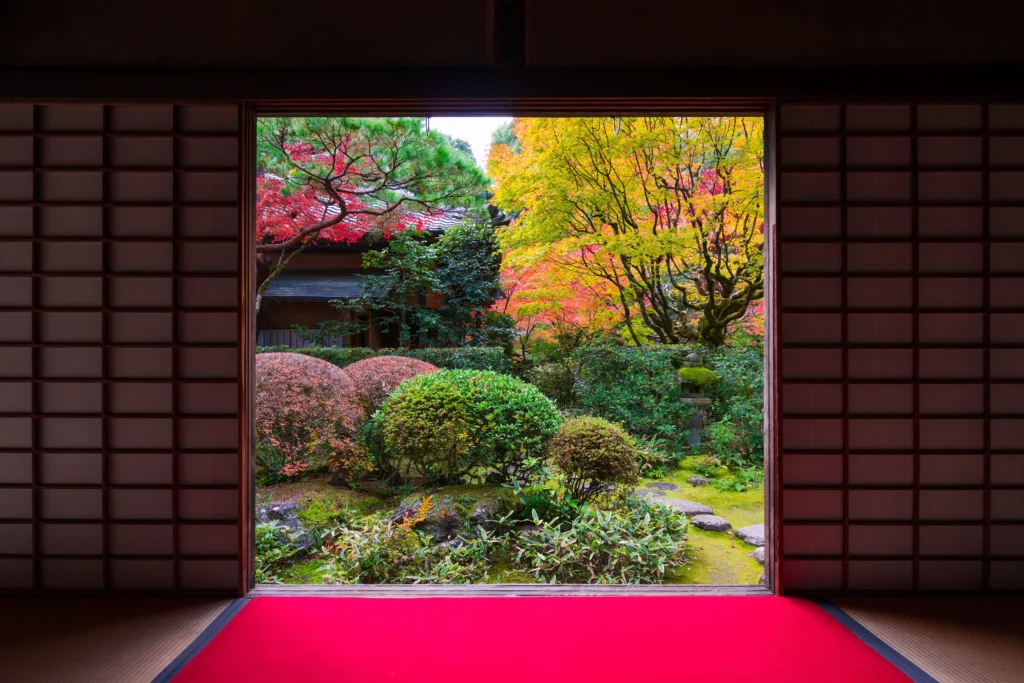
Daitoku-ji represents where Zen intersected with Japanese high culture. The temple complex contains over twenty sub-temples, though only seven open regularly to visitors. Each maintains distinct character while sharing Zen philosophical foundations. Tea master Sen no Rikyū studied here, cementing the profound relationship between Zen and tea ceremony.
Comprehensive guide : the tea ceremony tradition deeply connected to Zen practice
What to See
Daisen-in (大仙院): The jewel of Daitoku-ji, featuring one of Japan’s finest karesansui gardens. Created in the early 16th century, this garden tells a story: water emerging from mountain source, flowing through life’s journey (represented by a boat-shaped stone navigating “rapids”), eventually reaching the vast ocean. It’s a spiritual path rendered in stone and gravel.
Kōtō-in (高桐院): Perhaps the most atmospheric sub-temple, with a maple-lined approach creating a natural tunnel. The garden emphasizes seasonal change—spectacular autumn colors, serene winter snow scenes.
Zuihō-in (瑞峯院): Features both traditional rock garden and innovative modern design, demonstrating Zen’s adaptability.
Visiting Information
- Address: 53 Murasakino Daitokuji-cho, Kita Ward, Kyoto 603-8231
- Hours: Individual sub-temples vary; typically 9:00-16:30
- Access: Bus to Daitokuji-mae (30 min from Kyoto Station)
- Best time: Weekday mornings, autumn for Kōtō-in maples
- Photography: Policies vary; generally allowed outdoors
Insider Tip: Visit Daisen-in first (most famous), then Kōtō-in if autumn, finish with Zuihō-in. Allow 30-45 minutes per temple. Rainy weekday mornings offer near-solitude.
Nanzen-ji Temple (南禅寺)
Founded: 1291
Best for: Grand architecture and borrowed scenery garden
Visit Duration: 1-1.5 hours
Admission: Grounds free; Hōjō garden ¥600; Sanmon gate ¥600
What Makes It Special
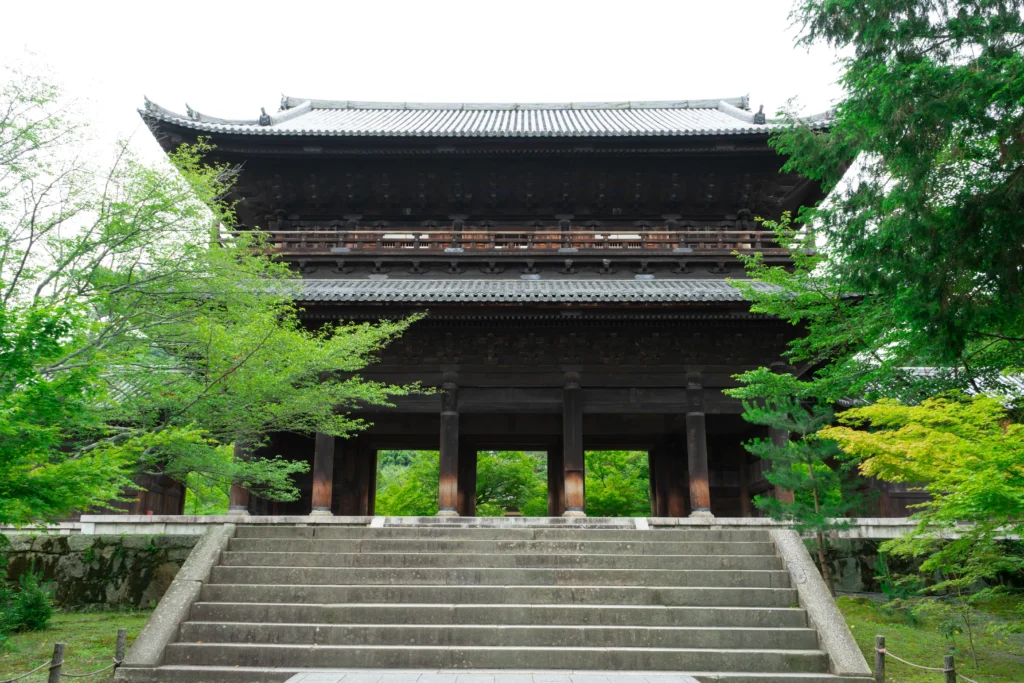
Nanzen-ji holds the highest rank among Kyoto’s five great Rinzai Zen temples. Emperor Kameyama established it after abdicating to pursue Zen practice, giving the temple tremendous prestige reflected in its monumental scale. Unlike intimate meditation gardens elsewhere, Nanzen-ji impresses through architectural grandeur.
What to See
Sanmon Gate: The massive two-story gate stands 22 meters tall. Climbing the steep stairs rewards with expansive views and ornate interior ceiling paintings—unusual decoration for Zen, reflecting the gate’s memorial function.
Hōjō Garden: The abbot’s quarters face a landscape garden incorporating shakkei (borrowed scenery), framing the Higashiyama mountains in the distance as part of the composition.
Comprehensive guide : the shakkei technique of incorporating distant landscapes
Suirokaku Aqueduct: A surprising Roman-style brick aqueduct from 1890 cuts through temple grounds, creating fascinating contrast between Meiji-era engineering and Zen architecture.
Visiting Information
- Address: 86 Nanzenji Fukuchicho, Sakyo Ward, Kyoto 606-8435
- Hours: 8:40-17:00 (Dec-Feb: 8:40-16:30)
- Access: Subway Tozai Line to Keage Station (10 min walk)
- Best time: Early morning or late afternoon
- Photography: Allowed throughout
Insider Tip: Nanzen-ji sits at the southern end of the Philosopher’s Path. After visiting, walk north to Ginkaku-ji (30-40 minutes) through one of Kyoto’s loveliest canal paths.
Ginkaku-ji (Silver Pavilion) (銀閣寺)
Founded: 1482
Best for: Wabi-sabi aesthetic perfection and sand sculptures
Visit Duration: 45-60 minutes
Admission: ¥500
What Makes It Special
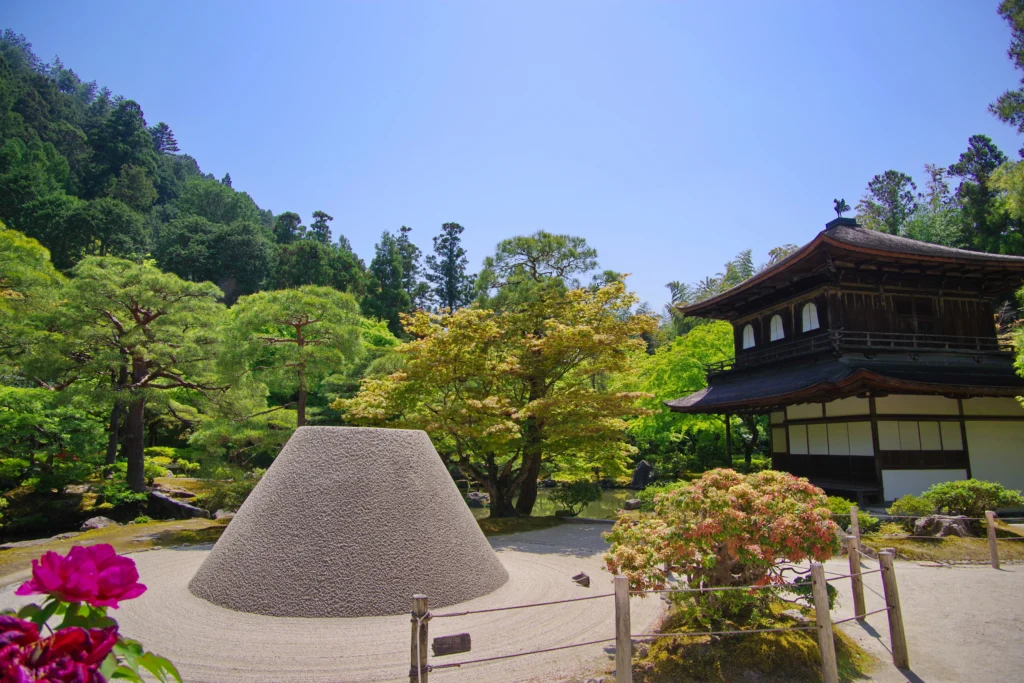
Despite its name “Silver Pavilion,” this temple’s building was never covered in silver. Yet its understated elegance arguably surpasses the Golden Pavilion’s ostentatious beauty. Shogun Ashikaga Yoshimasa built it as his retirement villa, cultivating the arts that would define Japanese aesthetics: tea ceremony, flower arrangement, landscape gardening—all guided by Zen principles emphasizing rustic simplicity.
Comprehensive guide : wabi-sabi aesthetic principles of restraint and natural beauty
What to See
The Silver Pavilion: The two-story building’s beauty lies not in decoration but in proportion, exposed wood grain, and harmonious relationship with surroundings—wabi-sabi architecture perfected.
Ginshadan and Kōgetsudai: Two sand sculptures maintained daily by monks. The raked “sea of silver sand” and precisely sculpted cone demonstrate meditation in action—the repetitive work of raking becoming spiritual practice.
Moss Garden: The prescribed path leads uphill through moss garden to a viewing platform overlooking the entire complex, creating a designed moment of spatial perspective.
Visiting Information
- Address: 2 Ginkakujicho, Sakyo Ward, Kyoto 606-8402
- Hours: 8:30-17:00 (Dec-Feb: 9:00-16:30)
- Access: Bus #5, #17, #32, #100 to Ginkakuji-michi (5 min walk; 40 min from Kyoto Station)
- Best time: Exactly at opening (8:30 AM)
- Photography: Allowed throughout
Insider Tip: Arrive at opening for the first 30-45 minutes of relative peace. Autumn weekends become overwhelmingly crowded by 10:00 AM. After snowfall (rare but magical), the temple offers special early opening.
Tōfuku-ji Temple (東福寺)
Founded: 1236
Best for: Modern Zen garden design and autumn foliage
Visit Duration: 1-1.5 hours
Admission: Hōjō gardens ¥500; Tsūten-kyō bridge ¥600; combined ¥1,000
What Makes It Special
Tōfuku-ji’s four revolutionary gardens, created in 1939 by landscape architect Shigemori Mirei, bridge traditional Zen aesthetics with modernist abstraction. These gardens demonstrate Zen’s continuing vitality—respecting ancient principles while fearlessly innovating.
What to See
South Garden: Seven stones arranged representing the Big Dipper constellation, set in raked gravel with five moss-covered mounds. The composition balances traditional elements with modernist abstraction.
West Garden: A stunning checkerboard alternating satsuki azalea squares with gravel. In early summer, the azaleas bloom in geometric pink precision.
North Garden: Checkerboard pattern alternating moss with cut stones (repurposed temple foundation stones—Shigemori found beauty in humble materials).
Tsūten-kyō Bridge: In autumn, this covered bridge spans a valley of over 2,000 maple trees creating an ocean of red foliage—one of Kyoto’s most spectacular seasonal sights.
Visiting Information
- Address: 15-778 Honmachi, Higashiyama Ward, Kyoto 605-0981
- Hours: 9:00-16:00 (Nov-early Dec: 8:30-16:00; Dec-Mar: 9:00-15:30)
- Access: JR Nara Line to Tōfukuji Station (5 min walk)
- Best time: Winter or early summer; avoid mid-late November crowds
- Photography: Allowed in gardens; restricted on bridge during autumn peak
Insider Tip: Visit in January—the checkerboard gardens with snow create striking monochrome patterns. The west garden’s azalea bloom (May-June) offers colorful alternative to autumn.
Kennin-ji Temple (建仁寺)
20Founded: 1202
Best for: Central location (near Gion) and Zen art
Visit Duration: 45-60 minutes
Admission: ¥600
What Makes It Special
Kennin-ji holds distinction as Kyoto’s oldest Zen temple, founded by the monk Eisai who introduced both Zen Buddhism and tea cultivation from China. Its location in Gion makes it easily accessible, yet it maintains surprising tranquility despite surrounding urban energy.
What to See
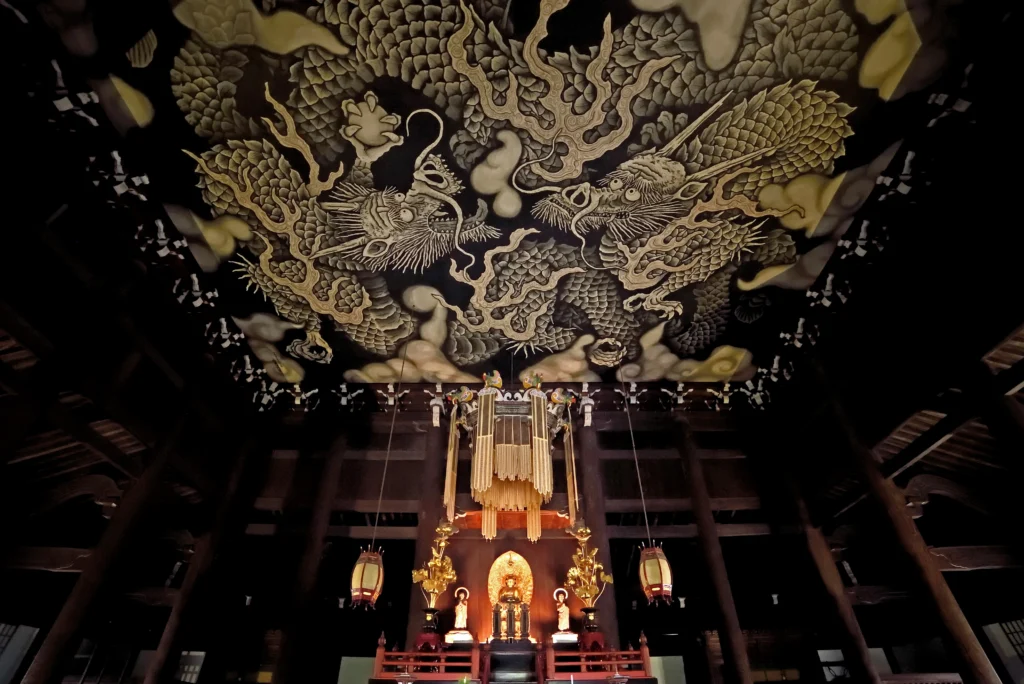
Twin Dragons Ceiling: The Dharma Hall features an enormous ceiling painting (11.4 x 15.7 meters) of twin dragons completed in 2002. While modern, this masterwork demonstrates Zen’s continuing vitality in contemporary art.
○△□ Garden: Minimalist composition using three fundamental geometric shapes representing circle (emptiness), triangle (dynamic action), and square (stability)—abstract concepts rendered in concrete form.
Wind and Thunder God Screens: Reproductions of Tawaraya Sōtatsu’s famous folding screens showing Zen temples’ role in preserving broader Japanese cultural heritage.
Visiting Information
- Address: 584 Komatsucho, Higashiyama Ward, Kyoto 605-0811
- Hours: 10:00-17:00 (last entry 16:30)
- Access: 7 min walk from Gion-Shijo Station (Keihan Line)
- Best time: Morning or late afternoon
- Photography: Allowed in garden areas
Insider Tip: Perfect pairing with Gion exploration. Visit temple in morning or late afternoon, explore Gion’s streets and tea houses in between. Single admission includes all buildings and gardens—excellent value.
Tenryū-ji Temple (天龍寺)
Founded: 1339
Best for: Borrowed scenery garden and Arashiyama location
Visit Duration: 1 hour
Admission: Garden ¥500; Garden + buildings ¥800
What Makes It Special
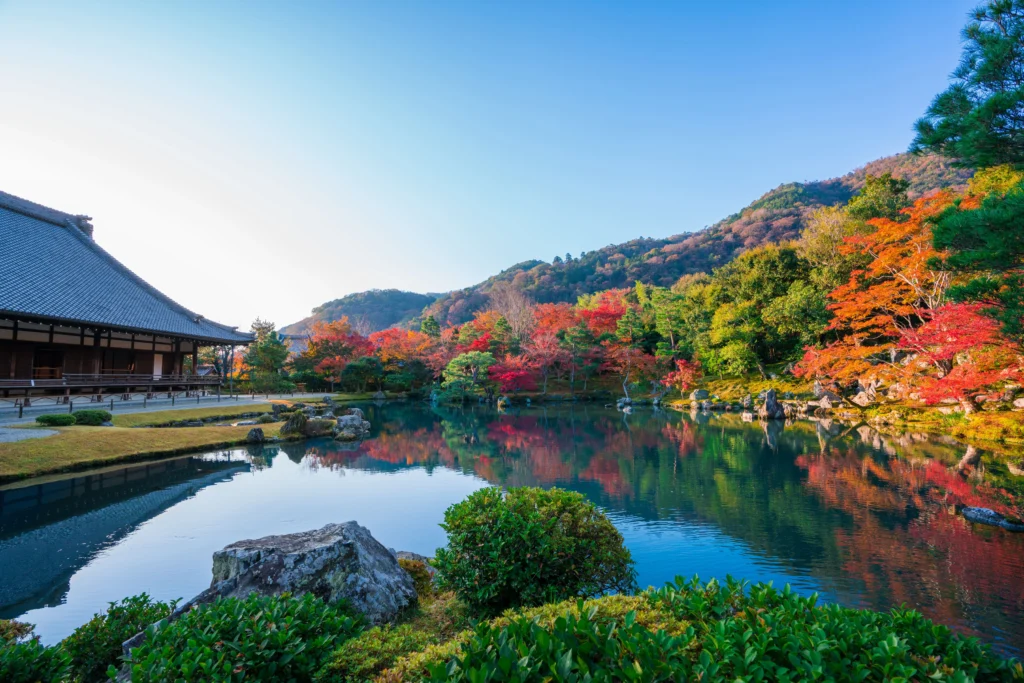
Tenryū-ji’s garden, designed by Zen master Musō Soseki, masterfully demonstrates shakkei (borrowed scenery), incorporating Arashiyama’s mountains into its composition. The garden frames distant Mount Arashi as if painted backdrop, creating seamless integration between temple garden and natural landscape.
What to See
Sogenchi Garden: The pond represents ocean or great lake, with stones arranged as islands. Strategic placement creates depth, making the compact garden feel expansive. The garden transforms dramatically with seasons—spring cherry blossoms, summer lotus, autumn maples, winter snow.
Bamboo Grove Path: Walking north from the temple leads directly into Arashiyama’s famous bamboo grove—towering green stalks creating natural cathedral.
Visiting Information
- Address: 68 Susukinobabacho, Saga-Tenryuji, Ukyo Ward, Kyoto 616-8385
- Hours: 8:30-17:00 (Oct 21-Mar 20: closes 16:30)
- Access: JR Sagano Line to Saga-Arashiyama Station (10 min walk)
- Best time: Early morning (8:30 AM); avoid autumn weekends
- Photography: Allowed
Insider Tip: Arashiyama becomes extremely crowded, especially autumn. Arrive by 8:30 AM opening for best experience. Early December offers autumn color with fewer crowds than peak mid-November.
Shōkoku-ji Temple (相国寺)
Founded: 1382
Best for: Avoiding crowds; authentic monastery experience
Visit Duration: 1 hour (2-3 hours with museum)
Admission: Grounds free; Hatto (special openings) ¥800; Museum ¥800
What Makes It Special
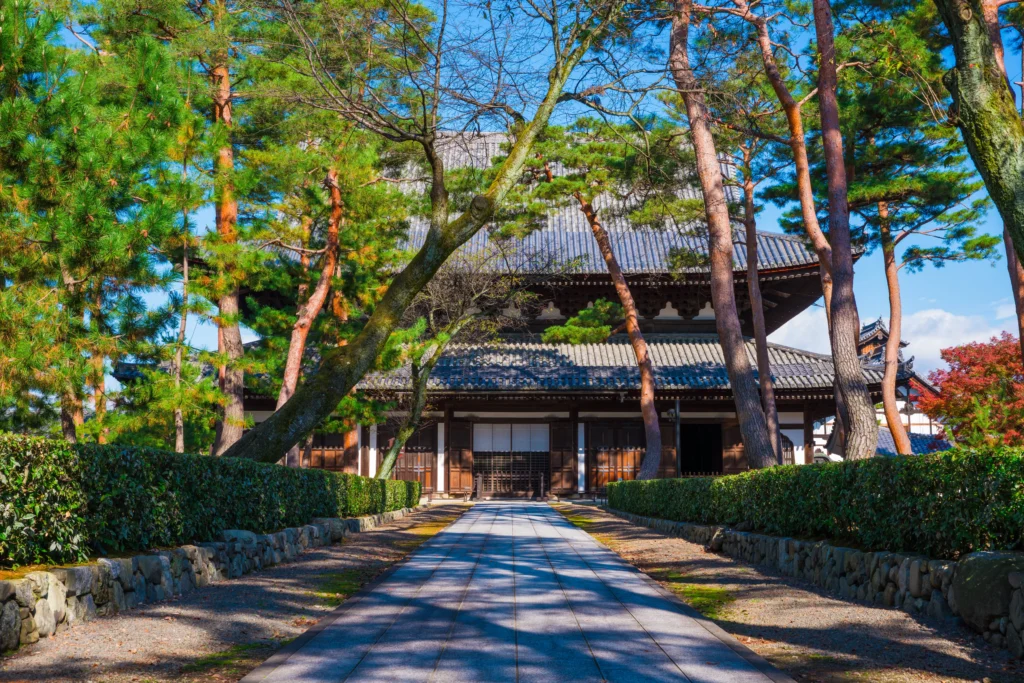
Shōkoku-ji is parent temple to Kinkaku-ji (Golden Pavilion) and Ginkaku-ji (Silver Pavilion), yet receives relatively few visitors—making it a hidden treasure for those seeking quieter Zen experience. The temple functions as active monastery, offering glimpse into living Zen tradition.
What to See
Jotenkaku Museum: Houses extraordinary art collection including works by Itō Jakuchū, one of Japan’s most innovative painters. The museum provides window into artistic culture Zen monasteries cultivated.
Hōjō Garden: While simpler than famous temples’ gardens, offers genuine contemplative quality without crowds.
Visiting Information
- Address: 701 Shokokuji Monzen-cho, Kamigyo Ward, Kyoto 602-0898
- Hours: Grounds always accessible; Museum 10:00-17:00 (closed Mondays)
- Access: Subway Karasuma Line to Imadegawa Station (8 min walk)
- Best time: Any time—crowds very light
- Photography: Exterior allowed
Insider Tip: The temple offers public zazen meditation every Sunday morning (free). Rare opportunity to practice at authentic Zen monastery.
[INTERNAL LINK 7: “zazen practice” → Link to Pillar 2: How to Practice Zazen at Home]
LINK COMMENT: For readers interested in joining meditation sessions
Anchor text suggestion: “preparation for zazen meditation practice”
Myōshin-ji Temple (妙心寺)
Founded: 1337
Best for: Experiencing vast temple complex; zazen opportunity
Visit Duration: 2-3 hours
Admission: Grounds free; Taizō-in ¥500; main buildings tour ¥500
What Makes It Special
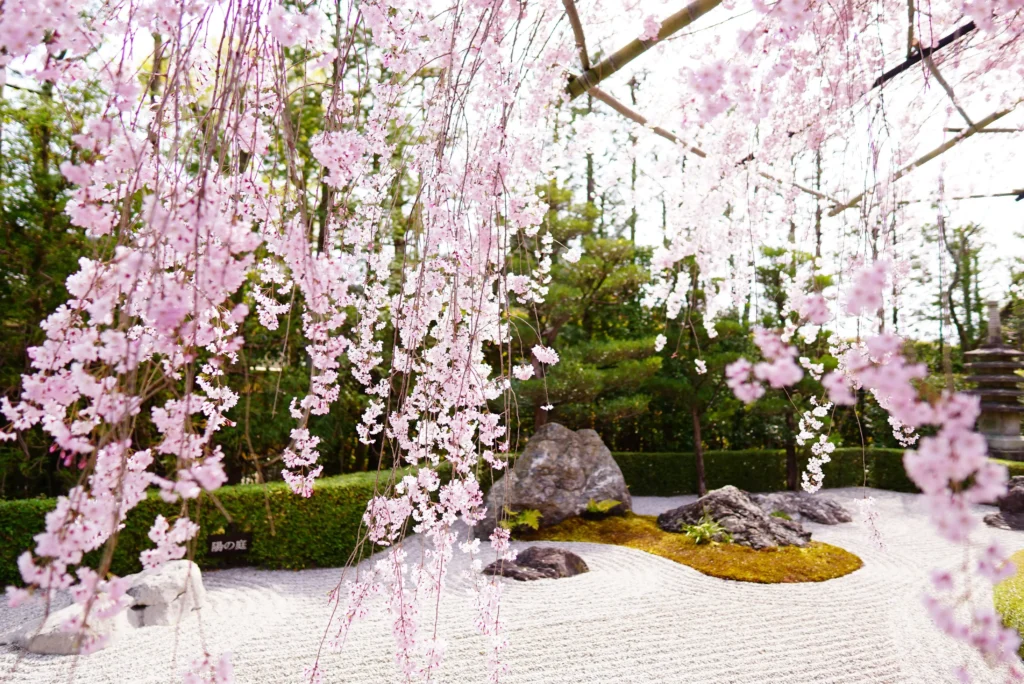
Myōshin-ji sprawls across approximately 100,000 square meters—Japan’s largest Zen temple complex. The grounds contain over 40 sub-temples, though most remain closed as functioning monasteries. This scale allows exploration and discovery impossible at smaller temples.
What to See
Taizō-in: Regularly open sub-temple featuring two gardens—a modern pond garden (1966) that feels timeless, and traditional Muromachi-period karesansui waterfall garden.
Hatto Cloud Dragon: The Dharma Hall ceiling features massive dragon painting by Kanō Tan’yū (1602-1674). The dragon appears to watch from any position—optical effect through sophisticated painting technique.
Daishin-in and Other Sub-temples: Several offer zazen meditation sessions for public participation. Several sub-temples open seasonally with unique gardens and treasures.
Visiting Information
- Address: 1 Myoshinji-cho, Hanazono, Ukyo Ward, Kyoto 616-8035
- Hours: Grounds 6:00-17:00; Taizō-in 9:00-17:00
- Access: JR Sagano Line to Hanazono Station (5 min walk)
- Best time: Early morning or late afternoon
- Photography: Exterior allowed
Insider Tip: Don’t try to see everything. Pick 2-3 sub-temples to visit deeply. The pleasure lies in wandering the lanes, discovering unexpected gates and glimpsed gardens.
Kōdai-ji Temple (高台寺)
Founded: 1606
Best for: Night illuminations and evening atmosphere
Visit Duration: 1 hour (1.5-2 hours for night)
Admission: Day ¥600; Night ¥600; Combined ¥900
What Makes It Special
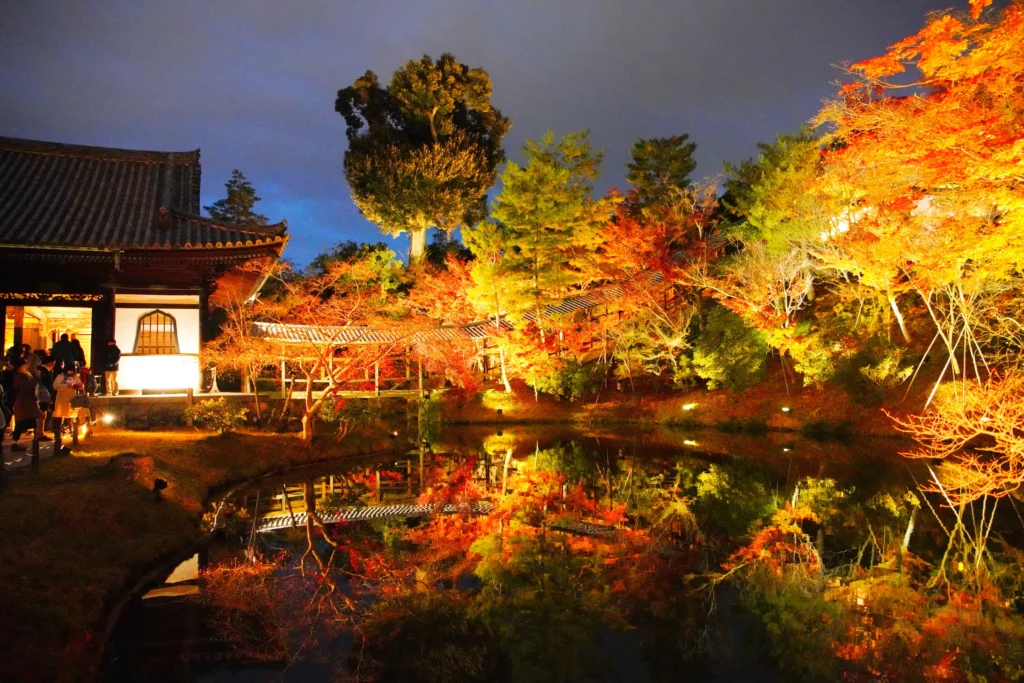
Kōdai-ji offers unique nighttime illuminations (spring, summer, autumn) transforming the temple through dramatic lighting. While purists debate artificial enhancement, the experience offers undeniably magical atmosphere unavailable at daytime-only temples, introducing many visitors to Zen beauty who might otherwise never visit.
What to See
Karesansui Garden: Classical dry landscape with raked gravel and strategic stones, designed for viewing from covered walkway.
Garyu-rō and Kangetsudai Tea Houses: Two tea houses designed by Sen no Rikyū demonstrating the rustic simplicity (wabi aesthetic) he perfected.
Ryokushō Pond and Bamboo Grove: Pond garden with bridge and bamboo creates atmospheric contrast to dry rock garden.
Night Illuminations: Seasonal nighttime openings with dramatic lighting enhance temple beauty. Autumn illumination particularly draws visitors as lights enhance maple foliage’s natural colors.
Visiting Information
- Address: 526 Kodaiji Shimogawaracho, Higashiyama Ward, Kyoto 605-0825
- Hours: Day 9:00-17:00; Night (seasonal) 17:00-22:00
- Access: Bus #206 to Higashiyama Yasui; 10 min walk from Gion-Shijo Station
- Best time: Night illumination opening (5:00 PM) before crowds peak
- Photography: Allowed; night reflections in pond particularly photogenic
Insider Tip: Kōdai-ji sits in Higashiyama district, walkable to Ninenzaka/Sannenzaka historic lanes, Kiyomizu-dera, and Gion. Plan full day exploring this concentrated cultural area.
Planning Your Temple Visit
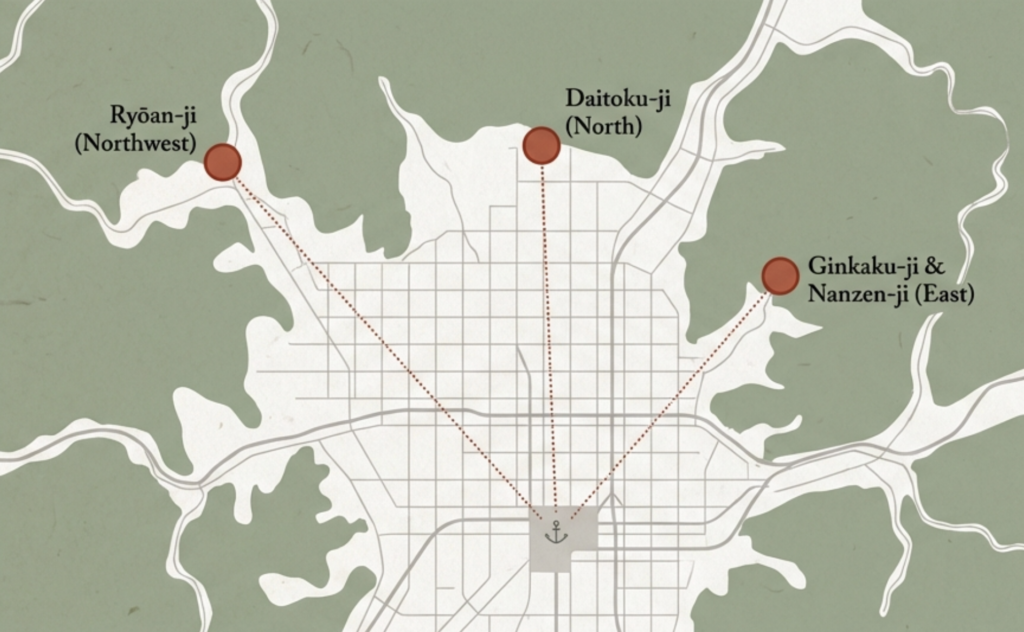
Suggested One-Day Itinerary
If you have only one day for temple visits, this route covers the essential highlights:
Morning (8:00 AM – 12:00 PM):
- 8:00 AM: Ryōan-ji (arrive at opening)
- 10:00 AM: Daitoku-ji (visit Daisen-in and one other sub-temple)
Afternoon (1:30 PM – 5:00 PM):
- 1:30 PM: Nanzen-ji
- 3:30 PM: Walk Philosopher’s Path (30 minutes)
- 4:00 PM: Ginkaku-ji (last entry)
This ambitious itinerary covers four temples representing different aspects of Zen—rock gardens, sub-temple diversity, grand architecture, and wabi-sabi aesthetics.
Getting Around
Best Transportation:
- Kyoto City Bus One-Day Pass (¥700): Unlimited rides, covers most temples
- Bicycle Rental (¥1,000-2,000/day): Flexible, pleasant way to experience Kyoto
- Taxi: Cost-effective for 3-4 people; saves time between distant temples
Best Times to Visit
By Season:
- Spring (March-May): Cherry blossoms early April; comfortable temperatures; peak crowds
- Summer (June-August): Lush greenery; hot and humid; fewer tourists
- Autumn (September-November): Spectacular foliage mid-late November; most crowded; expensive accommodation
- Winter (December-February): Minimal crowds; occasional snow magical; cheapest accommodation
Secret Season: Late November-early December combines autumn color with reduced crowds.
By Time: Early morning (8:00-9:30 AM) offers quietest experience, best light, coolest temperatures.
What to Bring
Essentials:
- Comfortable slip-on shoes (frequent removal required)
- Cash (¥5,000-10,000 in small bills—many temples don’t accept cards)
- Water bottle
- Weather protection (rain jacket or warm layers)
- Clean socks (visible when shoes removed)
Optional:
- Camera/smartphone with portable charger
- Small notebook for journaling
- Lightweight daypack
Temple Etiquette Essentials
Respectful Behavior
Before Entering:
- Bow slightly at the gate (sanmon), acknowledging sacred space
- Silence phone or turn off completely
- Lower voice to whisper level
Inside Temples:
- Shoe removal: Required at building entrances; place in designated areas
- Quiet: Walk quietly, speak in whispers
- Sitting: On verandas, sit cross-legged or in seiza (kneeling); avoid stretching legs toward garden
Photography:
- Generally allowed: Garden exteriors, building exteriors, grounds
- Usually prohibited: Building interiors, Buddha statues, during ceremonies
- When uncertain: Ask “Shashin wa daijōbu desu ka?” (写真は大丈夫ですか?)
- Always: Turn off flash, don’t block others’ views
Cultural Notes:
- These are functioning religious institutions, not museums
- Dress modestly (covered shoulders and knees)
- Don’t touch Buddhist statues, altars, or religious objects
- Observe ceremonies quietly from designated areas if you encounter them
Frequently Asked Questions
Q: How many temples can I visit in one day?
A: Realistically 3-4 temples for meaningful experience. Better to sit quietly for 30 minutes in one garden than rush through six temples. Quality vastly exceeds quantity.
Q: Do I need to speak Japanese?
A: No. Major temples have English pamphlets and some English signage. Meditation sessions transcend language barriers. Temple staff are generally patient and helpful.
Useful phrases:
- “Sumimasen” (すみません) – “Excuse me”
- “Arigato gozaimasu” (ありがとうございます) – “Thank you”
Q: Are there combined tickets?
A: Generally no. Each temple charges separately (typically ¥400-600). Budget ¥3,000-4,000 for 5-6 temples.
Q: Can children visit?
A: Yes, but Zen temples require quiet behavior. Best for older children (8+) who can appreciate stillness. Family-friendly options: Tenryū-ji (bamboo grove variety), Nanzen-ji (aqueduct interesting for kids).
Q: What’s the difference between Zen and other Buddhist temples?
A: Zen temples emphasize simplicity, meditation, and rock/sand gardens. Other Buddhist temples (Pure Land, Shingon) feature more ornate decoration and different practices.
Comprehensive guide : Learn more about Zen Buddhist philosophy and practice
Q: Are temples wheelchair accessible?
A: Accessibility varies significantly. Larger temples (Nanzen-ji, Kennin-ji) have some accessible areas. Traditional temples often have steps and gravel paths. Contact temples directly before visiting.
Beyond Temple Visits
Zazen Meditation Sessions
Several temples offer public meditation:
- Shōkoku-ji: Sunday mornings, 7:00-8:00 AM (free)
- Myōshin-ji sub-temples: Check website for schedule
- Kennin-ji: Occasional sessions (check website)
Experience Zen meditation in authentic temple environment—no religious commitment required.
Temple Lodging (Shukubō)
Overnight stays available at Myōshin-ji and Daitoku-ji sub-temples (limited availability). Experience includes simple room, vegetarian cuisine, morning meditation participation (¥8,000-15,000 per night).
Create Your Own Zen Garden
After visiting temple gardens, try creating a miniature version at home with small tray, white sand, stones, and rake.
Comprehensive guide : Learn how to create your own desktop Zen garden
Conclusion
These ten temples offer profound encounters with Zen philosophy, architecture, and practice. Each provides unique perspective on Zen’s expression through space, garden, and meditation. But understanding comes not from visiting all ten or knowing historical facts—it emerges from presence.
Approach each temple with beginner’s mind—fresh, curious, without preconceptions. Don’t rush for perfect photos. Simply be present with what reveals itself. The temples don’t surrender their secrets quickly. Many visitors report experiences continuing to unfold long after leaving—images surfacing in memory, insights emerging weeks later.
Before your journey begins, deepen your understanding:
- Understand the philosophy shaping these spaces
- Learn the aesthetic principles you’ll encounter
- Discover the symbolism behind the gardens
- Prepare for temple meditation sessions
When you reach the temple gate, bow. When you sit before the garden, breathe. When you leave, carry the temple’s silence with you.
Your journey begins now.