Japandi is a hybrid interior design aesthetic that combines Japanese wabi-sabi philosophy with Scandinavian minimalism. The style merges Japan’s appreciation for imperfection, natural materials, and craftsmanship with Scandinavia’s emphasis on functionality, clean lines, and hygge (cozy well-being). Japandi interiors are characterized by neutral color palettes, low-profile furniture, organic textures such as raw wood and linen, and a deliberate reduction of visual clutter. Unlike pure minimalism, which can feel cold or austere, Japandi achieves warmth through handmade objects, natural imperfections, and the careful balance of form and function. The style has gained global popularity as a sustainable, timeless approach to creating living spaces that feel both serene and inviting.
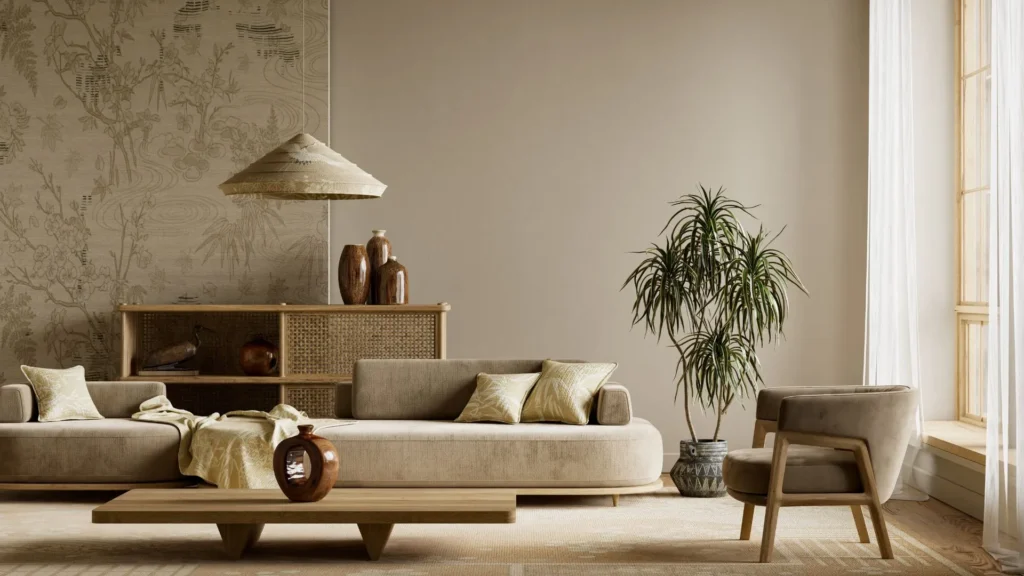
Two Cultures, One Silence
Japan and Scandinavia are separated by eight thousand kilometers, entirely different languages, and centuries of distinct cultural development. And yet, when you place a Japanese tea room beside a Danish living room, something remarkable happens: they rhyme.
Both traditions favor natural materials over synthetic ones. Both value simplicity—not as austerity but as clarity. Both treat empty space as a design element rather than a problem to solve. Both believe that the objects in a home should be functional, beautiful, and few.
Japandi is the name given to the design style that emerges when these two traditions are brought into deliberate conversation. The word itself is a portmanteau—Japan + Scandinavia—coined in the interior design world over the past decade as the aesthetic overlap between these cultures became impossible to ignore.
But Japandi is more than a visual trend. At its best, it is a philosophical convergence—two cultures that independently arrived at the same insight: a good life does not require many things. It requires the right things, in the right space, with room to breathe.
Comprehensive guide: Wabi Sabi : The Japanese Philosophy of Finding Beauty in Imperfection
This guide explores the philosophy beneath the surface of Japandi style—what each culture contributes, why the fusion works, and how to bring its principles into your own home.
What Is Japandi? The Fusion Explained
Japandi is not a 50/50 blend. It is a dialogue between two design philosophies, each contributing something the other lacks.
The Japanese Side: Wabi-Sabi and Ma
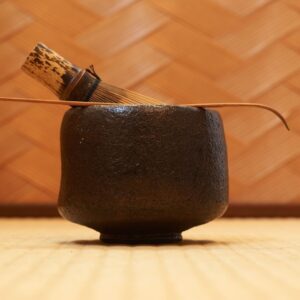
Japan contributes the philosophy of wabi-sabi (侘び寂び)—the aesthetic of imperfection, impermanence, and incompleteness. In a Japandi interior, this shows as: hand-thrown ceramics with visible irregularities, textiles with natural texture variations, surfaces that age and patina rather than remaining pristine.
Japan also contributes ma (間)—the concept of meaningful emptiness. In a Japandi room, the space between objects is not wasted. It is the composition. A single vase on an otherwise empty shelf communicates more than a shelf crowded with decorations, because the emptiness around it gives the object permission to be seen.
The Scandinavian Side: Hygge and Functionalism
Scandinavia contributes hygge (roughly: cozy well-being)—the warmth and human comfort that prevents minimalism from feeling cold. Where a purely Japanese interior can feel austere, the Scandinavian element introduces soft textiles, warm lighting, and an invitation to sit down and stay.
Scandinavia also contributes functionalism—the design principle that every object should serve a clear purpose and that beauty should arise from function rather than decoration. This aligns perfectly with the Japanese concept of yō no bi (用の美, “beauty of use”)—the idea that a well-made tool, used daily, becomes beautiful through the act of being used.
Why They Fit
The fusion works because both cultures share a philosophical root: respect for nature and an aversion to excess. Japanese design draws this from Buddhist and Shinto traditions. Scandinavian design draws it from a history of long winters, limited resources, and the Protestant ethic of modesty. They arrived at similar conclusions by entirely different paths—and when those conclusions are placed side by side, they do not clash. They complete each other.
Japandi vs Wabi-Sabi: Understanding the Difference
If you have read about wabi-sabi interior design, you may wonder how Japandi differs. The distinction is important.
Related guide: Wabi-Sabi Interior Design: A Room-by-Room Guide to Living with Imperfection
Wabi-sabi is a philosophy. It does not prescribe a style. It prescribes a relationship with imperfection, age, and natural process. A wabi-sabi space might look like a rustic farmhouse, a monk’s cell, or an artist’s studio. The test is not visual—it is whether the space feels honest.
Japandi is a style. It has recognizable visual markers: clean lines, light wood tones, muted palettes, functional furniture, natural textiles. Japandi rooms are designed to look a certain way—and that way is beautiful, but it is codified in a manner that wabi-sabi deliberately avoids.
Where Japandi selects the most photogenic elements of Japanese design—clean ceramics, simple wood, neutral colors—wabi-sabi embraces what is genuinely worn, aged, and unfinished, including elements that would never appear in a design magazine. A cracked wall. A stained countertop. A mended garment.
Japandi contains wabi-sabi. But wabi-sabi exceeds Japandi. Understanding this difference is what separates a Japandi interior that feels authentic from one that merely looks the part.
The Five Principles of Japandi Design
1. Natural Materials, Honestly Presented
Both traditions favor materials that come from the earth and show their origin: wood, stone, linen, cotton, ceramic, bamboo, paper. In Japandi, these materials are left as close to their natural state as possible. Wood is not painted. Stone is not polished to a mirror finish. Linen is not ironed smooth.
The Japanese contribution here is the idea that materials have their own character—mono no aware (物の哀れ), the poignant beauty of things as they are. The Scandinavian contribution is the principle that natural materials create warmth, which synthetic surfaces cannot replicate.
Japandi palette: Light oak, walnut, ash. Off-white plaster, warm grey, clay. Black accents sparingly. No chrome, no high-gloss, no plastic.
2. Functional Minimalism
Every object in a Japandi space should serve a purpose—either functional or contemplative. A chair is for sitting. A lamp is for light. A vase with a single branch is for bringing nature indoors and creating a point of stillness. Nothing exists purely for decoration.
This is stricter than typical Scandinavian design (which permits decorative objects if they contribute to hygge) and gentler than strict Japanese minimalism (which can feel uncompromising). Japandi finds the middle ground: fewer objects than a Western home, more warmth than a Japanese one.
3. Imperfection as Character
This is the principle that separates Japandi from generic minimalism. A Japandi interior is not showroom-perfect. The coffee table has a visible wood grain and perhaps a small knot. The ceramics are hand-thrown with slight asymmetry. The linen cushion covers wrinkle naturally.
This is wabi-sabi at work within the Japandi framework. A kintsugi-repaired bowl on a Japandi shelf is not an accident—it is a philosophical statement: this object has a history, and its history makes it more beautiful, not less.
Related guide: Kintsugi: The Art of Golden Repair and Finding Beauty in Broken Things
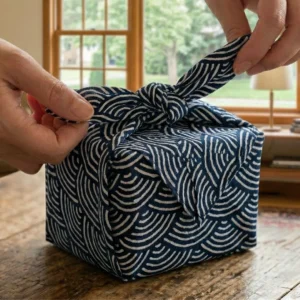
Related fuide: Furoshiki: The Japanese Art of Wrapping and the Philosophy of One Cloth
4. The Value of Handcraft
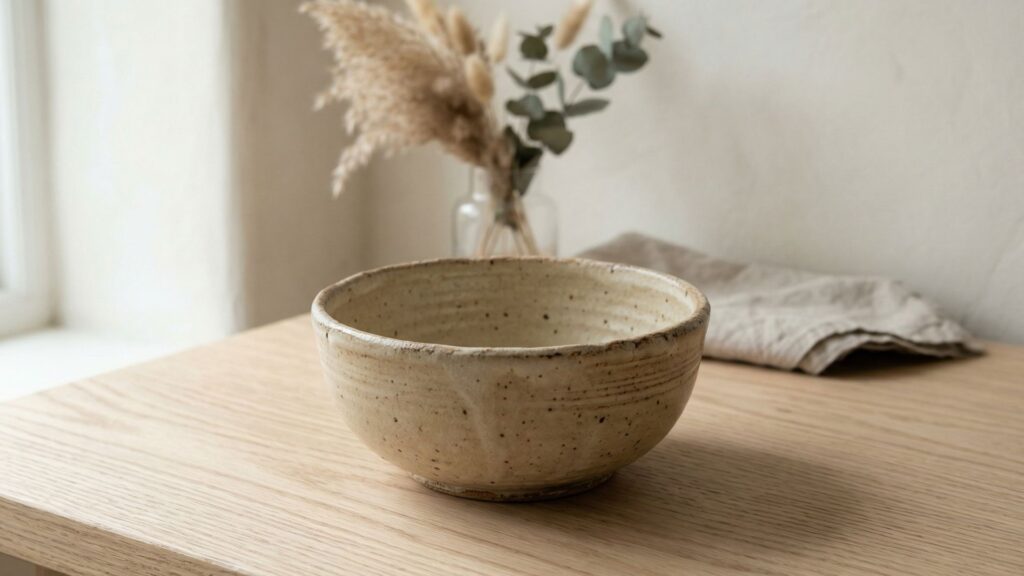
Japandi spaces prioritize handmade over mass-produced. A hand-woven textile. A turned wooden bowl. A piece of sashiko-mended fabric used as a table runner. These objects carry the trace of the human hand—small irregularities that mass production eliminates but that the eye and the heart recognize as signs of care.
Related guide: Sashiko: The Japanese Art of Stitching, Mending, and Finding Beauty in Repair
The Japanese tradition of mingei (民芸, “folk craft”)—the beauty of everyday objects made by anonymous artisans—aligns directly with the Scandinavian tradition of democratic design: beautiful objects should be accessible to everyone, not reserved for the wealthy.
5. Light and Space (Ma)
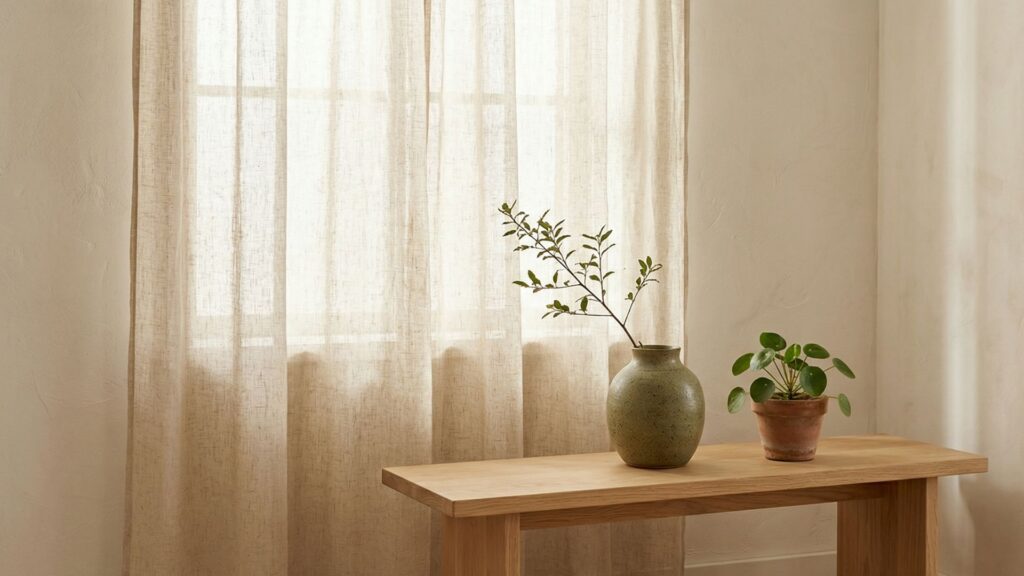
Japandi treats light as a material and space as a composition. Natural light is the primary light source during the day—windows are kept unobstructed or covered with light, translucent fabrics. In the evening, warm-toned lamps (never overhead fluorescents) create pools of soft illumination rather than uniform brightness.
Empty space is preserved intentionally. Not every wall needs art. Not every surface needs objects. The emptiness between things—ma—is what gives each object its presence and the room its calm.
Room by Room: Japandi in Practice
Living Room
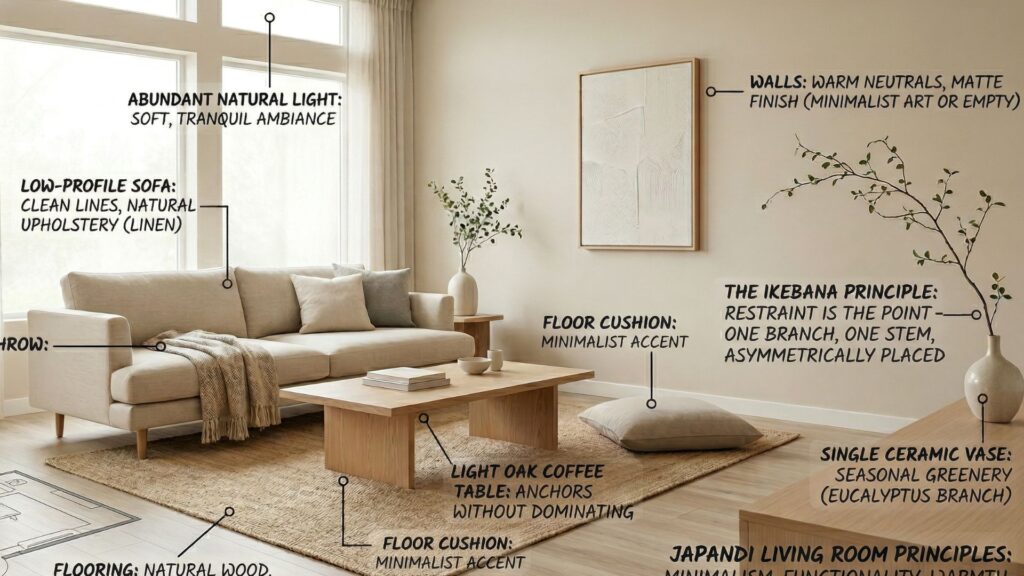
The living room is where Japandi makes its strongest visual statement. Low-profile furniture—a sofa with clean lines and natural upholstery, a coffee table in light oak or walnut—anchors the room without dominating it. One or two accent pieces provide warmth: a handwoven throw, a floor cushion, a single ceramic vase with seasonal greenery.
Walls: Warm neutrals. Matte finish. One piece of art or a calligraphy scroll if any—otherwise, empty.
Flooring: Natural wood or light-toned wood-look. A single natural-fiber rug (jute, wool, or cotton) to define the seating area.
The ikebana principle: Where a Western living room might have a large floral arrangement, a Japandi space uses the ikebana approach—one branch, one stem, asymmetrically placed. The restraint is the point.
Related guide: Ikebana: The Japanese Art of Flower Arrangement and Its Zen Roots
Bedroom
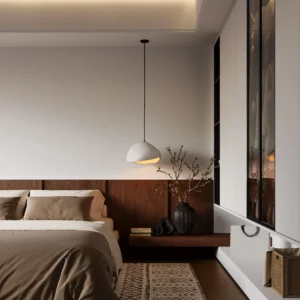
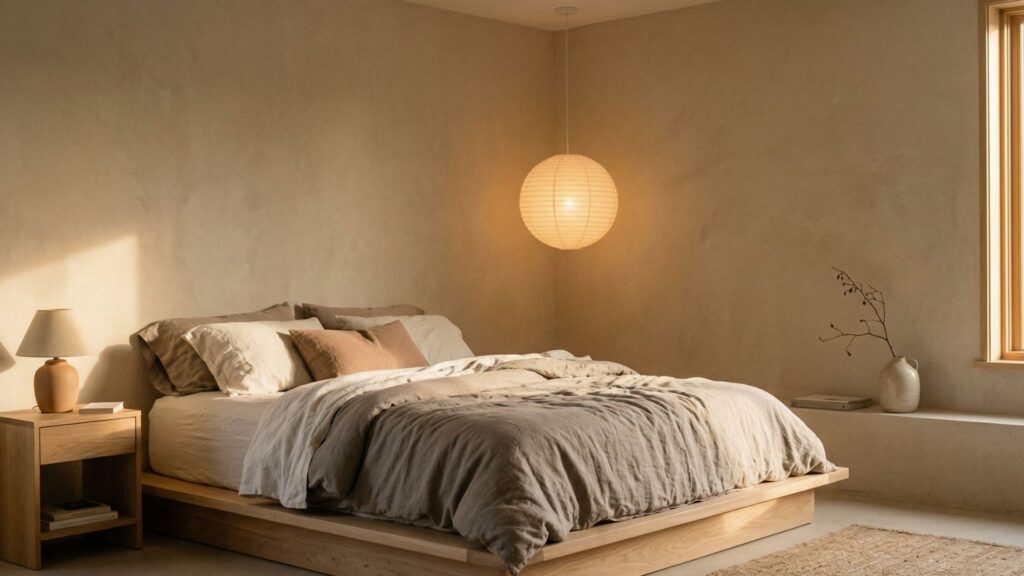
Japandi bedrooms are sanctuaries of simplicity. A low platform bed in natural wood—no headboard, or a simple slatted one. Linen bedding in muted tones (off-white, warm grey, soft clay). Minimal furniture: one nightstand, one lamp, nothing more.
Lighting: A single warm-toned pendant or a paper lantern. No overhead fixtures. The quality of light in a Japandi bedroom should feel like late afternoon—soft, warm, directional.
The rule: If you cannot explain why something is in the bedroom, it does not belong there.
Kitchen
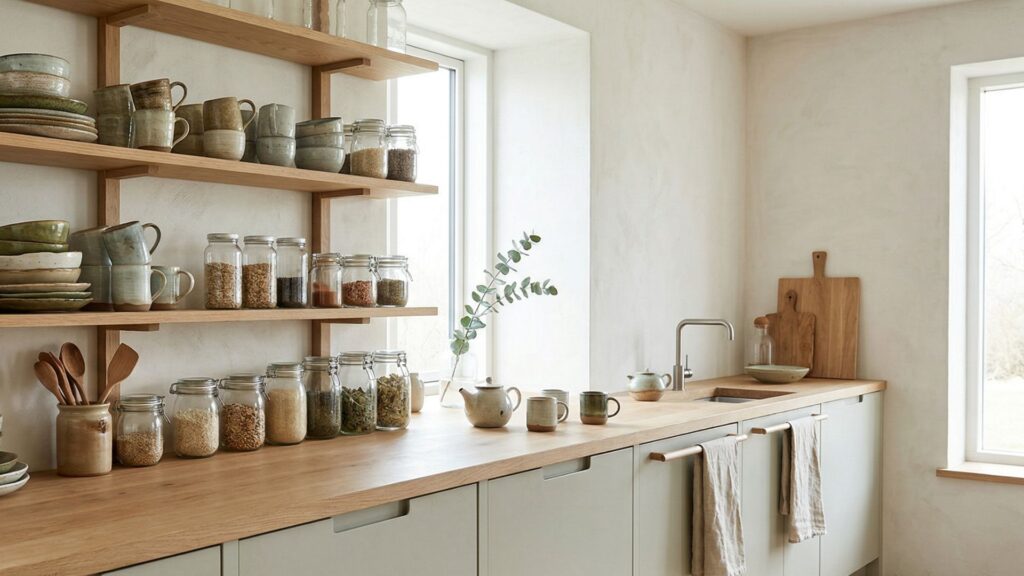
Japandi kitchens celebrate use. Open shelving replaces upper cabinets—displaying everyday ceramics, wooden utensils, and glass jars. Countertops in natural wood or matte stone. Cabinet fronts in light wood or muted paint.
The handcraft element: Replace uniform dinnerware with handmade ceramics. Each plate and bowl slightly different in shape and glaze—the kind of imperfect beauty that mass production cannot replicate and that transforms every meal into a tactile experience.
Bathroom
Stone, wood, and ceramic in natural tones. A wooden stool. A ceramic soap dish. Towels in undyed cotton or linen. The visual clutter of dozens of products replaced by essentials—one soap, one brush, one candle.
The Japanese bath principle: Bathing as transition, not task. Warm materials, soft light, and enough empty space to make the bathroom feel like a pause rather than a chore.
Key Materials and How to Choose Them
Wood
The foundation of Japandi. Light-toned woods (oak, ash, birch) from the Scandinavian side; darker, warmer woods (walnut, cedar, cypress) from the Japanese side. Both traditions prefer solid wood or quality veneer with visible grain over painted or laminated surfaces.
The test: Run your hand across the surface. If you can feel the grain, it belongs. If it feels like plastic, it does not.
Ceramics
Handmade over manufactured. Look for pieces with visible throwing marks, uneven glazes, and organic shapes. Japanese pottery traditions—Mashiko, Bizen, Karatsu—produce objects that embody Japandi aesthetics naturally. Scandinavian ceramics from studios like Kähler or Broste Copenhagen offer the same handcraft quality in lighter tones.
Textiles
Linen, cotton, wool. Undyed or naturally dyed. Textures that you can feel—a slubby linen throw, a wool blanket with visible weave, cotton cushion covers that wrinkle naturally. Avoid polyester, microfiber, and anything that resists aging.
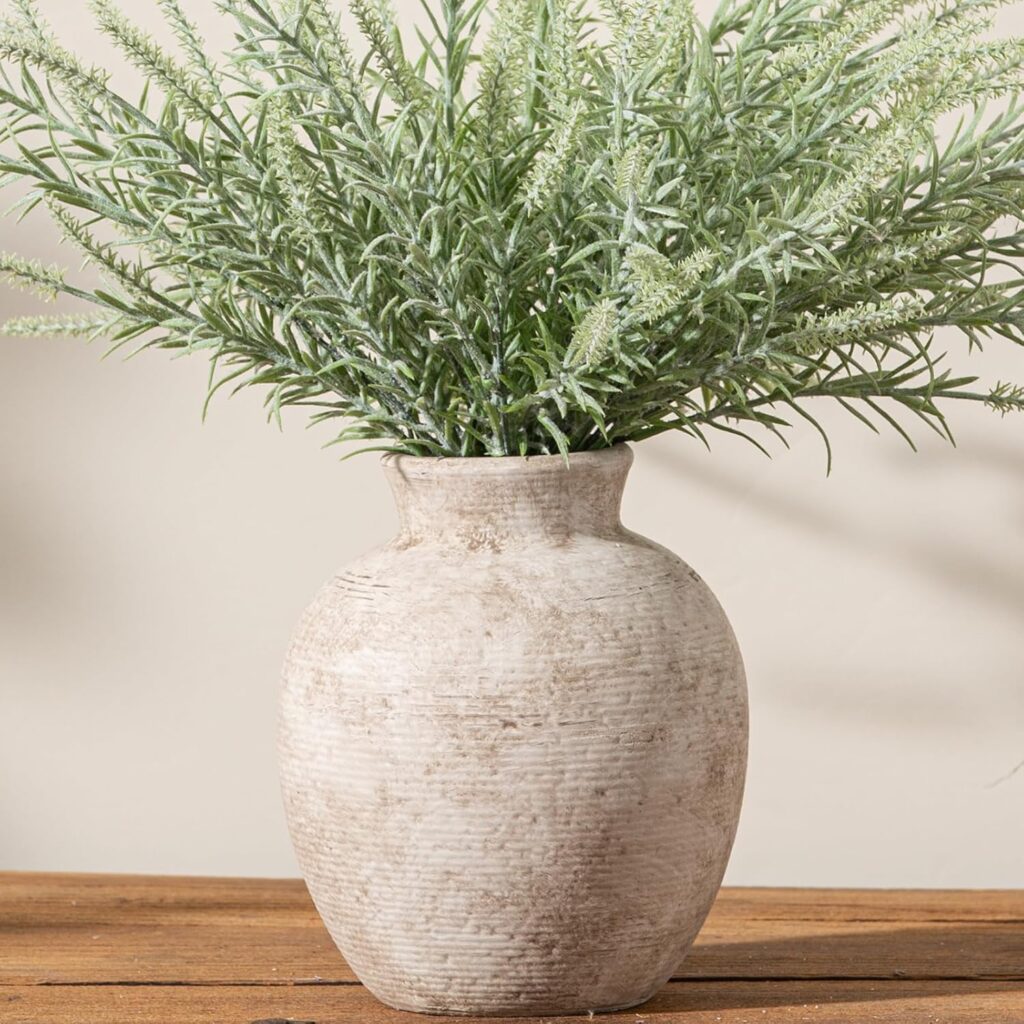
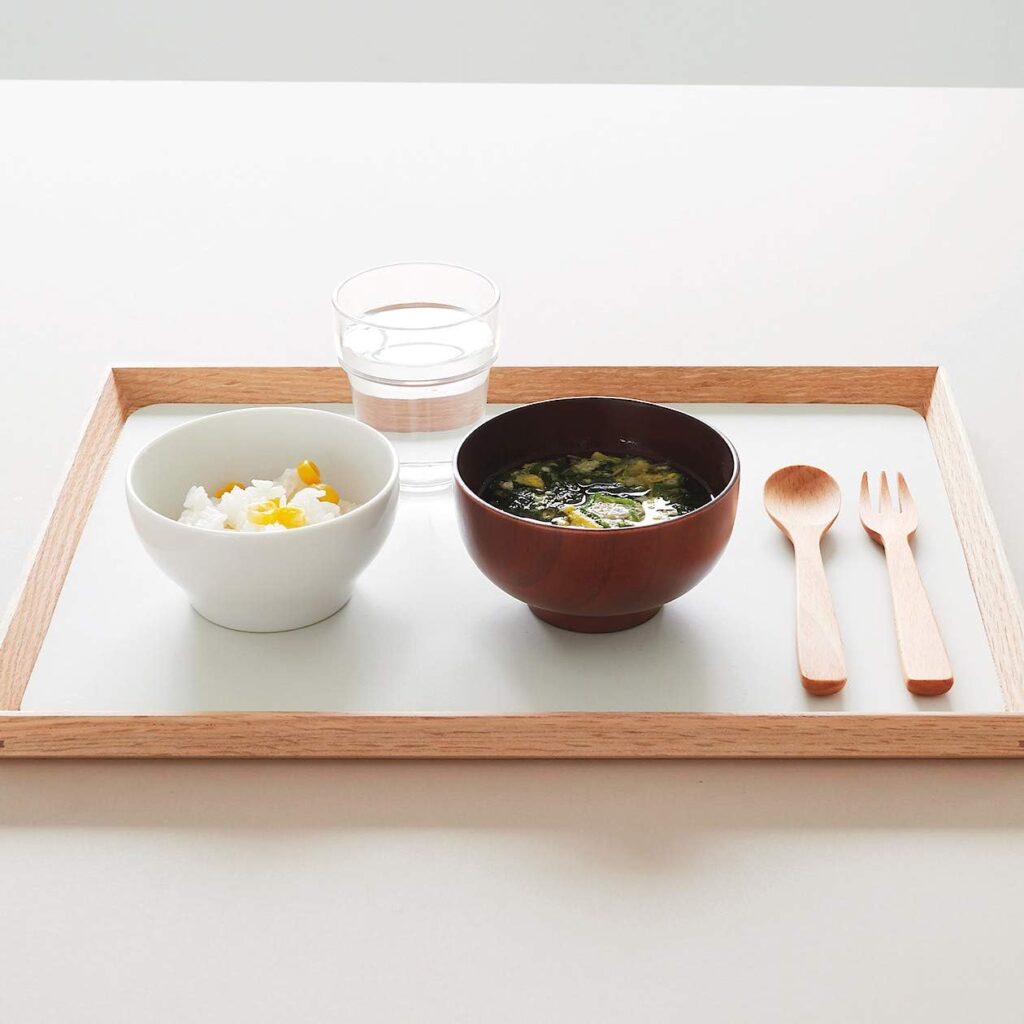
[AFFILIATE LINK 1: Amazon — Japandi Home Essentials] LINK COMMENT: Placed at point of highest action intent after materials guidance. “Starting a Japandi interior is simplest through textiles—a natural linen throw, handmade ceramic vase, and wooden tray can transform a room’s character overnight, and quality pieces are available from $20–60.”
Getting Started: Three Changes Today
1. Clear and curate one surface. Choose your most cluttered shelf, table, or counter. Remove everything. Clean the surface. Then place back only what passes the Japandi test: natural, functional, handmade, and given space to breathe. One to three objects, maximum.
2. Introduce one handcraft piece. A hand-thrown mug for your morning tea. A wooden serving board with visible grain. A small ceramic vase for a single stem. One object made by a human hand changes the energy of an entire room.
3. Warm your light. Replace one cool-white bulb with a warm-toned alternative (2700K or below). Or add one candle—a simple beeswax or soy candle in a ceramic holder. The shift from cool to warm light is the single fastest way to move a room from clinical to calm.
FAQ
Q: What is Japandi style?
A: Japandi is an interior design style that fuses Japanese and Scandinavian aesthetics. It combines the Japanese philosophy of wabi-sabi (beauty in imperfection) with Scandinavian hygge (cozy warmth) and functionalism. The result is spaces that are minimal but warm, simple but rich in natural texture—characterized by clean lines, natural materials, muted colors, handmade objects, and intentional empty space.
Q: Is Japandi just a trend?
A: The word “Japandi” is relatively new, but the aesthetic overlap between Japanese and Scandinavian design has existed for decades—Scandinavian designers have cited Japanese influence since the mid-twentieth century. The underlying philosophies (simplicity, natural materials, functional beauty) are timeless in both cultures. The specific label may eventually fade, but the principles it describes will not—they are rooted in values that both cultures have held for centuries.
Q: What is the difference between Japandi and wabi-sabi?
A: Wabi-sabi is a philosophy—a way of seeing beauty in imperfection, impermanence, and natural aging. It does not prescribe a visual style. Japandi is a style—it has recognizable visual markers (clean lines, light wood, muted tones) that draw from both Japanese and Scandinavian design traditions. Japandi incorporates elements of wabi-sabi, but wabi-sabi is broader and deeper than any single interior style.
Q: What is Japandi style clothing?
A: Japandi fashion applies the same principles as Japandi interiors: natural fabrics (linen, cotton, wool), muted earth-toned palettes, simple silhouettes, and quality over quantity. It overlaps significantly with the capsule wardrobe concept—a small number of versatile, well-made pieces that combine easily. Japanese brands like MUJI and ARTS&SCIENCE alongside Scandinavian labels like COS and Arket exemplify this approach.
Q: How is Japandi different from minimalism?
A: Generic minimalism prioritizes the absence of objects. Japandi prioritizes the presence of the right objects. A minimalist room can feel cold and impersonal. A Japandi room should feel warm and lived-in—because every object that remains has been chosen with care, is made from natural materials, and carries the character of handcraft or age. The warmth comes not from adding more but from choosing better.
The Space Between Two Cultures
Japandi is often described as a meeting of East and West, but this framing can flatten what is actually happening. Japan and Denmark are not generic representatives of their hemispheres. They are specific cultures with specific histories, specific relationships to nature, and specific philosophies about what makes a life well-lived.
What makes Japandi compelling is not that it blends “East” and “West” but that it demonstrates something more precise: two cultures, developed independently on opposite sides of the world, arrived at remarkably similar conclusions about beauty, simplicity, and the relationship between people and the objects they live with.
Comprehensive guide: Wabi Sabi : The Japanese Philosophy of Finding Beauty in Imperfection
A Japandi home does not require expensive furniture or a renovation. It requires a willingness to own less, choose better, and let the things you keep grow old alongside you. The wood will darken. The ceramics will chip. The linen will soften. None of this is damage. All of it is the room becoming more itself—more honest, more lived-in, more yours.
That is not a trend. That is a way of living.
References
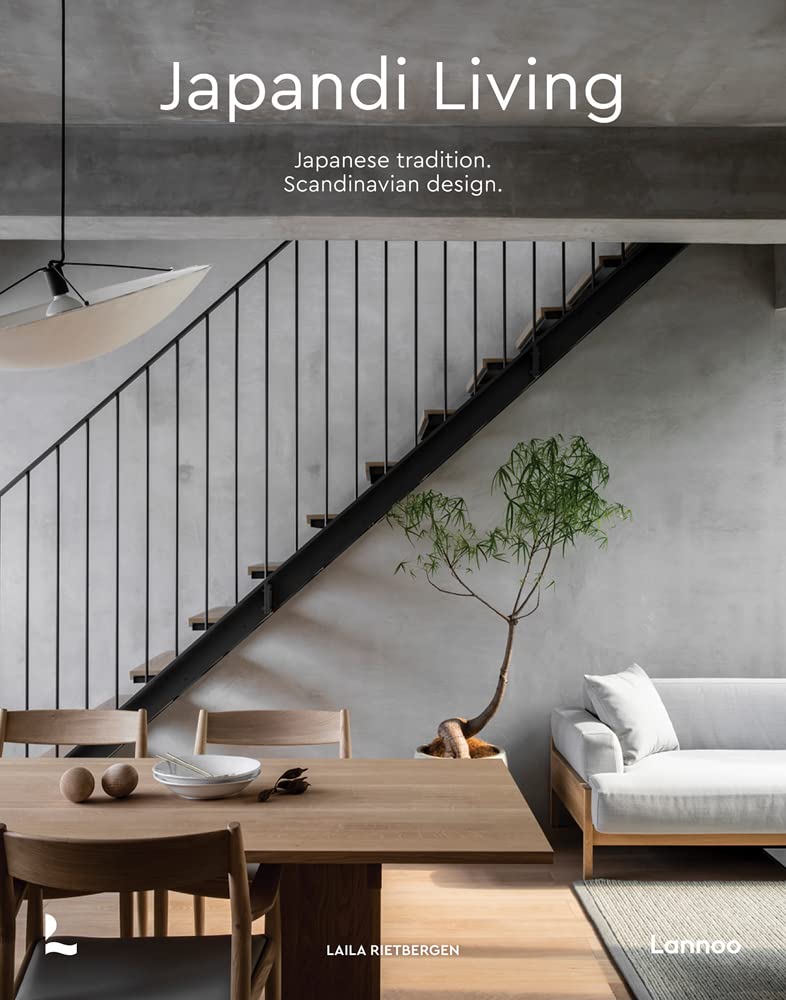
- Rietbergen, L. (2022). Japandi Living: Japanese Tradition. Scandinavian Design. Lannoo Publishers.
- Koren, L. (1994). Wabi-Sabi for Artists, Designers, Poets & Philosophers. Imperfect Publishing.
- Brits, L. T. (2016). The Book of Hygge: The Danish Art of Living Well. Penguin.
- Tanizaki, J. (1977/1933). In Praise of Shadows. Leete’s Island Books.
- Yanagi, S. (1972). The Unknown Craftsman: A Japanese Insight into Beauty. Kodansha International.
- Ellmin, J. (2020). Lagom: The Swedish Art of Balanced Living. Penguin.