Kōdō (香道, “the way of incense”) is one of Japan’s three classical arts of refinement, alongside chadō (tea ceremony) and kadō (flower arrangement). Dating back over 1,400 years to the arrival of Buddhist incense traditions in 6th-century Japan, kōdō evolved from religious ritual into a sophisticated art form during the Muromachi period under the influence of Zen Buddhism. Practitioners do not “smell” incense but “listen” to it (聞く, kiku)—a distinction that reflects the meditative attention the practice demands. Japanese incense is distinguished by its subtlety, use of natural aromatic woods such as agarwood (jinkō) and sandalwood (byakudan), and coreless stick construction that produces minimal smoke.
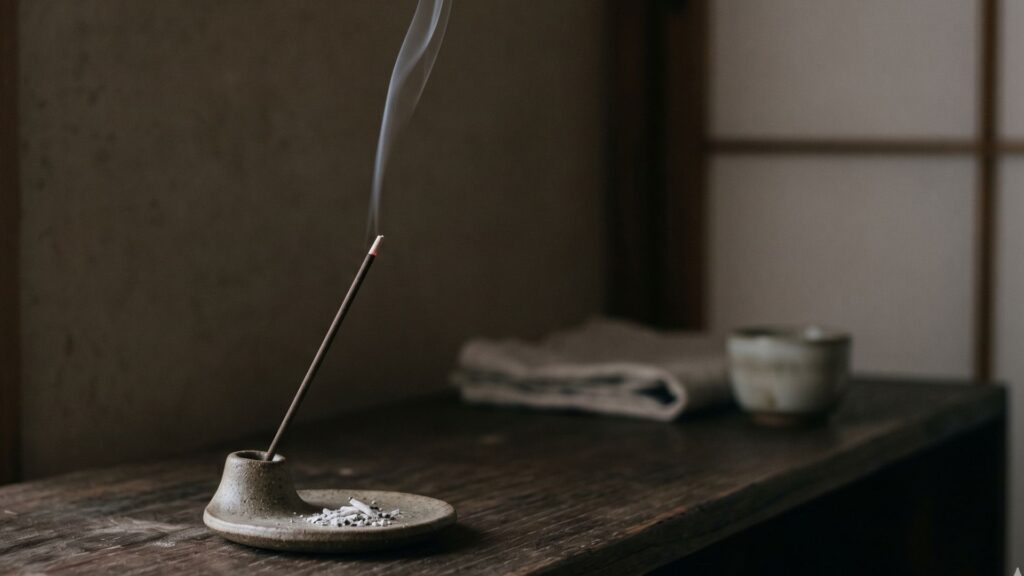
The First Thing You Notice
When you step into a Zen temple in Kyoto, the first thing that reaches you is not what you see. It is what you smell.
Before your eyes adjust to the dim interior, before you notice the wooden beams or the seated Buddha, a fragrance meets you at the threshold—warm, woody, faintly sweet, and ancient. It is the smell of incense that has been burning in this space for centuries, layered into the wood and stone so deeply that the building itself has become a vessel for fragrance.
Japanese incense (kō, 香) is not an accessory to spiritual practice. It is the practice. In Zen monasteries, incense marks the passage of time during meditation—a single stick burning down is one sitting of zazen. In the aristocratic tradition of kōdō (香道, “the way of incense”), fragrance is elevated to the level of high art, practiced alongside the tea ceremony and flower arrangement as one of Japan’s three classical refinements.
Comprehensive guide: How to Practice Zazen at Home
Yet outside Japan, Japanese incense remains remarkably little known. Most English-language writing about it is either product descriptions on e-commerce sites or brief cultural summaries that miss the philosophical depth entirely. This guide explores what makes Japanese incense different from every other incense tradition in the world—the history, the philosophy of “listening” to fragrance, the major traditions and makers, and how to bring this ancient practice into your own home.
1,400 Years of Fragrance
Buddhist Beginnings
Incense arrived in Japan with Buddhism in the sixth century, carried by monks who burned aromatic woods as offerings before Buddhist images. The Nihon Shoki (日本書紀, Japan’s oldest chronicle) records that a log of fragrant agarwood (jinkō, 沈香) washed ashore on Awaji Island in 595 CE—an event that marks the traditional beginning of Japanese incense culture.
Comprehensive guide: What Is Zen Buddhism?
These early uses were devotional—burning incense to purify a space, to honor the dead, and to carry prayers upward with the smoke. The fragrance was not meant to be enjoyed aesthetically. It was a bridge between the human and the sacred.
The Heian Refinement
During the Heian period (794–1185), incense moved from temple to court. The aristocracy developed takimono-awase (薫物合わせ)—incense-blending competitions in which nobles created their own signature scents by combining powdered woods, herbs, and resins according to secret recipes. The Tale of Genji, written around 1000 CE, describes Prince Genji’s exquisite taste in blended incense as a marker of his refinement—in Heian culture, how you smelled was as important as how you dressed.
The six principal scents—rokushu (六種)—established during this period remain the foundation of Japanese incense aesthetics today, though the exact recipes have been lost.
The Birth of Kōdō
In the Muromachi period (1336–1573), under the influence of Zen Buddhism and the culture of refined simplicity it promoted, the appreciation of incense was formalized into kōdō—the Way of Incense. Like sadō (the Way of Tea) and kadō (the Way of Flowers), kōdō transformed a sensory pleasure into a structured spiritual practice with rules, tools, and philosophical principles.
The three arts were recognized as Japan’s san-dō (三道)—three paths of aesthetic cultivation that a person of culture was expected to study. Together, they formed a complete education of the senses: taste and touch through tea, sight through flowers, and smell through incense.
Kōdō: The Way of Incense
Listening, Not Smelling
The most remarkable thing about kōdō is its vocabulary. In Japanese, you do not “smell” incense. You listen to it—monkō (聞香), literally “listening to incense.”
This is not a poetic metaphor. It is a precise description of the quality of attention that kōdō cultivates. Smelling is passive—odors arrive whether you attend to them or not. Listening is active—it requires you to be still, receptive, and focused. When you “listen” to incense, you bring to fragrance the same concentrated awareness that a musician brings to sound or a tea master brings to the taste of matcha.
The shift from smelling to listening changes everything about the experience. You are no longer a consumer of a pleasant scent. You are a participant in a dialogue—between yourself and a piece of wood that may be hundreds of years old, releasing the fragrance it has accumulated over centuries of slow chemical transformation in the forests of Southeast Asia.
The Kōdō Ceremony
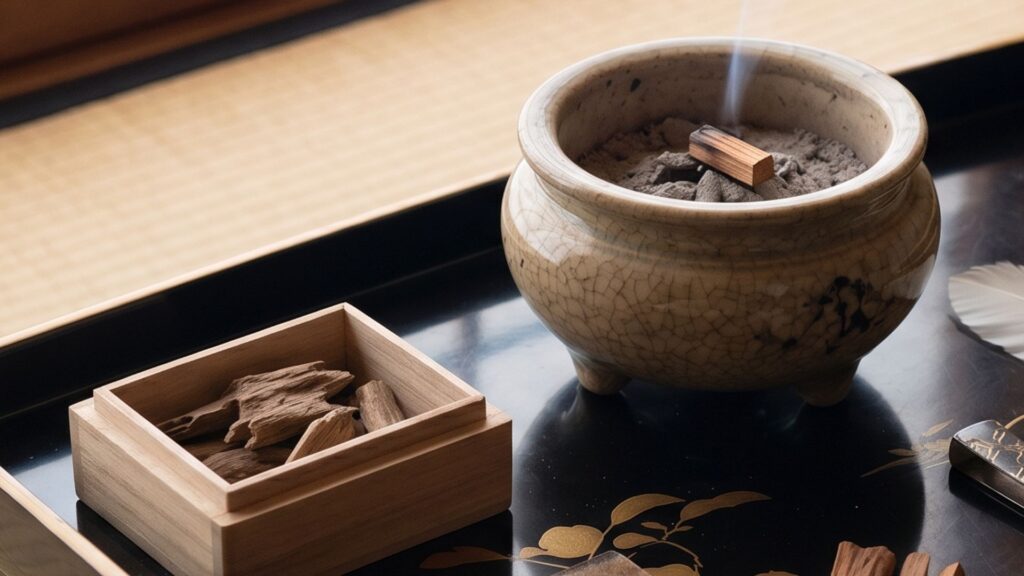
A formal kōdō gathering is an exercise in collective attention. Participants sit in a circle. A small piece of fragrant wood—usually jinkō (agarwood) or the supreme kyara (伽羅)—is heated on a bed of ash over a single piece of charcoal, buried inside a ceramic incense burner (kōro). The wood is not burned. It is gently warmed so that it releases its fragrance without smoke.
The kōro is passed from person to person. Each participant cups the burner in both hands, brings it close to the face, and inhales three times through the right nostril—slowly, deliberately, with full attention. Then the burner passes to the next person.
No one speaks during the listening. The fragrance arrives, develops, and fades in silence. Only afterward do participants share what they experienced—often through poetry or by selecting the word that best describes the quality of the fragrance.
Kumikō: The Incense Game
One of the most distinctive elements of kōdō is kumikō (組香)—structured “incense games” in which participants must distinguish between different fragrances and identify them correctly. The games often follow literary themes—a particular kumikō might be based on The Tale of Genji, with each fragrance representing a character, and the challenge being to identify which character you are “hearing.”
This is not trivial entertainment. Kumikō develops a quality of sensory discrimination that most people never cultivate—the ability to detect subtle differences between fragrances, to hold a scent in memory, and to compare it with another experienced minutes earlier. The practice trains attention itself, using fragrance as the medium.
Incense in Zen Practice
The Stick That Measures Silence
In a Zen monastery, incense serves a function so practical it is almost invisible: it measures time.
A standard stick of senkō (線香, stick incense) burns for approximately 45 minutes—the length of one period of zazen. When the stick burns out, the sitting ends. There are no clocks on the wall of a meditation hall. There are no timers. There is only a thin stick of incense, slowly becoming ash, its fragrance filling the room as the minutes pass.
This is elegant in its simplicity. The meditator does not need to wonder how much time remains—the diminishing stick is visible (or, in a darkened hall, its fragrance marks the passage of time without requiring sight). The incense does not interrupt. It accompanies. And when it is gone, the silence it inhabited remains.
Comprehensive guide: How to Practice Zazen at Home
Purification and Threshold
Beyond timekeeping, incense in Zen temples serves as a threshold marker—a sensory signal that you are entering a different kind of space. The fragrance at the entrance of a meditation hall is not decoration. It is a boundary. When you smell it, your body begins to associate the fragrance with stillness, and over time, the scent alone can begin to settle the mind before the sitting even begins.
This is not mysticism. It is conditioning—the same principle that makes the smell of coffee signal “morning” or the smell of a particular food signal “home.” Zen practitioners have used incense as a threshold for centuries because it works: the fragrance becomes a cue for the mental state it accompanies.
Types of Japanese Incense
Senkō (線香) — Stick Incense
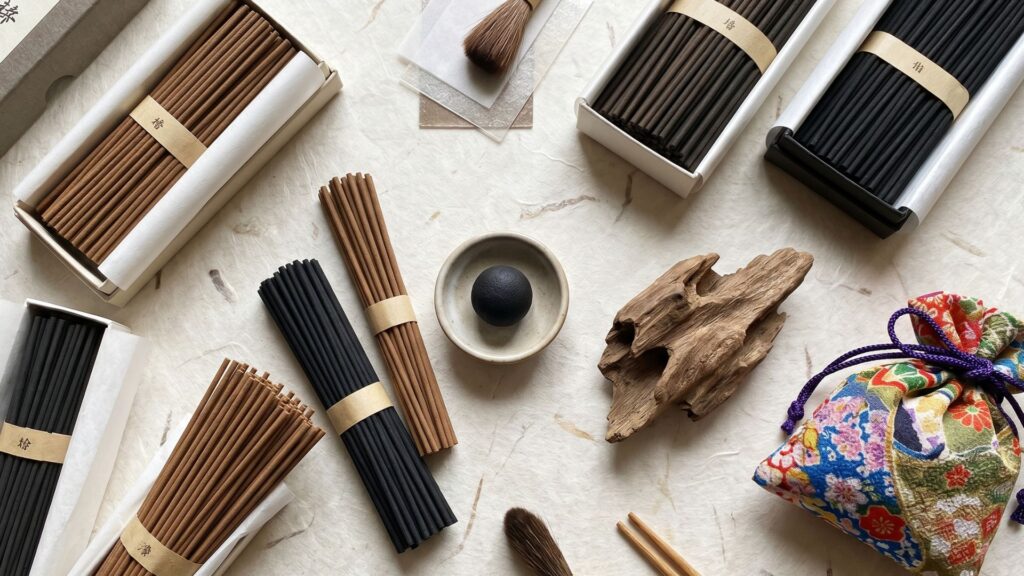
The most common form. Thin sticks of compressed incense powder, typically made from a blend of aromatic woods, herbs, and a natural binding agent (tabuko, a bark-based adhesive). Japanese senkō is markedly different from Indian incense—it produces less smoke, no oily residue, and a more subtle, refined fragrance.
Japanese senkō is also thinner than most Western incense sticks and does not use a bamboo core. The entire stick is combustible material, which produces a cleaner, more even burn.
Nerikō (練香) — Kneaded Incense
Small balls of blended aromatics mixed with honey and plum paste, aged for months or years before use. Nerikō is not burned directly—it is placed on heated charcoal or a mica plate. This is the oldest form of Japanese incense, descended from the Heian-period blending traditions. The fragrances are complex, layered, and change as the nerikō warms—an olfactory equivalent of watching a sunset develop.
Kōboku (香木) — Fragrant Wood
The most precious form. Small pieces of naturally aromatic wood—primarily agarwood (jinkō) and sandalwood (byakudan)—heated gently to release their fragrance. The finest agarwood, classified as kyara (伽羅), is rarer than gold and has been traded along Asian maritime routes for over a millennium. A single gram of museum-quality kyara can cost thousands of dollars.
Kōboku is the medium of formal kōdō ceremony. The wood is not consumed quickly—a small piece can be heated, rested, and reheated multiple times, revealing different facets of its fragrance with each session.
Nioi-bukuro (匂い袋) — Fragrance Sachets
Small fabric pouches filled with powdered aromatic woods and herbs, placed in drawers, closets, or carried in a pocket. Nioi-bukuro are the most accessible entry point to Japanese incense culture—no burning required, no special equipment, just a gentle fragrance that accompanies you through the day.
Guide to Japanese Incense Brands
Japan’s incense-making tradition is concentrated in a handful of companies, several of which have been operating for centuries. Understanding their distinct characters helps you choose incense that suits your purpose.
Shoyeido (松栄堂) — Kyoto, founded 1705
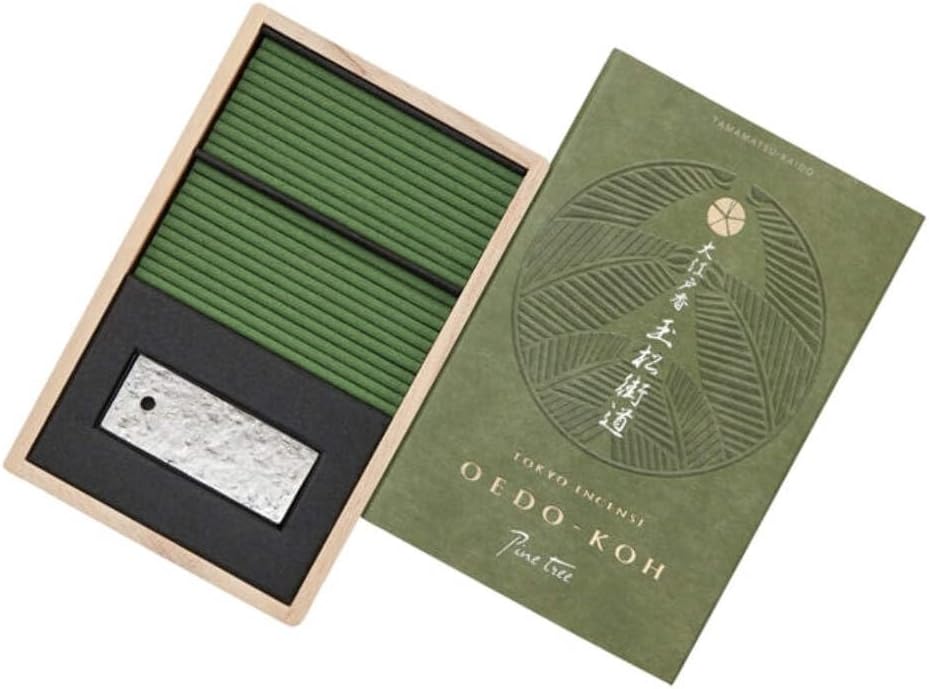
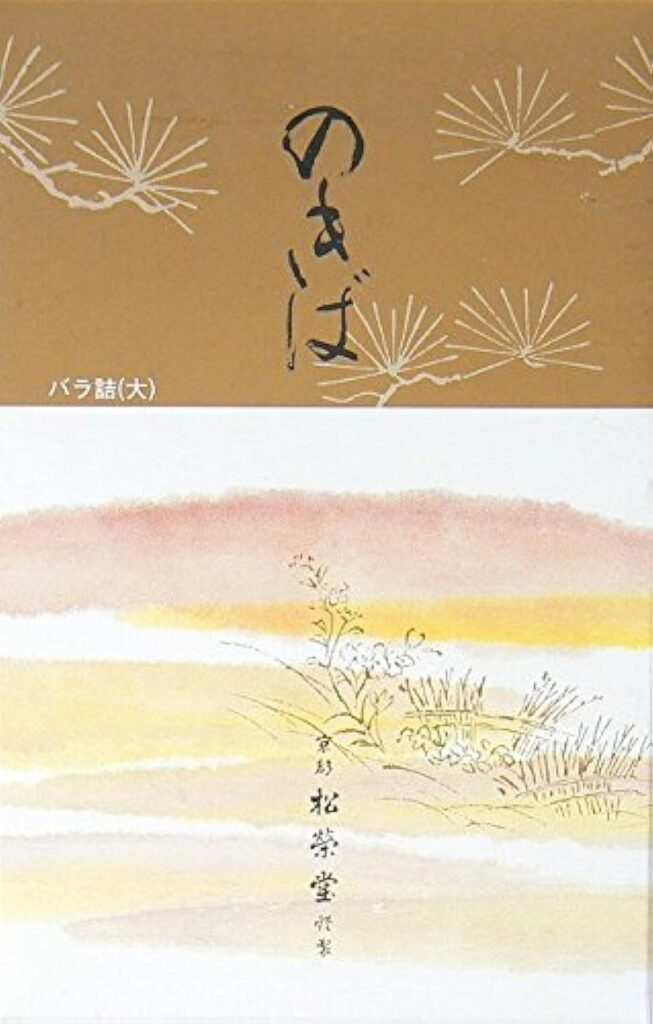
The most internationally recognized Japanese incense maker. Shoyeido uses only natural ingredients—no synthetic fragrances, no charcoal fillers. Their incense is subtle, refined, and designed for daily use. The Oedo-koh (おえど香) line offers affordable, high-quality sticks in accessible fragrances (cherry blossom, green tea, water lily), while their premium lines use aged agarwood and sandalwood.
Best for: Beginners. Daily meditation. Those who value purity of ingredients.
Nippon Kodo (日本香堂) — Tokyo, founded 1575
Japan’s largest incense manufacturer, producing everything from everyday senkō to ceremonial kōboku. Their Morning Star line is one of the best-selling Japanese incense products worldwide—affordable, consistent, and available in a wide range of fragrances. Their premium Kayuragi line uses traditional Japanese fragrance profiles (wisteria, osmanthus, Japanese cypress).
Best for: Everyday use. Exploring a range of fragrances. Budget-conscious buyers.
Baieido (梅栄堂) — Sakai, founded 1657
A smaller, more traditional maker known for incense that appeals to connoisseurs. Baieido’s Kōbunboku series is regarded as one of the finest everyday senkō available—complex, woody, and deeply satisfying. Their premium lines are exceptional.
Best for: Those who have tried Shoyeido or Nippon Kodo and want to explore deeper. Connoisseurs.
Getting Started: Your First Incense Practice
What You Need
The beauty of Japanese incense is its simplicity. You need:
- Incense sticks — Start with a Shoyeido or Nippon Kodo sampler set to explore different fragrances before committing to a full box.
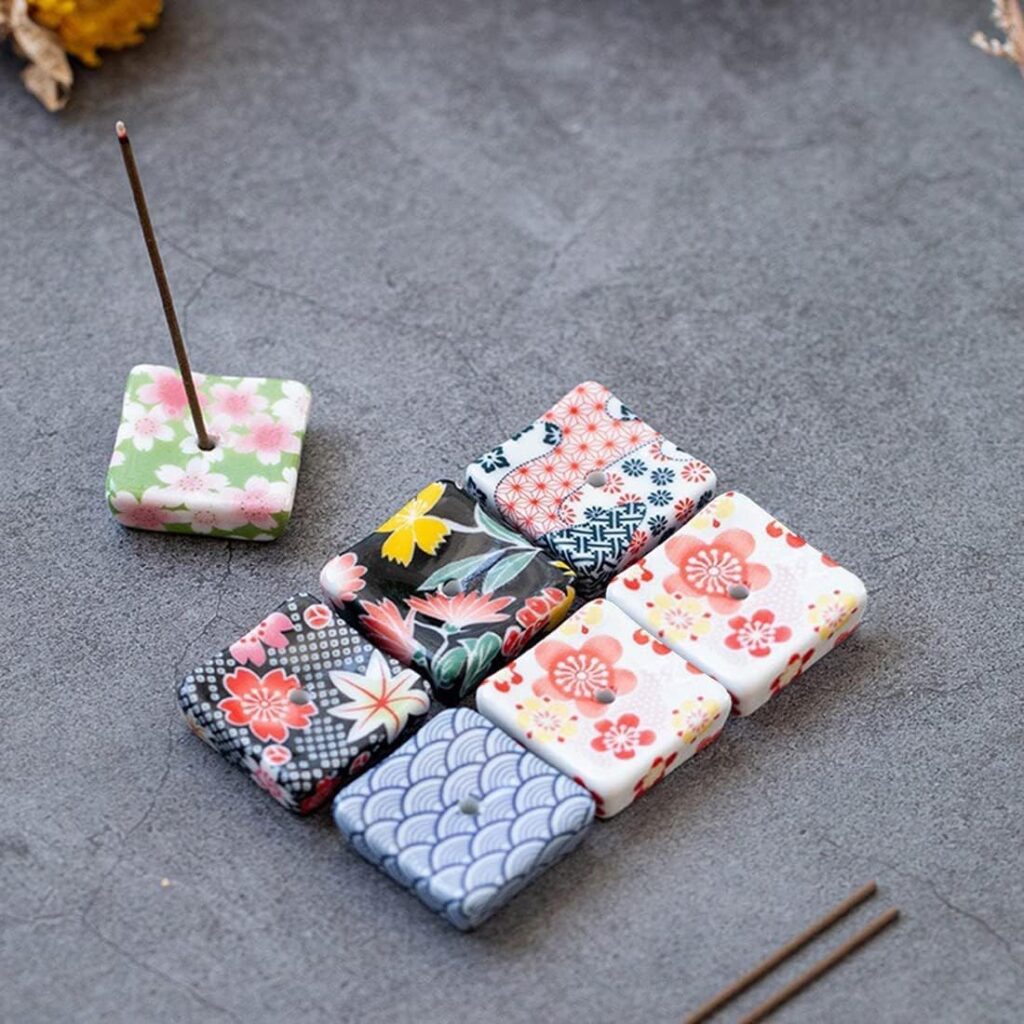
- A holder — A simple ceramic kōtate (香立て) or a small bowl filled with ash. The holder catches the falling ash and keeps the stick upright.
- A match or lighter — Light the tip of the incense, let the flame establish for 2-3 seconds, then blow it out gently. The stick should glow at the tip and produce a thin, steady stream of smoke.
Three Ways to Practice
As a meditation timer. Light one stick at the beginning of your zazen or meditation session. When the fragrance fades and the last ember dies, the sitting is complete. No timer needed. The incense gives you approximately 25-45 minutes depending on the stick length—adjust by choosing shorter or longer sticks.
As a threshold ritual. Light incense when you transition between activities—arriving home from work, sitting down to write, beginning your morning routine. The fragrance marks the boundary between one mode of attention and another. Over time, the scent becomes a cue that tells your nervous system: the quality of attention is changing now.
As listening practice. Sit with a burning stick and simply attend to the fragrance. Notice how it changes as the stick burns—the top notes that appear in the first minutes, the deeper base notes that emerge later, the way the fragrance interacts with the temperature and humidity of the room. This is monkō in its simplest form: listening to incense with the same quality of attention you would bring to music.
Experiencing Kōdō in Japan
For visitors to Japan, a kōdō workshop offers an immersive introduction to the art that no written guide can replicate.
Kyoto. Shoyeido’s flagship store in central Kyoto offers incense-making workshops and kōdō introductions. Several temples in the Higashiyama district offer incense experiences as part of broader Zen cultural programs. Yamada-matsu (山田松香木店), an incense shop operating since the Edo period, offers hands-on fragrance workshops.
Related guide: 10 Must-Visit Zen Temples in Kyoto: Complete Visitor Guide
Tokyo. Nippon Kodo’s Ginza showroom and Kōdō cultural programs provide accessible introductions for English-speaking visitors.
FAQ
Q: What makes Japanese incense different from Indian or Western incense?
A: Japanese incense is distinguished by subtlety, purity of ingredients, and construction. Japanese senkō sticks contain no bamboo core (the entire stick is combustible material), produce less smoke, and use natural aromatic woods and herbs without synthetic fragrances. The fragrances tend to be quieter and more refined than Indian incense—designed for contemplation rather than filling a room. The philosophical tradition of kōdō, which treats fragrance as an art form requiring focused attention, has no equivalent in other incense cultures.
Q: Is Japanese incense safe to burn indoors?
A: High-quality Japanese incense from established makers (Shoyeido, Nippon Kodo, Baieido) uses natural ingredients and produces minimal smoke. Burning one stick in a ventilated room is generally considered safe. As with any combustible product, ensure adequate ventilation, never leave burning incense unattended, and keep it away from flammable materials. If you are sensitive to smoke, nerikō (kneaded incense) heated on an electric warmer produces fragrance without any combustion.
Q: How long does a Japanese incense stick burn?
A: Standard senkō sticks burn for 25-30 minutes. Longer sticks designed for meditation burn for approximately 45 minutes—the traditional length of one period of zazen. Short sticks and cones burn for 10-15 minutes. Burn time varies by thickness and density of the stick.
Q: Where can I experience kōdō?
A: In Japan, Kyoto and Tokyo offer the most accessible kōdō experiences—incense shops, temples, and cultural centers host workshops ranging from introductory sessions to formal ceremony participation. Outside Japan, kōdō is practiced in specialized groups in major cities (New York, London, Paris), though opportunities are more limited. Several Japanese incense companies offer online kōdō introductions.
Q: What is the best Japanese incense for meditation?
A: For zazen or seated meditation, choose a single-note incense with a calm, woody profile—sandalwood (byakudan) or agarwood (jinkō) are traditional choices. Shoyeido’s Zen line and Nippon Kodo’s Morning Star Sandalwood are widely recommended starting points. Avoid complex floral blends during meditation—simplicity supports concentration. The fragrance should be present enough to notice but subtle enough to fade into the background as your attention settles.
The Fragrance That Remains
There is a concept in Japanese aesthetics called yojō (余情)—the lingering emotion, the resonance that remains after an experience has ended. A haiku has yojō when the feeling it produces outlasts the reading. A tea gathering has yojō when the host’s care is still felt after the guests have gone.
Incense is pure yojō. The stick burns down and disappears. The smoke disperses. But the fragrance lingers—in the room, in your clothing, in the wood of the furniture that has absorbed it over years of practice. The incense is gone, but what it created is still present.
Related guide: Tea Ceremony: History, Philosophy & How to Experience It
Related guide: Ikebana: The Japanese Art of Flower Arrangement and Its Zen Roots
Related gide: Raku Pottery: The Zen Art of Imperfect Tea Bowls
This is why Japanese incense has been part of spiritual practice for fourteen centuries. It teaches, through the simplest possible means, the same truth that Zen teaches through meditation: everything passes. The fragrance arrives, develops, fades, and is gone. You cannot hold it. You cannot replay it. You can only be present while it lasts—listening, with your full attention, to something that is offering itself to you exactly once.
Light a stick. Sit down. Listen.
References
- Morita, K. (1992). The Book of Incense: Enjoying the Traditional Art of Japanese Scents. Kodansha International.
- Bedini, S. A. (1994). The Trail of Time: Shih-Chien and the Chinese Tradition of Incense Clocks. Cambridge University Press.
- Suzuki, D. T. (1959). Zen and Japanese Culture. Princeton University Press.
- Shoyeido Corporation. (2024). The History of Japanese Incense. shoyeido.com.
- Nippon Kodo. (2024). About Kōdō: The Way of Fragrance. nipponkodo.co.jp.