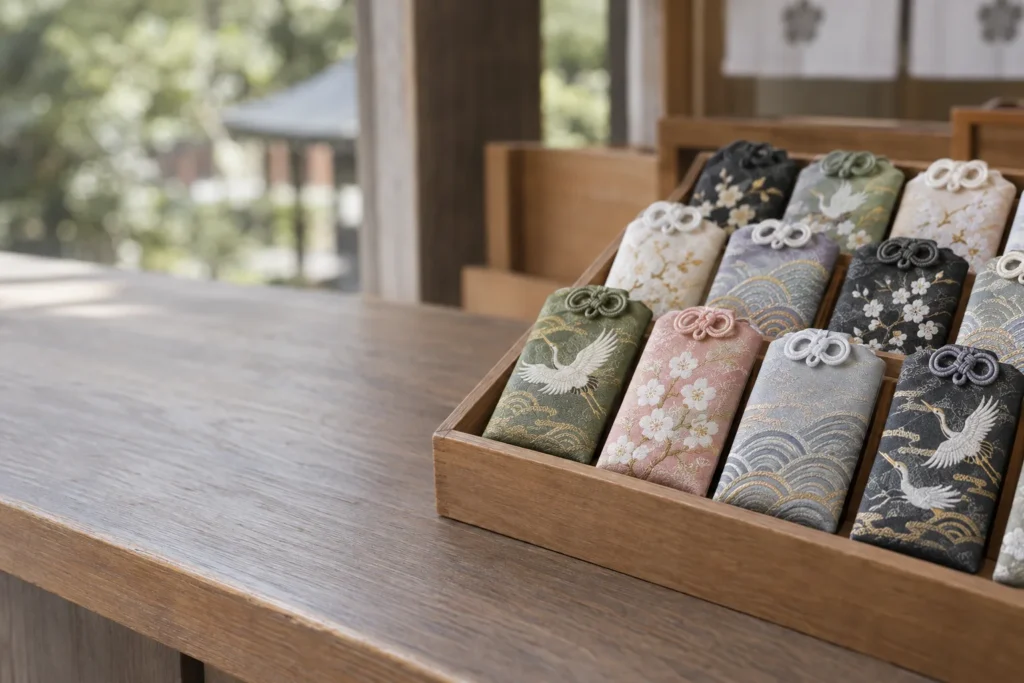
At almost every shrine and temple in Japan, rows of omamori, small brightly colored pouches, are laid out in neat lines at a counter near the main hall. Some are embroidered in gold thread, some in deep indigo, some with tiny cats, cranes, or cherry blossoms. Visitors linger over them, choosing carefully, as if picking a gift for someone they love.
These pouches are omamori (お守り), Japan’s traditional charms. An omamori is a small amulet, usually a cloth pouch containing a blessed slip of paper or wood, that a Shinto shrine or Buddhist temple offers to visitors for protection or good fortune in a particular part of life, such as health, safe travel, study, or love. The name comes from the verb mamoru (守る), “to protect.”
Millions of Japanese people carry an omamori on a bag, a key ring, or a car mirror, and many travelers bring one home as a meaningful souvenir. But omamori come with customs that visitors often don’t know: they are not opened, they are usually kept for about a year, and they are returned rather than thrown away. This guide explains what omamori are, why these customs exist, how shrine and temple charms differ, what the main types mean, and how to receive, carry, and return one respectfully.
What Is an Omamori?
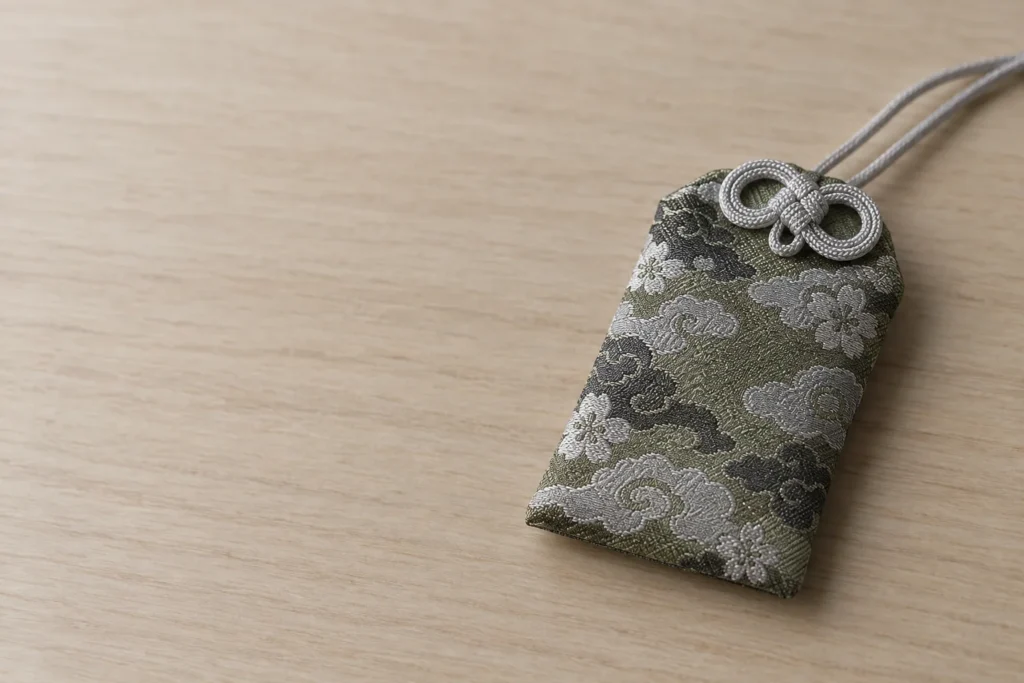
An omamori looks simple: a flat pouch of brocade or cotton, a few centimeters long, closed at the top with a decorative cord tied in a special knot. On the front, embroidered characters usually name the blessing, such as 交通安全 (kōtsū anzen, traffic safety). On the back, they name the shrine or temple that issued it. The characters are often based on brushwork, a small example of how Japanese calligraphy (書道) lives on in everyday objects.
The important part is inside. Most omamori contain a small slip of paper or a thin piece of wood, inscribed with the name of the shrine’s deity, a Buddha or bodhisattva, a sacred phrase, or the temple’s name. This inner slip has been blessed through prayers or rituals, and it is what gives the omamori its meaning. The pouch is its protective covering.
Because of this, Japanese people speak of receiving an omamori rather than buying one. At the counter, you offer a set amount, often between 300 and 1,500 yen, and the charm is handed to you. The money is understood as an offering to the shrine or temple, not as the price of a product. It may seem like a small difference in wording, but it reflects how the object is regarded: an omamori is a portable piece of a sacred place, carried into daily life.
Why Omamori Work the Way They Do
Three customs surprise many first-time visitors. Each makes sense once you understand how the charm is regarded.
Why You Shouldn’t Open It
Because the blessed slip inside is the heart of the omamori, it is traditionally said that opening the pouch lets the protection escape, or at least treats a sacred object carelessly. In practice, the custom is about respect rather than magic. The pouch keeps the inner slip clean and whole, and leaving it closed is a way of treating it as something set apart from ordinary things. If an omamori is damaged, the usual practice is to return it and receive a new one, not to repair it.
Why About One Year
Omamori are generally kept for about a year. According to a multilingual guide published by Japan’s tourism authorities for Meiji Jingu in Tokyo, charms are usually returned “once they have served their purpose, or if they are more than a year old,” typically around New Year before a new one is received.
There are two common explanations. The first is practical: a charm carried every day collects dirt and wear, and a fresh one keeps the practice fresh too. The second is spiritual. In Shinto thought, purity and renewal matter deeply, and the New Year is a natural moment to give thanks for the past year’s protection and begin again. The one-year guideline is a custom rather than a strict rule. Many people keep a charm longer, especially one received for a specific goal, such as a safe birth or an exam, until that goal has been reached.
Why You Return It Instead of Throwing It Away
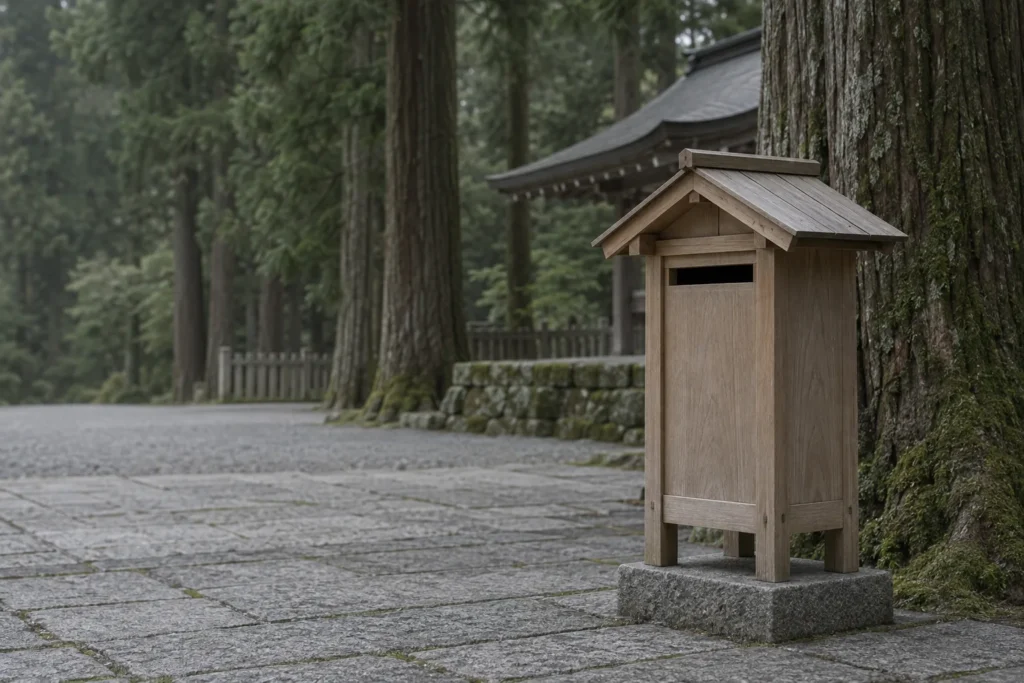
Since an omamori is regarded as sacred, putting it in the trash would be disrespectful. Instead, shrines and temples provide boxes, often near the entrance, where visitors can return old charms. The same guide explains that “returned items are then burned in a sacred fire.” This ceremony, called otakiage (お焚き上げ), is often held around New Year or Little New Year in mid-January. Burning the charms is seen as a respectful way to send them off with gratitude.
Shrine or Temple? Omamori in Buddhism and Zen
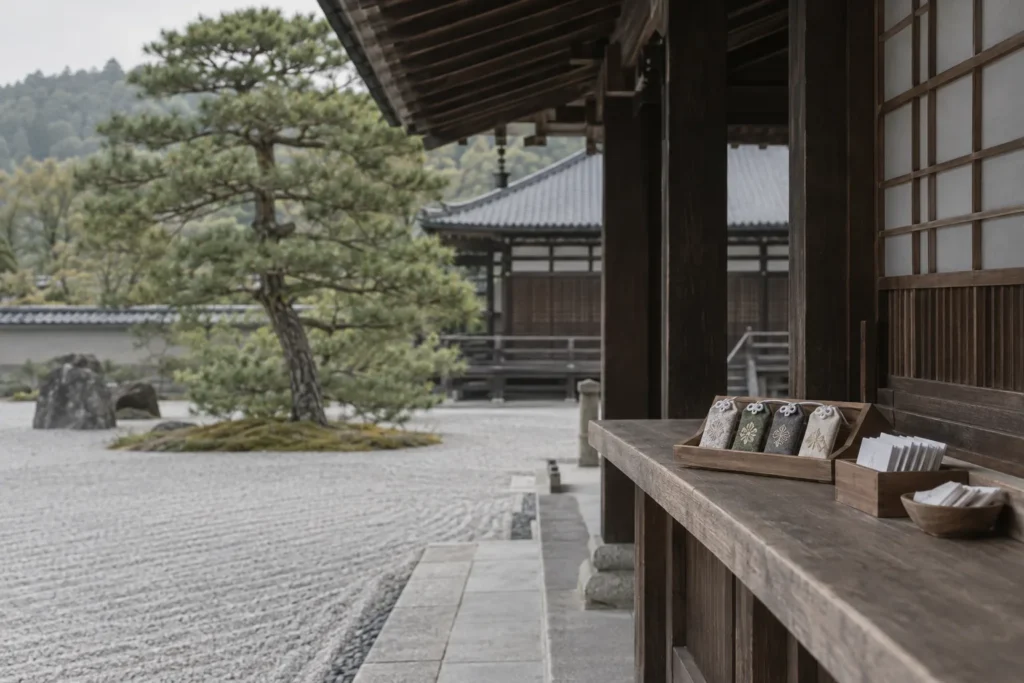
Both Shinto shrines and Buddhist temples offer omamori, and to the casual visitor they look almost identical. The difference lies in the source of the blessing. A shrine’s omamori draws on the power of the shrine’s kami, the deities of Shinto. A temple’s omamori is associated with a Buddha, a bodhisattva such as Kannon or Jizō, or the temple’s founder, and it is usually blessed through sutra chanting or prayers by the temple’s priests.
Japanese people generally see no conflict in carrying charms from both. For more than a thousand years, Shinto and Buddhism in Japan were deeply intertwined, and many families visit a shrine for New Year and a temple for funerals and memorial services without a second thought. It is perfectly acceptable to carry a shrine charm for traffic safety and a temple charm for health at the same time.
Buddhist temples, including many temples of Zen Buddhism, offer omamori too. From a Zen point of view, though, the charm is best understood not as a magical object but as a reminder. Zen teaching places responsibility for awakening on one’s own practice, not on outside powers. A charm for safe travel, in this light, is a small daily prompt to drive with care and attention; a charm for health is a reminder to look after the body you have. It points you back to your own conduct, rather than replacing it.
This is the same spirit you meet during a temple stay, where monks treat ordinary actions such as cleaning, eating, and walking as part of practice. An omamori carried with that attitude becomes less a lucky charm than a quiet vow.
Types of Omamori and Their Meanings
Most omamori are dedicated to one purpose, and the characters on the front tell you which. These are the types you will see most often:
| Name | Japanese | Meaning |
|---|---|---|
| Yakuyoke | 厄除け | Warding off misfortune and evil, especially in yakudoshi, the traditionally unlucky years of life |
| Kaiun | 開運 | Opening good fortune; general good luck |
| Kōtsū anzen | 交通安全 | Traffic safety, for drivers, cyclists, and travelers |
| Gakugyō jōju | 学業成就 | Success in study; also for passing exams |
| Enmusubi | 縁結び | Good relationships and finding love |
| Anzan | 安産 | Safe pregnancy and childbirth |
| Kenkō | 健康 | Good health |
| Shōbai hanjō | 商売繁盛 | Prosperity in business |
| Kanai anzen | 家内安全 | Safety and harmony of the household |
| Katsumamori | 勝守 | Victory, for athletes and competitions |
Many shrines and temples also offer charms tied to their own history. A shrine dedicated to a scholar may be famous for study charms, while a temple known for its healing image may be sought out for health.
What About the Colors?
Online, you will often find charts claiming that each color of omamori has a fixed meaning: pink for love, blue for study, red for health, and so on. These charts are not a rule shared by shrines and temples. Each shrine and temple designs its own charms, and the same blessing may come in several colors, or one color may be used for many blessings. The characters on the charm, not its color, tell you what it is for. Choosing a color you like is perfectly fine, as long as you read the characters first.
Omamori Etiquette: Receiving, Carrying, and Returning
Receiving an Omamori
It is customary to pay your respects at the main hall before visiting the amulet counter, known as the juyosho (授与所). At a shrine, this usually means bowing, making a small offering, and praying; at a temple, bowing and placing your palms together. Then choose your charm, offer the stated amount, and receive it with both hands. There is no need to speak Japanese; a smile and a bow are understood everywhere. A good travel guidebook with a section on shrine and temple etiquette is useful if you want to feel confident before your first visit.
Carrying It
Keep your omamori somewhere it stays with you and is treated with care: on a bag, in a wallet or pencil case, on a key ring, or hung from a car’s rear-view mirror for a traffic safety charm. Many people attach study charms to a school bag, as a Japan National Tourism Organization guide notes about the famous charms of Dazaifu Tenmangu. Avoid places that feel disrespectful, such as a back pocket you sit on, and keep it away from water.
Having More Than One
It is fine to carry several omamori, even from different shrines and temples. A common saying claims that charms from different deities will “argue,” but there is no such rule, and carrying several charms is common in Japan. What matters is the care you give each charm.
Giving an Omamori as a Gift
Omamori make thoughtful gifts. Japanese people often receive a charm on behalf of a friend or family member: a study charm for a student, a safe-birth charm for an expectant mother, a traffic safety charm for someone who has just bought a car. When you bring one home for someone, tell them where it came from and why you chose it. Like the spirit of ichigo ichie (一期一会), “one time, one meeting,” the gift carries the memory of a single visit that will not happen in quite the same way again.
If You Lose or Damage It
Charms carried every day sometimes go missing or wear out. If an omamori is lost, there is no need to worry that bad luck will follow. A common way of thinking in Japan is that a charm which disappears or breaks may have taken a misfortune upon itself in your place, having done the job it was given. Simply give thanks for the protection it offered and, when you can, receive a new one. If a charm becomes torn, stained, or frayed, do not try to repair it or open it to save the inner slip. Return it to a shrine or temple as you would any old charm. The same applies to the decorative cord: if it comes loose, you can tie it again gently, but if the pouch itself is coming apart, it is time to let it go. Treating even a worn-out charm with care is part of the practice, and many people find that the habit of noticing and caring for such a small object carries over into the way they treat other things.
Returning It
When your charm has done its work, or after about a year, return it to the shrine or temple where you received it, or to any shrine or temple with a return box. As a rule, shrine charms go to shrines and temple charms go to temples. Place the charm in the return box, bow, and give thanks.
If you live outside Japan, returning a charm is harder but not impossible. Some shrines and temples abroad accept old charms for their own otakiage ceremonies. In the United States, for example, the Shinto Shrine of Shusse Inari in America, based in Los Angeles, accepts omamori and ofuda from other shrines and temples by mail for its otakiage ceremony, with a small donation. If you have no way to return a charm, many people simply keep it in a clean, high place at home, wrapped in white paper, until they next visit Japan.
Where to Find Memorable Omamori
Every shrine and temple has its own charms, and part of the pleasure is discovering them as you travel. A few places are especially well known. The Japan National Tourism Organization’s guide to protective charms at temples and shrines highlights several of them.
- Kyoto. Seimei Shrine, dedicated to the court astrologer Abe no Seimei, is famous for charms bearing a five-pointed star that ward off misfortune. Kyoto’s many Zen temples also have their own charms, often in quieter, more restrained designs, and a walk along our Kyoto Zen Trail passes several temple offices. A guided walk of Kyoto’s shrines and temples is an easy way to learn the stories behind each charm.
- Tokyo and Kanagawa. Meiji Jingu, Tokyo’s great Shinto shrine, offers charms in a calm forest setting and provides a box for returning old ones. Kawasaki Daishi Heikenji, a Buddhist temple in nearby Kawasaki, is known for charms against misfortune and for traffic safety. A guided tour combining Meiji Jingu with Asakusa’s temple district makes a good introduction.
- Kamakura. Kamakura’s temples and shrines, including the great Zen monasteries of the city, are an easy day trip from Tokyo and an ideal place to compare shrine and temple charms within a short walk.
- Fukuoka. Dazaifu Tenmangu, dedicated to the scholar Sugawara no Michizane, is one of Japan’s most popular places to receive charms for academic success.
A Small Promise to Carry
An omamori weighs almost nothing, and it is easy to treat it as a cute souvenir. But the customs around it suggest something more: that an ordinary object can carry a place, a wish, and a promise with it into daily life. Received with respect, carried with care, and returned with thanks, it completes a small circle of gratitude, and each time you notice it on your bag, it invites you to remember what you hoped for, and to act accordingly.
FAQ
Q: What is inside an omamori?
A: Most omamori contain a small slip of paper or a thin piece of wood inscribed with the name of a shrine’s deity, a Buddha or bodhisattva, a sacred phrase, or the temple’s name. The slip has been blessed through prayers or rituals, and it is considered the heart of the charm.
Q: Can you open an omamori?
A: It is traditionally said that you should not. Opening the pouch is believed to let the protection escape, or at least to treat a sacred object carelessly. If a charm is damaged, the usual practice is to return it to a shrine or temple and receive a new one.
Q: How long do you keep an omamori?
A: Usually about a year. Many people return old charms around New Year and receive new ones. Charms received for a specific goal, such as a safe birth or an exam, are often kept until the goal is reached and then returned with thanks.
Q: Can I have more than one omamori?
A: Yes. You can carry several omamori at once, even from different shrines and temples. The popular belief that charms from different deities will quarrel is not a rule, and many Japanese people carry several charms.
Q: Can you buy omamori outside Japan?
A: A few Shinto shrines and Buddhist temples outside Japan offer their own omamori, and online shops sell charms imported from Japan. Many people feel that a charm received in person at a shrine or temple is more meaningful, since the visit itself is part of the blessing.
References
- Japan National Tourism Organization. (2018, October 17). Family protection, health and more: Visit these special temples and shrines. Japan National Tourism Organization.
- Japan Tourism Agency. (n.d.). Koshinpu nosatsusho, box to return old amulets. Multilingual Commentary Database.
- Shinto Shrine of Shusse Inari in America. (n.d.). Otakiage: Shinto item return and ritual bonfire. Shinto Shrine of Shusse Inari in America.