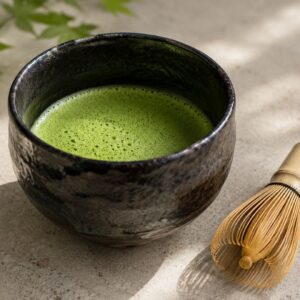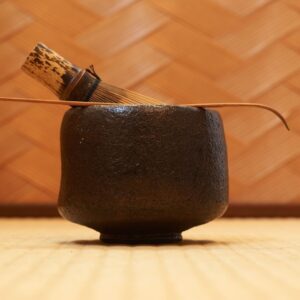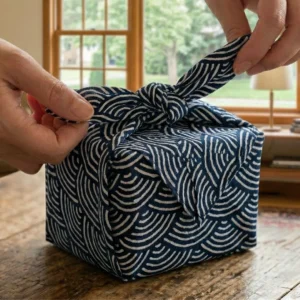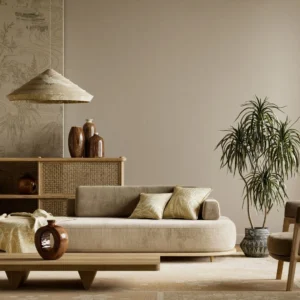
Wabi-sabi (侘び寂び) is a Japanese aesthetic philosophy centered on finding beauty in imperfection, impermanence, and incompleteness. Originating from Zen Buddhist teachings and refined through the tea ceremony tradition of Sen no Rikyū in the 16th century, wabi-sabi embraces the natural cycle of growth and decay. Wabi refers to the quiet beauty of rustic simplicity, while sabi describes the elegance that comes with the passage of time. Together, they offer an alternative to Western ideals of perfection and permanence—inviting appreciation for weathered surfaces, asymmetric forms, and the transient nature of all things.
Introduction
Imagine walking through a centuries-old Japanese temple garden. You notice a weathered stone basin, its surface marked by moss and time. A crack runs through aged pottery holding a single autumn branch. The rough-hewn tea bowl in your hands bears the unmistakable marks of the craftsman’s fingers. Everything appears incomplete, imperfect, impermanent—yet profoundly beautiful.
This is wabi-sabi (侘寂), one of Japan’s most influential aesthetic and philosophical concepts. In a world obsessed with perfection, flawlessness, and eternal youth, wabi-sabi offers a radically different perspective: true beauty lies not in perfection but in imperfection, not in permanence but in transience, not in completeness but in simplicity.
The term wabi-sabi has gained significant attention in Western design and lifestyle circles over the past two decades, appearing in everything from interior design magazines to mindfulness books. Yet this ancient philosophy runs far deeper than trendy minimalist aesthetics. Rooted in Zen Buddhism and refined through Japanese tea ceremony, wabi-sabi represents a complete worldview—a way of seeing, being, and living that can transform how we relate to our homes, our possessions, ourselves, and the passage of time.
This comprehensive guide will take you on a journey through the origins, principles, and practical applications of wabi-sabi. You’ll discover how this 500-year-old philosophy emerged, what it truly means beyond surface aesthetics, and most importantly, how you can integrate wabi-sabi wisdom into your modern life to find greater peace, authenticity, and appreciation for the beauty that already surrounds you.
The Origins and History of Wabi-Sabi
Etymology: Understanding the Words
o grasp wabi-sabi fully, we must first understand its component parts, which originally had quite different meanings than they do today.
Wabi (侘): The character 侘 originally conveyed loneliness, desolation, and the misery of living alone in nature, away from society. By the 14th century, however, Buddhist monks and poets began to reframe this concept positively. Wabi came to represent simplicity, quietness, and the profound peace found in solitude and rustic simplicity. According to scholar Andrew Juniper, wabi evolved to mean “a sense of understated elegance or quiet simplicity” and later “a life unencumbered by the material world” (Juniper, 2003, p. 51).
Sabi (寂): Sabi initially meant “chill,” “lean,” or “withered”—terms associated with aging and loneliness. Over time, particularly through the influence of medieval Japanese poetry, sabi acquired aesthetic dimensions. It came to represent the beauty visible in things that show the patina of age, the marks of time, and the weathering of years. Leonard Koren describes sabi as “the beauty or serenity that comes with age, when the life of the object and its impermanence are evidenced in its patina and wear, or in any visible repairs” (Koren, 1994, p. 26).
The Compound: Wabi-Sabi: When combined, wabi-sabi creates a concept greater than its parts. While the terms had been used separately in Japanese aesthetics, their pairing into the compound “wabi-sabi” is relatively modern, becoming common only in the 20th century. Together, they express an aesthetic that finds beauty in imperfection, impermanence, incompleteness, and the humble marks of time and nature.
Historical Development: From Poverty to Philosophy
The evolution of wabi-sabi cannot be separated from the development of the Japanese tea ceremony (chanoyu) and Zen Buddhism.
The Muromachi Period (1336-1573): Early Foundations
During Japan’s medieval period, tea drinking evolved from a stimulant used by Buddhist monks during long meditation sessions into an elaborate social ritual among the aristocracy. Initially, tea gatherings featured ostentatious displays of wealth—expensive Chinese ceramics, elaborate decorations, and competitive tea-tasting games.
This began to change as Zen Buddhist principles infiltrated tea culture. Zen monks like Ikkyu Sojun (1394-1481) emphasized simplicity and direct experience over ritual complexity. Ikkyu famously criticized the pretentious tea culture of his time, advocating instead for simplicity and authenticity.
The Azuchi-Momoyama Period (1573-1603): The Revolutionary Tea Masters
he true crystallization of wabi-sabi occurred through the work of two revolutionary tea masters: Murata Juko (1423-1502) and especially Sen no Rikyu (1522-1591).
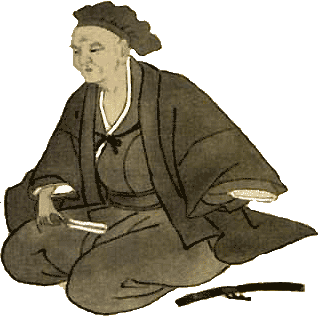
Portrait of Murata Jukō, Founder of the Japanese Tea Ceremony Artist: Unknown
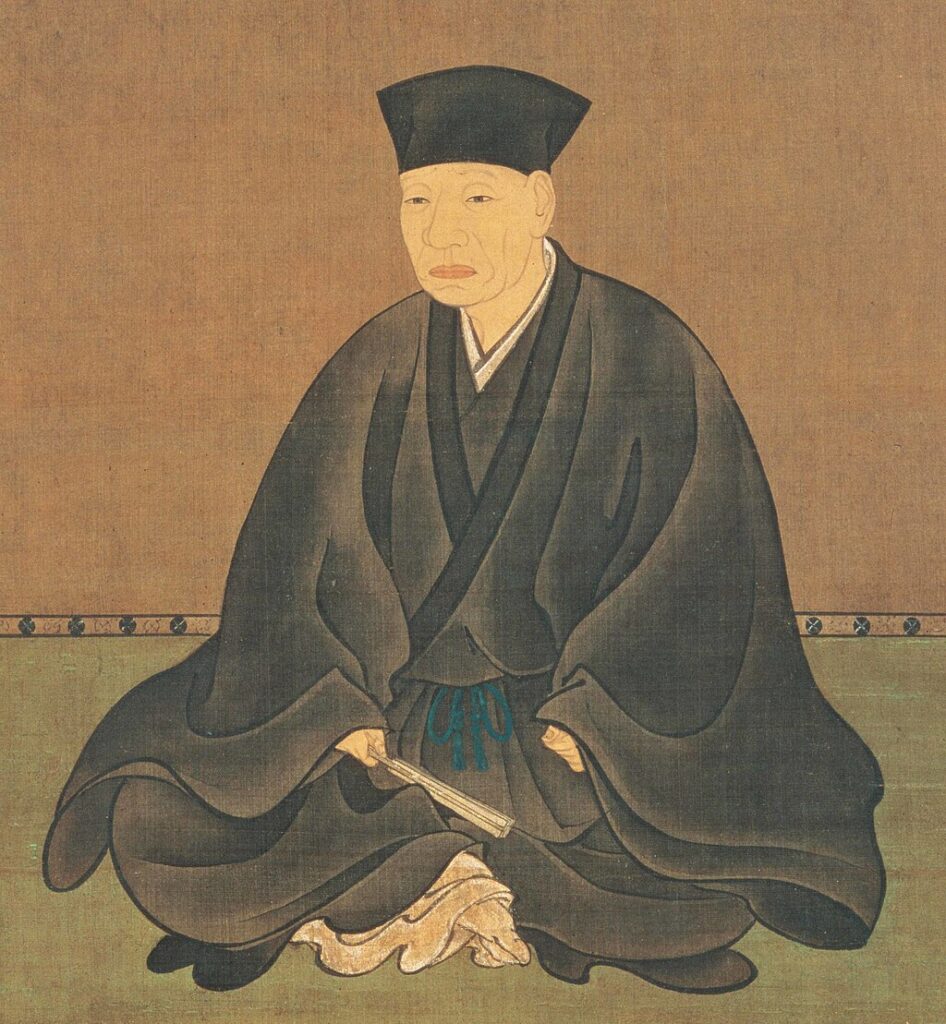
Portrait of Sen no Rikyu Painting by Hasegawa Tōhaku (1539–1610) Inscribed by Shunoku Sōen (1529–1611)
Murata Juko introduced the concept of wabi-cha (wabi tea), deliberately using simple, rough, and even damaged Korean and Japanese pottery instead of expensive Chinese ceramics. He transformed the tea ceremony from a display of wealth into a spiritual practice emphasizing humility and presence. Juko famously stated: “The moon not clear, the night not void of cloud—this is the flower of longing” (quoted in Varley & Kumakura, 1989, p. 187). In other words, perfect clarity is less interesting than the subtle beauty of obscurity and imperfection.
Sen no Rikyu perfected and codified the wabi aesthetic in tea ceremony. As the most influential figure in the history of Japanese tea, Rikyu transformed the practice into its modern form. His innovations included:
- Designing the nijiriguchi (crawling-in entrance), a small doorway that forced even high-ranking samurai to enter the tea room in humility
- Creating extremely small tea rooms (as small as 4.5 tatami mats, or about 2.7 square meters), promoting intimacy and equality
- Using humble, imperfect tea bowls, often hand-formed Korean peasant ware
- Emphasizing natural, unadorned materials—rough clay, weathered wood, simple bamboo
- Reducing decoration to a single flower in a simple container or a hanging scroll with minimal calligraphy
Rikyu’s aesthetic philosophy can be summarized in seven principles he established for tea ceremony, as recorded by his descendants (Tanaka, 1973):
- Wa (和) – Harmony
- Kei (敬) – Respect
- Sei (清) – Purity
- Jaku (寂) – Tranquility
These principles extended far beyond tea ceremony to encompass a complete approach to living. Rikyu demonstrated that the path to beauty and meaning lay not in accumulation and perfection, but in subtraction, simplicity, and acceptance of natural processes.
Related guide: the Zen tea ceremony and Sen no Rikyū’s wabi-cha revolution
The Edo Period (1603-1868): Literary and Artistic Expression
During the Edo period, wabi-sabi expanded beyond tea ceremony into literature, particularly through haiku poetry. Matsuo Basho (1644-1694), Japan’s most celebrated haiku poet, embodied wabi-sabi sensibility in his verses:
An old pond—
A frog jumps in,
The sound of water.
This famous haiku exemplifies wabi-sabi: a humble scene, a moment of imperfection breaking stillness, the appreciation of a fleeting sound. Basho wrote about decaying farmhouses, withered fields, and the loneliness of travel—finding profound beauty in transience and simplicity.
Philosophical Foundations: The Buddhist Roots
Wabi-sabi’s philosophical foundation rests firmly in Buddhist teachings, particularly three fundamental concepts:
Mujō (無常) – Impermanence: Nothing in existence is permanent. All things arise, change, and pass away. This fundamental Buddhist teaching underlies wabi-sabi’s appreciation for the marks of age and decay. Rather than resisting impermanence, wabi-sabi embraces it as a source of beauty and meaning.
Ku (空) – Emptiness: This Zen Buddhist concept (also called shunyata) teaches that nothing possesses inherent, independent existence. Everything exists in relationship to everything else, without fixed essence. In wabi-sabi aesthetics, this manifests as appreciation for simplicity, space, and the beauty of the unfinished or incomplete.
Dukkha (苦) – Suffering or Dissatisfaction: Buddhist teaching recognizes that attachment to permanence and perfection causes suffering. Wabi-sabi offers liberation from this suffering by helping us appreciate things as they are—imperfect, impermanent, incomplete—rather than grasping for an impossible ideal.
As Zen scholar D.T. Suzuki wrote: “Wabi is to be satisfied with a little hut, a room of two or three tatami mats, like the log cabin of Thoreau, and with a dish of vegetables picked in the neighboring fields, and perhaps to be listening to the pattering of a gentle spring rainfall” (Suzuki, 1959, p. 287).
Related guide: Mono no Aware: The Japanese Philosophy of Bittersweet Beauty
The Core Principles of Wabi-Sabi
Understanding wabi-sabi requires going beyond surface aesthetics to grasp its fundamental principles. While different scholars emphasize different aspects, the following seven principles capture wabi-sabi’s essence:
1. Kanso (簡素) – Simplicity and Elimination of Clutter
Kanso means simplicity achieved through careful subtraction rather than addition. It’s not about barrenness but about reducing to the essential, creating space for what matters.
In wabi-sabi, simplicity serves multiple purposes:
- It eliminates visual and mental noise
- It reveals the true nature of things
- It creates ma (間)—meaningful empty space
- It allows appreciation of subtle details
The tea master’s empty room, containing only what’s needed for tea—a kettle, tea bowl, simple flower arrangement—exemplifies kanso. Everything unnecessary has been removed, allowing full attention to the ceremony and the present moment.
In contemporary terms, kanso challenges our culture of accumulation. It asks: What can be removed? What is truly essential? How much emptiness can you tolerate before feeling compelled to fill it?
2. Fukinsei (不均斉) – Asymmetry and Irregularity
Wabi-sabi rejects perfect symmetry and geometric regularity, finding them artificial and lifeless. Nature rarely produces perfect symmetry—trees grow asymmetrically, rivers meander irregularly, mountains rise in uneven peaks.
This principle manifests in various ways:
- In ceramics: Hand-formed tea bowls with irregular rims, uneven glazing, and asymmetrical form
- In flower arrangement (ikebana): Avoiding balanced, symmetrical compositions in favor of dynamic, natural-looking arrangements
- In architecture: Deliberately irregular stone pathways, asymmetrical garden layouts
- In design: Avoiding repetitive patterns and perfect geometric shapes
Fukinsei creates visual interest and reflects the organic nature of reality. It also implies humility—perfection is for the divine; imperfection is beautifully human.
3. Shizen (自然) – Naturalness and Absence of Pretense
Shizen doesn’t simply mean “nature” but rather “naturalness”—things being allowed to be themselves without force or artifice. It’s the opposite of contrived, artificial, or overly controlled.
In wabi-sabi practice:
- Materials are used in ways that honor their natural qualities (wood grain visible, stone’s natural surface texture preserved)
- Processes reveal rather than conceal the maker’s hand (finger marks in clay, visible brush strokes in calligraphy)
- Design works with nature rather than against it
- Actions arise from genuine feeling rather than social obligation
The 17th-century poet Onitsura captured shizen when he advised: “Learn about the pine from the pine, learn about the bamboo from the bamboo” (quoted in Addiss et al., 2006, p. 147). True understanding comes from allowing things to reveal themselves, not imposing our preconceptions.
4. Yugen (幽玄) – Subtle Profundity and Mystery
Yugen is perhaps wabi-sabi’s most elusive quality. It refers to subtle beauty that hints at profound depths without fully revealing them—the mystery of things that remain partially concealed.
Examples include:
- Mountains partially obscured by mist
- The sound of a temple bell fading into silence
- A garden path that curves out of sight, suggesting what lies beyond
- The subdued lighting in a tea room, creating pools of shadow
Yugen creates space for imagination and contemplation. It recognizes that explicitly stating everything diminishes mystery and wonder. Some things are more beautiful suggested than fully revealed, implied rather than stated.
In modern life, yugen counters our culture’s demand for complete transparency, explicit communication, and total accessibility. It reminds us that not everything needs to be fully explained, brightly lit, or completely exposed.
5. Datsuzoku (脱俗) – Freedom from Convention
Datsuzoku means liberation from habit, formula, and convention. It’s the creative freedom that emerges when you step outside prescribed rules and approaches.
In wabi-sabi aesthetics, this manifests as:
- Using “inappropriate” materials in surprising ways (Rikyu’s use of peasant pottery for aristocratic tea ceremony)
- Breaking established rules to create something genuine
- Transcending categories and expectations
- Spontaneity and freshness of approach
Datsuzoku doesn’t mean random rebellion for its own sake. Rather, it’s freedom earned through deep understanding—knowing the rules so thoroughly that you can transcend them meaningfully. As Picasso reportedly said: “Learn the rules like a pro, so you can break them like an artist.”
6. Seijaku (静寂) – Tranquility and Stillness
Seijaku refers to stillness, silence, and tranquility—not as mere absence of sound or movement, but as active quality of calm presence.
This principle appears in:
- The quiet atmosphere of the tea room
- The silence between words in conversation
- The still surface of water in a stone basin
- The mental calm cultivated through meditation
Seijaku is both means and end in wabi-sabi practice. Quiet spaces cultivate quiet minds; quiet minds appreciate quiet spaces. In our noisy, hyperactive culture, seijaku offers sanctuary—permission to be still, to let the mind settle, to simply be rather than constantly do.
7. Kanketsu (簡潔) – Appreciation of the Weathered and Aged
While often considered part of sabi, this principle deserves special attention. Kanketsu involves finding beauty in things that show the passage of time—the patina of age, the marks of use, the gentle degradation that reveals an object’s history.
This manifests as:
- Weathered wood that has turned silver-grey
- Copper roofs aged to verdigris
- Ceramics that have developed a crackling in the glaze (貫入, kan’nyu)
- Garden stones covered in moss
- Vintage textiles softened by washing and wear
Crucially, this isn’t simply old for old’s sake, nor manufactured “distressing.” Wabi-sabi appreciates authentic aging—the genuine marks left by time, use, and natural processes. These marks tell stories, connect us to history, and remind us of impermanence.
Wabi-Sabi vs. Western Aesthetics: A Fundamental Contrast
To truly understand wabi-sabi, it helps to contrast it with dominant Western aesthetic values. While these are generalizations (both traditions contain diversity), the contrast illuminates wabi-sabi’s distinctive character.
| Aspect | Western Aesthetic (Traditional) | Wabi-Sabi Aesthetic |
|---|---|---|
| Perfection | Values flawlessness, precision, geometric perfection | Values imperfection, irregularity, organic forms |
| Materials | Precious metals, refined materials, polished surfaces | Humble materials, rough textures, natural finishes |
| Symmetry | Symmetric, balanced, ordered | Asymmetric, irregular, natural |
| Permanence | Built to last forever, defying time | Embraces impermanence, accepts decay |
| Newness | Values the new, pristine, and unused | Values age, patina, marks of use |
| Addition | Beauty through decoration and embellishment | Beauty through subtraction and simplicity |
| Brightness | Well-lit, clearly visible, transparent | Subdued lighting, shadow, mystery |
| Completion | Finished, complete, resolved | Unfinished, suggesting continuation |
| Objective | Universal standards of beauty | Subjective, personal perception |
| Technology | Celebrates technological perfection | Questions technological excess |
This contrast explains why wabi-sabi can feel counterintuitive to Western sensibilities. We’ve been conditioned to value the opposite qualities. Yet many people experience wabi-sabi as deeply liberating precisely because it challenges these ingrained assumptions.
Leonard Koren notes: “Wabi-sabi is exactly about the delicate traces, the faint
evidence, at the borders of nothingness” (Koren, 1994, p. 50). Where Western aesthetics often emphasize bold presence and clear definition, wabi-sabi appreciates subtle suggestion and gentle absence.
Wabi-Sabi in Traditional Japanese Arts
Wabi-sabi isn’t confined to philosophy—it permeates Japanese traditional arts, offering concrete examples of its principles in action.
Tea Ceremony (Chanoyu)
The tea ceremony remains wabi-sabi’s clearest expression. Every element embodies these principles:
The Tea Room:
- Small, simple space (often just 4.5 tatami mats)
- Natural materials: clay walls, rough wooden posts, thatched or shingled roof
- Subdued lighting from shoji screens
- Tokonoma (alcove) containing a simple scroll and seasonal flower
- Crawling entrance (nijiriguchi) promoting humility
Tea Utensils:
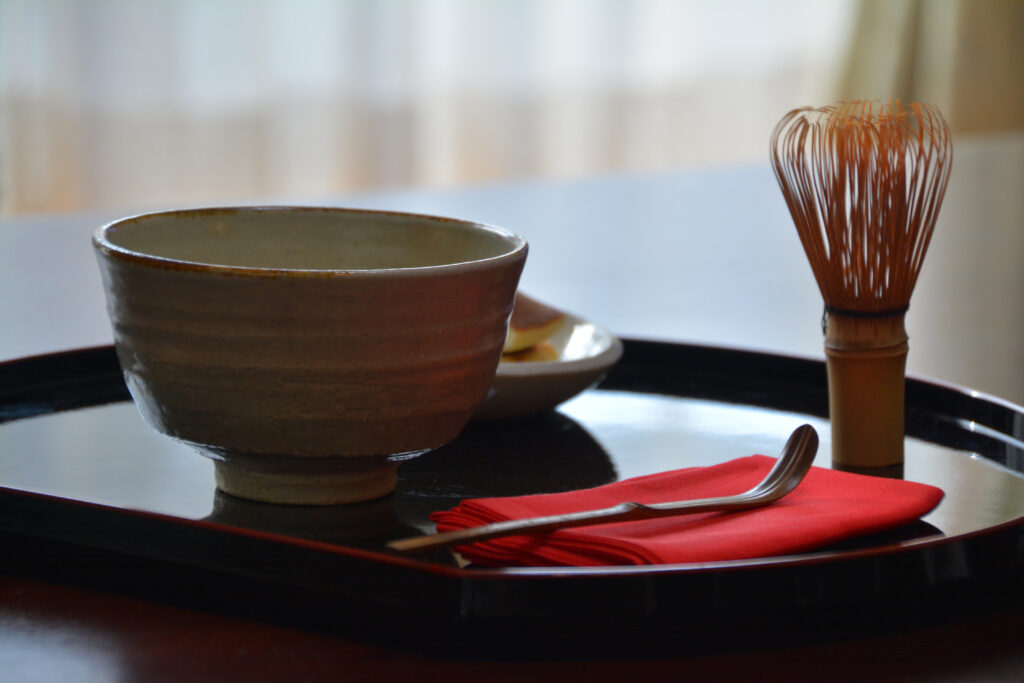
- Rustic ceramic tea bowls, often irregular and imperfect
- Bamboo tea scoop and whisk
- Simple iron kettle
- Humble tea container
The Ceremony Itself:
- Deliberate, mindful movements
- Attention to seasonal awareness
- Creating temporary beauty that exists only in the moment
- Host and guests co-creating an unrepeatable experience
Sen no Rikyu exemplified wabi-sabi when he advised: “In the small room tea is first of all a matter of studying Buddhism… a matter of vanity and attachment” to be transcended (quoted in Varley & Kumakura, 1989, p. 205).
Ceramics (Yakimono)
Japanese pottery traditions embody wabi-sabi beautifully:
Raku Ware: Developed for tea ceremony, raku ceramics are hand-formed rather than wheel-thrown, creating irregular shapes. They’re fired at low temperatures and removed from the kiln while still glowing hot, creating unpredictable crackled glazes and color variations. Each piece is unique, bearing the marks of fire and the potter’s hands.
Hagi Ware: Hagi pottery from Yamaguchi Prefecture is prized for developing subtle color changes over years of use as tea absorbs into its porous clay body—a literal embodiment of beauty emerging through time and use.
Kintsugi (金継ぎ): Perhaps the ultimate wabi-sabi practice, kintsugi repairs broken pottery using lacquer mixed with powdered gold. Rather than hiding the damage, kintsugi highlights it, making the repair part of the object’s history and beauty. This practice embodies several wabi-sabi principles:
- Accepting imperfection and damage
- Honoring the object’s history
- Finding beauty in scars
- Valuing repair over replacement
As Christy Bartlett writes in her introduction to Flickwerk: The Aesthetics of Mended Japanese Ceramics: “Not only is there no attempt to hide the damage, but the repair is literally illuminated… a kind of physical expression of the spirit of mushin….Mushin is often literally translated as ‘no mind,’ but carries connotations of fully existing within the moment, of non-attachment, of equanimity amid changing conditions” (Bartlett, 2008, p. 9).
Related guide: kintsugi – the art of repairing broken pottery with gold
Related guide: Raku Pottery: The Zen Art of Imperfect Tea Bowls
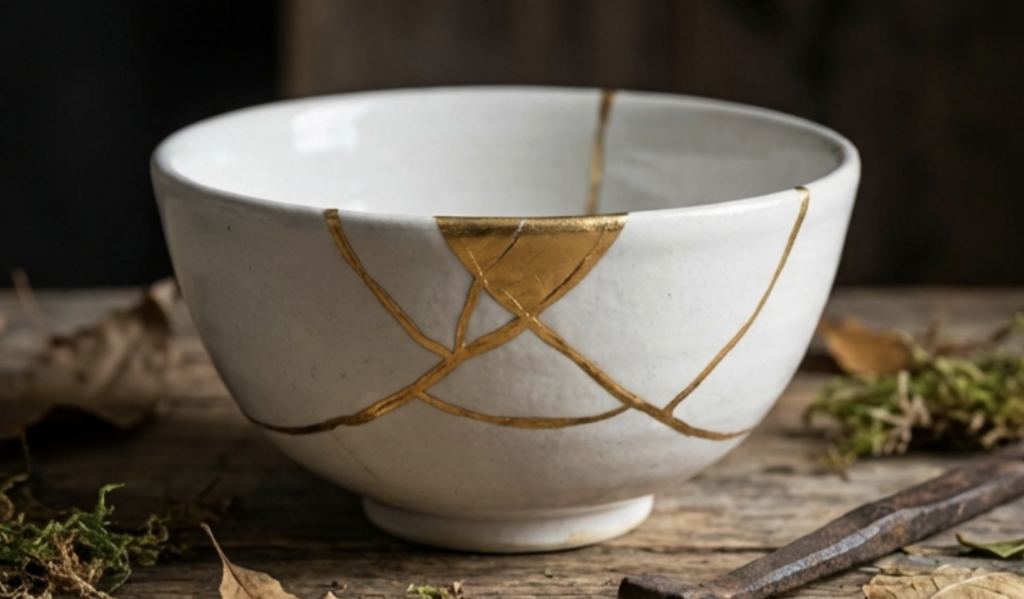
Kintsugi : The art of brokenness
Garden Design (Nihon Teien)
Japanese gardens express wabi-sabi through:
Karesansui (Dry Landscape Gardens): Zen rock gardens like Ryoan-ji in Kyoto embody wabi-sabi through extreme simplicity—just rocks, carefully raked gravel, and occasional moss. The asymmetric arrangement of stones, the suggestion of water through gravel patterns, and the meditative quality all reflect wabi-sabi principles.
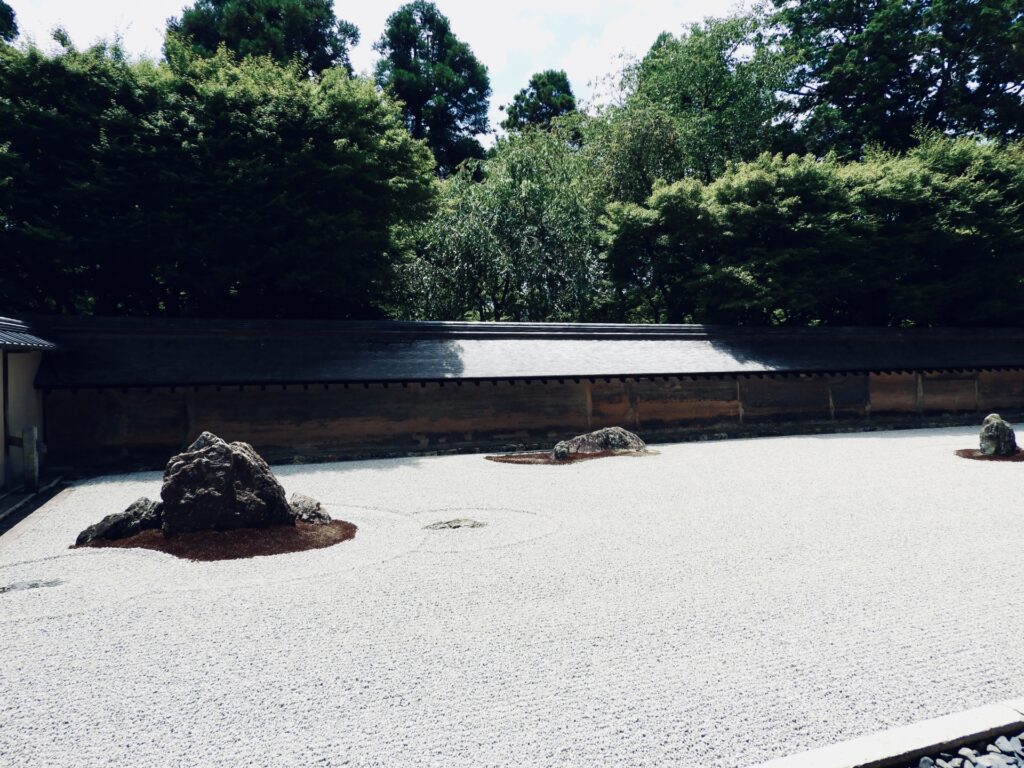
Ryoan-ji Temple
Related guide: Famous Zen Gardens in Kyoto: A Visitor’s Guide to Sacred Landscapes
Tea Gardens (Roji): The garden path leading to a tea house creates a transitional space from the ordinary world. Features include:
- Irregular stepping stones (suggesting natural pathways)
- Stone water basins weathered by time
- Deliberately “humble” plants rather than showy flowers
- Careful attention to natural aging and seasonal change
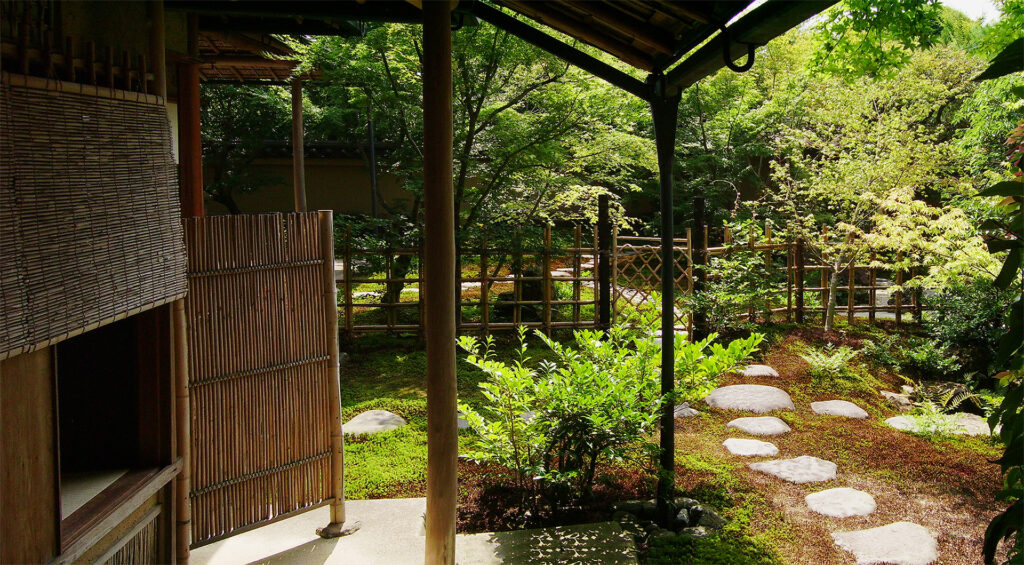
The Roji (Tea Garden) and Nijiriguchi (Crawl-in Entrance) Juraku-an Tea House, Adachi Museum of Art Yasugi, Shimane, Japan
Architecture
Traditional Japanese architecture incorporates wabi-sabi through:
- Exposed wooden structural elements showing grain and age
- Natural materials left in their unfinished state
- Sliding doors (fusuma, shoji) creating flexible, impermanent spaces
- Engawa (veranda) spaces that blur inside/outside boundaries
- Visible joinery rather than hidden fasteners
Related guide: Japanese Woodworking: The Zen Philosophy of Building Without Nails
Flower Arrangement (Ikebana)
Ikebana, particularly the wabi style, emphasizes:
- Asymmetric compositions
- Empty space (ma) as important as filled space
- Seasonal awareness and impermanence
- Natural, unpretentious materials (branches, grasses, single blooms)
- Arrangements that suggest natural growth patterns rather than contrived designs
The ikebana master Sofu Teshigahara wrote: “I like to use dead branches, to bring out the life in them” (quoted in Richie, 2007, p. 98), perfectly capturing wabi-sabi’s ability to find beauty in decay.
Related guide: Ikebana: The Japanese Art of Flower Arrangement and Its Zen Roots
Related guide: Sashiko: The Japanese Art of Stitching, Mending, and Finding Beauty in Repair
Related guide: Japanese Calligraphy (Shodō): The Zen Art of Brush and Ink
Related guide: Japanese Incense and Kōdō: The Ancient Art of Listening to Fragrance
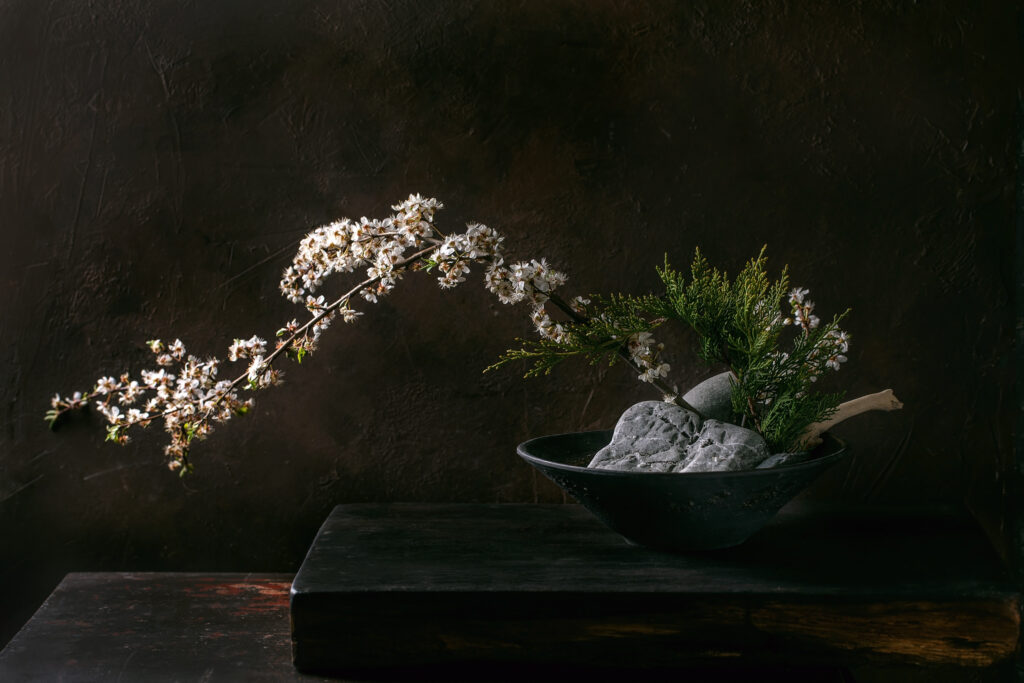
Minimalistic floral composition with spring blooming white flowers, thuja branch and stones in black ceramic bowl, standing on black wooden table.
Applying Wabi-Sabi to Your Home and Living Space
Understanding wabi-sabi philosophically is one thing; applying it practically to modern life is another. Here’s how to bring wabi-sabi into your living space.
Wabi-Sabi Interior Design Principles
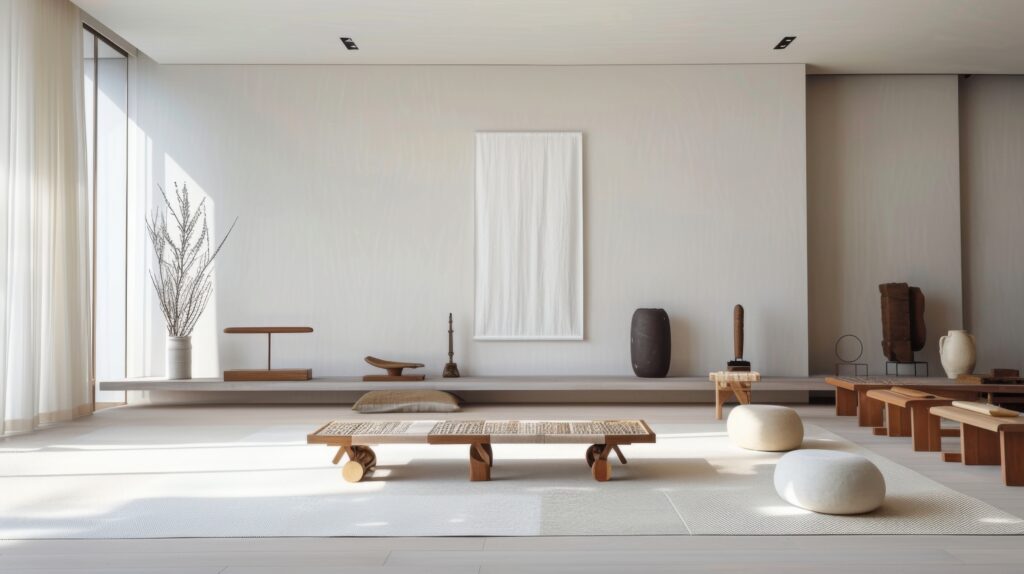
1. Embrace Natural, Unrefined Materials
Choose materials that age gracefully and show their natural character:
- Wood: Leave natural grain visible; choose reclaimed or weathered wood over perfectly finished lumber
- Stone: Irregular natural stone rather than polished marble; pebbles and river rocks
- Clay and Earth: Earthenware, terracotta, mud plaster walls
- Natural Fibers: Linen, cotton, hemp, wool, bamboo, jute
- Metal: Patinated copper, weathered iron, tarnished silver
What to Avoid:
- Plastic and synthetic materials that don’t age well
- Highly polished, mirror-like surfaces
- Materials that hide their nature (wood-grain laminate, faux stone)
2. Choose an Earthy, Muted Color Palette
Wabi-sabi colors come from nature:
- Warm earth tones: clay, sand, ochre
- Soft grays and weathered wood tones
- Muted greens (moss, sage, olive)
- Cream, off-white, natural linen
- Charcoal and deep brown
- Touches of rust, verdigris, or faded indigo
What to Avoid:
- Bright primary colors
- High-contrast color schemes
- Artificially vibrant hues
3. Value Handmade and Imperfect Objects
- Ceramics showing the maker’s hand—finger marks, irregular glazing
- Hand-woven textiles with slight variations
- Found objects from nature (driftwood, stones, dried branches)
- Vintage items with authentic patina
- Objects with visible repair (practicing kintsugi mentality)
What to Avoid:
- Mass-produced identical items
- Perfect, machine-made objects
- Plastic imitations of natural materials
4. Practice Subtraction and Simplicity
The essence of wabi-sabi interior design is removing what’s unnecessary:
The Subtraction Process:
- Remove all decorative items from a room
- Return only what serves a clear purpose or brings genuine joy
- Create generous empty space around remaining objects
- Resist the urge to fill empty space
Guidelines:
- One beautiful bowl is better than a shelf of mediocre pottery
- A single branch in a simple vase is more powerful than an elaborate flower arrangement
- An empty wall invites contemplation more than one covered in frames
- Floor space is more valuable than filled floor space
5. Let Natural Light and Shadow Play
Wabi-sabi lighting differs dramatically from typical Western interiors:
- Use natural light filtered through translucent materials (shoji screens, linen curtains)
- Allow shadows and dim areas—not everything needs bright illumination
- Use warm, low lighting in the evening
- Candlelight and oil lamps over electric brightness
- Position objects to catch interesting shadows
The Japanese novelist Junichiro Tanizaki wrote an entire essay, In Praise of Shadows (1933), celebrating the beauty of darkness and shadow in traditional Japanese spaces, arguing that wabi-sabi beauty emerges partly from what remains hidden in shadow.
6. Honor the Patina of Age
Rather than constantly refreshing and replacing:
- Allow copper to develop verdigris
- Let wood weather to silver-grey
- Embrace the crackle in old ceramics
- Keep vintage textiles that have softened with age
- Display objects that show marks of use
What Not to Do:
- Over-restore vintage items to “like new” condition
- Hide wear and tear
- Constantly refresh and replace furnishings
Room-by-Room Wabi-Sabi Applications
Living Room:
- Low, simple seating close to the floor
- Natural fiber rugs or tatami mats
- One or two carefully chosen art pieces rather than gallery walls
- Organic shapes (rounded ceramics, natural wood forms)
- Plants in simple containers
- Books displayed with care, not crammed on shelves
Bedroom:
- Natural fiber bedding (linen, cotton, hemp)
- Minimal furniture—bed, simple storage, perhaps one chair
- Neutral colors promoting calm
- Window coverings that filter rather than block light
- Empty floor space
- Natural materials underfoot
Kitchen/Dining:
- Open shelving displaying beautiful, functional pottery
- Handmade ceramics for daily use
- Wood cutting boards showing knife marks and patina
- Copper cookware developing natural color
- Simple table settings—each bowl unique
- Fresh seasonal ingredients as decoration
Bathroom:
- Natural stone or wood
- Simple ceramic basin
- Minimal products in beautiful containers
- Natural soaps and materials
- Plants that thrive in humidity
- Unpolished surfaces
Outdoor/Garden Spaces:
- Weathered wood furniture
- Stone pathways with irregular placement
- Native plants over exotic showpieces
- Water features with aged stone
- Allowing controlled wildness
- Seasonal change embraced
Related guide: Wabi-Sabi Interior Design: A Room-by-Room Guide to Living with Imperfection
Related guide: Japandi Style: Where Japanese Wabi-Sabi Meets Scandinavian Design
Practical Projects to Create Wabi-Sabi Spaces
Project 1: Create a Wabi-Sabi Altar or Display
Choose a small shelf, table, or alcove. Arrange:
- One beautiful ceramic vessel
- A single seasonal element (branch, stone, flower)
- Perhaps a candle
- Ample empty space around objects
Change seasonally, always maintaining simplicity. This becomes a focal point for contemplation.
Project 2: Practice Kintsugi Repair
When ceramic items break:
- Gather the pieces carefully
- Use food-safe epoxy mixed with metallic powder (gold, silver, or copper)
- Glue pieces together, allowing the metallic seams to show
- Or take a kintsugi workshop to learn traditional lacquer methods
This transforms breakage from tragedy to opportunity for creating unique beauty.
Project 3: Natural Material Swap
Systematically replace synthetic items with natural alternatives:
- Plastic storage → Woven baskets
- Synthetic rugs → Natural fiber rugs
- Artificial plants → Real plants or dried branches
- Plastic dishes → Ceramic pottery
- Polyester curtains → Linen or cotton
Do this gradually, choosing quality over quantity.
Project 4: The One-In, Two-Out Rule
To maintain wabi-sabi simplicity:
- When acquiring something new, remove two existing items
- This gradually reduces possessions
- Forces discrimination about what truly matters
- Creates breathing room in your space
Related guide: the principles of Zen architecture
Wabi-Sabi as a Mindset and Way of Life
While wabi-sabi aesthetic principles are valuable, the philosophy’s deepest power lies in how it shapes our consciousness and daily choices.
Embracing Imperfection in Self and Others
Personal Application: Wabi-sabi offers liberation from perfectionism’s tyranny. It suggests:
- Your wrinkles, scars, and grey hair are marks of a life lived, not flaws to erase
- Your mistakes and failures are part of your unique story
- Your quirks and irregularities make you interesting, not deficient
- “Perfect” doesn’t exist—striving for it causes suffering
As we age, wabi-sabi provides a healthier model than youth-obsessed culture. Each year adds patina to our lives, depth to our character, stories to our being. The Japanese concept of shibui (渋い) celebrates mature beauty—the subdued elegance that comes only with age.
Relationships: Applying wabi-sabi to relationships means:
- Accepting others’ imperfections without trying to fix or change them
- Appreciating people’s unique irregularities
- Understanding that relationships change and evolve (impermanence)
- Valuing authenticity over polished presentation
- Finding beauty in ordinary moments together
Practicing Non-Attachment and Acceptance
Buddhist roots make wabi-sabi fundamentally about non-attachment:
To Material Things:
- Objects will age, break, and eventually disappear—this is natural
- Possession is temporary; we’re merely caretakers
- Repair rather than replace when possible
- Let go gracefully when items reach their natural end
To Youth and Physical Appearance:
- Bodies change—this is life, not failure
- Each life stage has its own beauty
- Fighting natural aging creates suffering
- Acceptance brings peace
To Control:
- Not everything can or should be controlled
- Some irregularity and chaos is natural
- Perfection is an illusion
- Releasing the need to control everything reduces stress
Finding Beauty in the Everyday
Wabi-sabi trains us to notice beauty we’ve overlooked:
Mindfulness Practice:
- Really see your morning tea bowl—its texture, color, weight
- Notice how morning light falls across your floor
- Appreciate the sound of rain on the roof
- Observe seasonal changes in your neighborhood
- Find beauty in simple, humble moments
This aligns with Zen practice of “chop wood, carry water”—finding the sacred in ordinary tasks. Every moment contains beauty if we’re present enough to notice.
Simplifying and Letting Go
Wabi-sabi supports minimalism and decluttering, but with different motivation:
Not: Getting rid of things to achieve a trendy aesthetic But: Letting go of what no longer serves to create space for what matters
Questions to Ask:
- Does this object have a function or bring genuine beauty?
- Does it tell a meaningful story?
- Does it spark joy or create stress?
- Am I keeping it out of guilt or genuine value?
Marie Kondo’s KonMari method shares philosophical ground with wabi-sabi, though approached differently. Both value simplicity and intentionality about possessions.
Related guide: Furoshiki: The Japanese Art of Wrapping and the Philosophy of One Cloth
Slowing Down and Savoring
Modern life rushes toward the next thing. Wabi-sabi invites slowness:
Practical Slowness:
- Eat one meal daily without devices, savoring each bite
- Walk without destination sometimes
- Create work slowly and carefully
- Leave gaps in your schedule
- Practice the tea ceremony’s deliberate pace
This slowness isn’t laziness but intentionality—choosing quality of presence over quantity of activity.
Accepting Impermanence and Change
Perhaps wabi-sabi’s most profound lesson: everything changes, nothing lasts, impermanence is fundamental.
Rather than Resisting:
- Accept that relationships evolve
- Understand careers and identities shift
- Recognize bodies age
- Accept that life circumstances change
This Acceptance Brings:
- Reduced anxiety about the future
- Greater appreciation for the present
- Less clinging to what must naturally change
- Deeper engagement with life as it is
The Japanese phrase mono no aware (物の哀れ) captures this—”the pathos of things,” a gentle sadness mixed with appreciation for beauty’s transience. Cherry blossoms are beautiful partly because they last just days. Life is precious partly because it’s finite.
Wabi-Sabi in Different Life Domains
Wabi-Sabi in Work and Creativity
For Artists and Makers:
- Embrace “mistakes” as opportunities
- Let your hand show in your work
- Don’t over-refine—know when to stop
- Value authenticity over technical perfection
- Use humble, natural materials
For Writers:
- First drafts are meant to be imperfect
- Your unique voice matters more than grammatical perfection
- Simple language often surpasses elaborate prose
- Leaving something unsaid creates space for readers
For All Workers:
- Done is better than perfect
- Authentic effort beats polished pretense
- Mistakes are learning opportunities
- Sustainable pacing over burnout-inducing perfectionism
Wabi-Sabi in Fashion and Personal Style
Wabi-sabi fashion contrasts sharply with fast fashion:
Principles:
- Natural fibers that age beautifully (linen, cotton, wool, silk)
- Neutral, earthy colors
- Simple, timeless designs over trendy pieces
- Handmade or artisan-crafted items
- Vintage and second-hand treasures
- Quality over quantity
- Visible mending (sashiko stitching, visible patches)
- Embracing wrinkles in linen
- Allowing jeans to fade naturally
Japanese brands like Kapital, 45rpm, and Evam Eva embody wabi-sabi in fashion through their use of natural materials, artisan techniques, and celebration of imperfection.
Wabi-Sabi in Food and Cooking
Principles:
- Seasonal ingredients at their peak
- Simple preparations honoring ingredient quality
- Imperfect plating emphasizing naturalness
- Handmade pottery for serving
- Attention to texture, temperature, color balance
- Mindful eating practices
Japanese Cuisine Examples:
- Kaiseki ryori (traditional multi-course meals) with seasonal, local ingredients
- Simple grilled fish with salt
- Vegetable preparations honoring the ingredient’s nature
- Presentation emphasizing natural beauty over elaboration
Related guide: Shojin Ryori: The Zen Philosophy Behind Buddhist Cuisine
Wabi-Sabi in Digital Life
Can wabi-sabi apply to technology? Some contemporary thinkers say yes:
Digital Minimalism:
- Deleting unused apps (digital decluttering)
- Simple, uncluttered interfaces
- Analog alternatives when appropriate (paper journals, physical books)
- Accepting that digital perfection is unnecessary
- Embracing limitations (low-fi photography, simple websites)
Social Media:
- Sharing imperfect, authentic moments over curated highlights
- Fewer but more meaningful posts
- Accepting you don’t need to document everything
- Valuing presence over performance
Common Misconceptions About Wabi-Sabi
Misconception 1: “Wabi-Sabi Means Everything Should Look Old and Worn”
Reality: Wabi-sabi values authentic aging, not artificial distressing. Buying new furniture manufactured to look old contradicts wabi-sabi. It’s about genuinely allowing things to age naturally, not faking age.
Misconception 2: “Wabi-Sabi Is Just Minimalism”
Reality: While both value simplicity, they differ fundamentally:
- Minimalism often has aesthetic or efficiency goals
- Wabi-sabi has spiritual and philosophical dimensions
- Minimalism can be cold; wabi-sabi is warm
- Minimalism prizes perfection in simplicity; wabi-sabi embraces imperfection
Misconception 3: “Wabi-Sabi Means Accepting Poor Quality”
Reality: Wabi-sabi celebrates quality craftsmanship. The tea master’s bowl may be irregular, but it’s made by a skilled potter. Wabi-sabi rejects shoddiness disguised as “rustic charm.” There’s a crucial difference between authentic simplicity and carelessness.
Misconception 4: “Wabi-Sabi Is Just an Aesthetic Style”
Reality: While wabi-sabi has aesthetic expressions, it’s fundamentally a worldview and philosophy. It’s a way of perceiving, valuing, and relating to reality—not just a decorating style.
Misconception 5: “Wabi-Sabi Means Letting Everything Fall Apart”
Reality: Wabi-sabi values caring for things appropriately. Maintenance, repair, and cleaning are all part of wabi-sabi practice. It’s about accepting natural aging, not neglect.
Challenges in Practicing Wabi-Sabi in Modern Life
Cultural Resistance
Western culture’s perfectionism runs deep:
- Social media promotes curated perfection
- Consumer culture pushes constant upgrading
- Youth obsession rejects aging’s beauty
- Busy-ness culture resists slowness
Response: Recognize these as cultural conditioning, not truth. Wabi-sabi offers an alternative, not a rejection of your culture but an expansion of possibilities.
Practical Limitations
Modern life presents challenges:
- Rental properties with restrictions
- Limited budgets for quality natural materials
- Time pressures making slowness difficult
- Family members with different values
Response: Start small. One corner, one practice, one mindset shift. Wabi-sabi isn’t all-or-nothing.
The Appropriation Question
As Westerners adopting Japanese philosophy, we should be thoughtful:
- Learn from authentic sources
- Respect cultural origins
- Avoid superficial cherry-picking
- Acknowledge your position as outsider learning from another culture
- Support Japanese artisans and teachers when possible
Perfectionism About Wabi-Sabi
Ironically, people sometimes pursue wabi-sabi perfectly, missing the point entirely.
Remember: Even your wabi-sabi practice can be imperfect! If you find yourself stressing about achieving the perfect wabi-sabi aesthetic, you’ve missed the essence. Practice with gentleness, humor, and self-compassion.
Starting Your Wabi-Sabi Journey: Practical First Steps
Week 1: Observation and Awareness
Days 1-3: Notice Beauty in Imperfection
- Take three photos daily of imperfect beauty (weathered wood, cracked pavement, wilted flowers)
- Journal about what makes these things beautiful
- Notice your resistance or acceptance
Days 4-7: Declutter One Space
- Choose one drawer, shelf, or corner
- Remove everything
- Return only what’s truly necessary or beautiful
- Sit with the empty space
Week 2: Material World
Acquire Something Natural and Imperfect:
- Visit a pottery studio and choose a handmade bowl with visible irregularities
- Find a weathered stone or piece of driftwood
- Purchase one item from a thrift store specifically for its patina
Replace One Synthetic Item:
- Swap plastic food storage for ceramic
- Replace synthetic curtains with linen
- Trade fake flowers for a simple branch
Week 3: Mindset Practices
Daily Meditation on Impermanence:
- Spend 10 minutes observing something change (cloud movement, candle burning, tea cooling)
- Reflect on everything’s temporary nature
Practice Kintsugi Thinking:
- Identify one “broken” aspect of yourself or your life
- Reframe it as part of your unique beauty
- Journal about how this “flaw” has shaped you positively
Week 4: Integration
Create a Wabi-Sabi Ritual:
- Morning tea in a simple, beautiful bowl
- Evening walk noticing seasonal changes
- Weekly flower arrangement with natural materials
- Monthly review of possessions, removing what no longer serves
Share Wabi-Sabi:
- Discuss these ideas with a friend
- Give a wabi-sabi inspired gift (handmade pottery, repaired item, found natural object)
- Start an online journal documenting your wabi-sabi explorations
Conclusion: Living Wabi-Sabi
Wabi-sabi offers more than aesthetic guidelines—it provides a complete philosophy for living in a world obsessed with perfection, permanence, and accumulation. In embracing imperfection, we find liberation from impossible standards. In accepting impermanence, we discover presence and appreciation. In choosing simplicity, we create space for what truly matters.
This 500-year-old philosophy remains radically relevant today, perhaps more than ever. As climate crisis demands we consume less, as mental health challenges rise from perfectionism and comparison, as digital overwhelm drowns us in noise, wabi-sabi whispers: There’s another way.
That way involves:
- Seeing beauty in what you already have
- Accepting yourself as you are, imperfect and evolving
- Appreciating the marks of time and use
- Finding profound meaning in simple moments
- Letting go of what doesn’t serve
- Being present with what is
As Leonard Koren beautifully concludes his study of wabi-sabi: “Things wabi-sabi are expressions of time frozen. They are made of materials that are visibly vulnerable to the effects of weathering and human treatment. They record the sun, wind, rain, heat and cold in a language of discoloration, rust, tarnish, stain, warping, shrinking, shriveling and cracking… The materials of wabi-sabi things are either left in their natural state or processed in ways that don’t hide their essential characteristics. They may be left unfinished or ‘unrefined’… Things wabi-sabi are appreciated for what they could become, not just for what they are. Their identity keeps evolving” (Koren, 1994, p. 58).
Your wabi-sabi journey is uniquely yours—imperfect, evolving, incomplete. And that’s exactly as it should be.
Begin where you are. Start small. Notice one beautiful imperfection today. Let one thing age gracefully. Create one space of simplicity. Practice one moment of acceptance.
The beauty is already here, waiting to be noticed.
Frequently Asked Questions
Can I practice wabi-sabi if I’m not Japanese?
Yes. While wabi-sabi emerged from Japanese culture and Zen Buddhism, its core principles—appreciating imperfection, accepting impermanence, valuing simplicity—are universally accessible. Approach it with respect for its origins, willingness to learn deeply, and recognition that you’re adopting practices from another culture. Study authentic sources and support Japanese teachers and artisans when possible.
Isn’t wabi-sabi just an excuse for being messy or lazy?
No. There’s a crucial difference between wabi-sabi and neglect. Wabi-sabi involves careful attention, thoughtful curation, and appropriate care for things. A wabi-sabi space is clean and tended, just not sterile or over-controlled. Think of a well-maintained Japanese garden—carefully tended yet allowing natural processes.
How is wabi-sabi different from shabby chic or rustic style?
Shabby chic often artificially distresses new items to create a vintage look—this contradicts wabi-sabi’s principle of authentic aging. Rustic style can become cluttered and overly decorated. Wabi-sabi emphasizes genuine aging, simplicity, and spiritual depth beyond mere aesthetic.
Can modern or contemporary design be wabi-sabi?
Yes, when it embodies wabi-sabi principles: simplicity, natural materials, acceptance of imperfection, thoughtful subtraction. Some contemporary minimalist architecture and design aligns with wabi-sabi values, though it often lacks wabi-sabi’s embrace of imperfection and aging.
Do I need to get rid of all my possessions to practice wabi-sabi?
No. Wabi-sabi encourages thoughtful simplification, not extreme deprivation. Start by removing what genuinely doesn’t serve or bring beauty. The goal is creating space and clarity, not achieving some perfect minimal number of possessions.
How do I know if something has genuine wabi-sabi quality?
Ask yourself:
- Does it show authentic aging or use?
- Does it embody simplicity without pretense?
- Does it use natural materials honestly?
- Does it have subtle beauty that reveals itself gradually?
- Does it connect you to impermanence and imperfection?
- Does it evoke seijaku (tranquility)?
Trust your intuition—wabi-sabi is ultimately about subjective perception and personal connection.
Resources for Further Exploration
Essential Books:
- Koren, L. (1994). Wabi-Sabi for Artists, Designers, Poets & Philosophers. Stone Bridge Press. [The foundational English text on wabi-sabi]
- Juniper, A. (2003). Wabi Sabi: The Japanese Art of Impermanence. Tuttle Publishing.
- Powell, R. (2004). Wabi Sabi Simple. Adams Media.
- Tanizaki, J. (1977). In Praise of Shadows. Leete’s Island Books. [Originally published 1933]
- Richie, D. (2007). A Tractate on Japanese Aesthetics. Stone Bridge Press.
Related guide: Best Buddhist Books: A Reading Guide from Zen to Tibetan Buddhism
On Tea Ceremony:
On Zen and Philosophy:
- Suzuki, D.T. (1959). Zen and Japanese Culture. Princeton University Press.
- Watts, A. (1957). The Way of Zen. Pantheon Books.
Online Resources:
Places to Experience Wabi-Sabi:
- Visit Japanese tea houses and gardens (many major cities have Japanese gardens)
- Attend a tea ceremony
- Visit museums with Japanese art collections
- Take workshops on kintsugi, ikebana, or tea ceremony
References
Addiss, S., Groemer, G., & Rimer, J. T. (2006). Traditional Japanese Arts and Culture: An Illustrated Sourcebook. University of Hawaii Press.
Bartlett, C. (2008). Introduction. In C. Bartlett, B. Kemske, & B. Reichert, Flickwerk: The Aesthetics of Mended Japanese Ceramics (pp. 7-14). Museum für Angewandte Kunst.
Juniper, A. (2003). Wabi Sabi: The Japanese Art of Impermanence. North Clarendon, VT: Tuttle Publishing.
Koren, L. (1994). Wabi-Sabi for Artists, Designers, Poets & Philosophers. Berkeley, CA: Stone Bridge Press.
Richie, D. (2007). A Tractate on Japanese Aesthetics. Berkeley, CA: Stone Bridge Press.
Suzuki, D.T. (1959). Zen and Japanese Culture. Princeton, NJ: Princeton University Press.
Tanaka, S. (1973). The Tea Ceremony. Tokyo: Kodansha International.
Tanizaki, J. (1977). In Praise of Shadows (T. J. Harper & E. G. Seidensticker, Trans.). New Haven, CT: Leete’s Island Books. (Original work published 1933)
Varley, P., & Kumakura, I. (Eds.). (1989). Tea in Japan: Essays on the History of Chanoyu. Honolulu: University of Hawaii Press.