
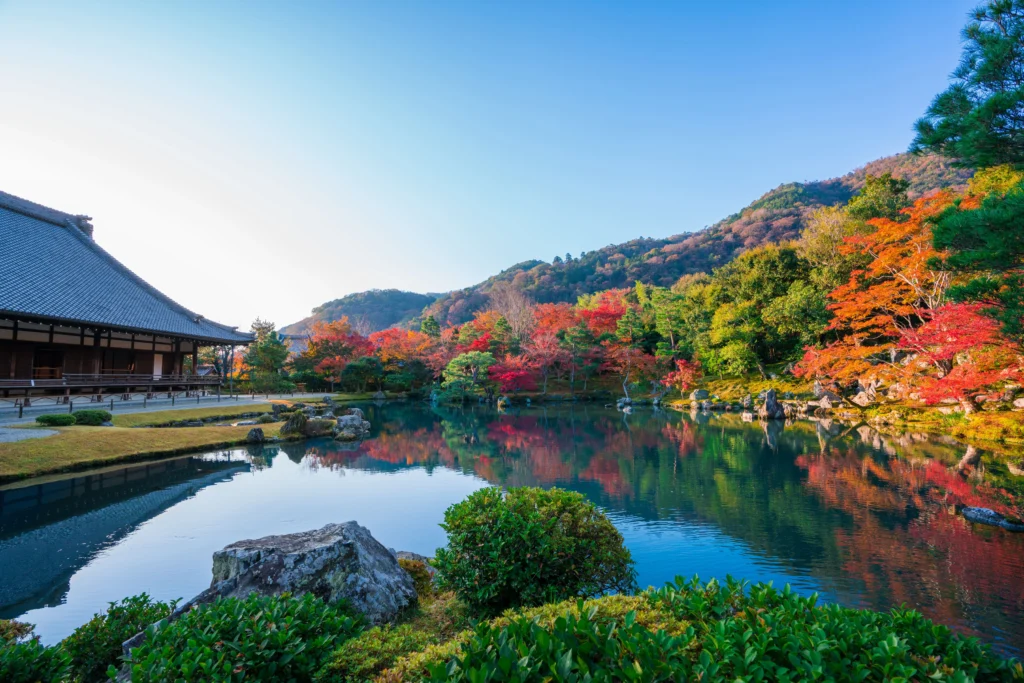
Zen architecture is a building philosophy rooted in Zen Buddhist principles that prioritizes simplicity, natural materials, spatial emptiness, and the integration of interior and exterior environments. Developed through centuries of Japanese temple, tea room, and residential design, Zen architecture employs elements such as shoji (sliding paper screens), tatami flooring, tokonoma (display alcoves), and engawa (transitional verandas) to create spaces that cultivate awareness and stillness. The aesthetic rejects ornamentation in favor of honest materials—unpainted wood, earth plaster, stone, and paper—allowed to age and weather naturally. From the medieval Zen monasteries of Kamakura and Kyoto to the modernist works of Tadao Ando, Zen architectural principles continue to influence contemporary design worldwide through their emphasis on light, space, and the beauty of restraint.
Introduction
Stand before a Zen temple and you encounter something paradoxical: monumental structures that somehow feel ephemeral, buildings that command attention through quietness, spaces that achieve grandeur through restraint. This is architecture as philosophy made visible—walls, beams, and stones arranged to cultivate awakening.
Zen temple architecture represents one of humanity’s most sophisticated attempts to create sacred space not through decoration or symbolism, but through fundamental relationships: between interior and exterior, material and void, permanence and impermanence. Unlike the soaring cathedrals of Europe or the elaborate Hindu temples of India, Zen architecture achieves its spiritual power through what it doesn’t include as much as what it does.
But this simplicity conceals profound sophistication. Every proportion, every material choice, every spatial relationship reflects centuries of refinement aimed at a single goal: creating environments that support meditation, presence, and insight. The apparently “simple” Zen temple actually represents the distillation of complex philosophical and aesthetic principles into pure architectural form.
Comprehensive guide : the wabi-sabi aesthetic that finds beauty in imperfection and impermanence
This exploration reveals what makes Zen architecture sacred—not divine intervention or religious symbolism, but the intentional creation of space that facilitates transformation of consciousness. Whether you’re visiting temples in Kyoto, designing your own space, or simply curious about architecture’s spiritual dimensions, understanding these principles opens new ways of seeing built environments.
The Four Defining Characteristics of Zen Architecture
1.Radical Simplicity
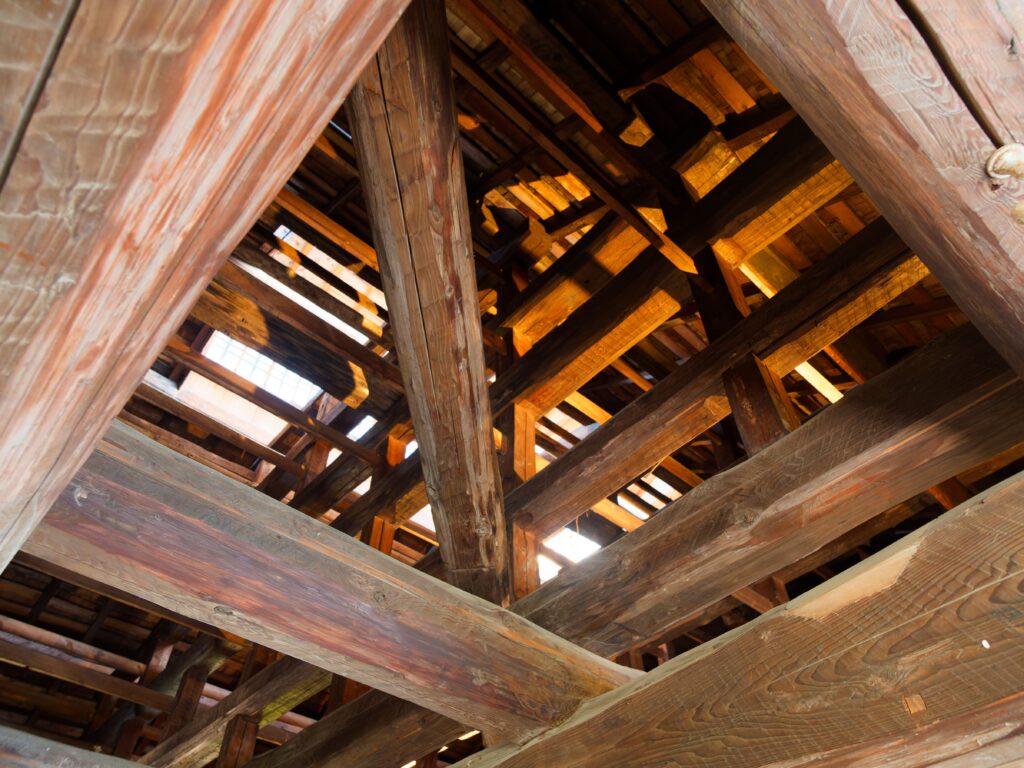
Zen architecture strips away everything non-essential, revealing what remains: space, light, material, and relationship. This isn’t poverty or lack—it’s intentional refinement to essence.
Material Honesty:
Walk through a Zen temple and materials present themselves without disguise. Wood shows its grain, age, and weathering. Stone reveals its texture and geological history. Clay walls display the marks of hands that shaped them. Nothing pretends to be what it isn’t.
Comprehensive guide : This material honesty reflects core wabi-sabi principles
Related guide: Japanese Woodworking: The Zen Philosophy of Building Without Nails
This honesty extends to construction methods. Traditional Zen temples use joinery that holds beams together through geometric precision rather than nails or glue. These joints remain visible, celebrating craft rather than concealing it. The building doesn’t hide how it stands—it reveals its own structural logic.
Restraint in Decoration:
Where other religious architectures employ elaborate ornamentation—golden Buddhas, painted ceilings, carved columns—Zen temples offer almost nothing. Perhaps a single scroll hanging in the tokonoma alcove. One flower arrangement. The occasional ink painting on fusuma sliding doors. This restraint forces attention onto what remains: the quality of light, the proportion of space, the relationship between inside and outside.
The power emerges not from added decoration but from perfected proportion and relationship. A room’s dimensions, the spacing between posts, the height of ceilings—all follow aesthetic principles refined over centuries to create harmonious space without ornament.
Minimal Color Palette:
Natural wood tones dominate—honey-colored hinoki cypress, darker keyaki zelkova, weathered gray cedar. Earthen walls in subtle grays and beiges. The occasional dark accent of charred wood or iron fittings. This limited palette allows seasonal changes outside—cherry blossoms, autumn maples, snow—to provide all the color needed.
2.Integration with Nature
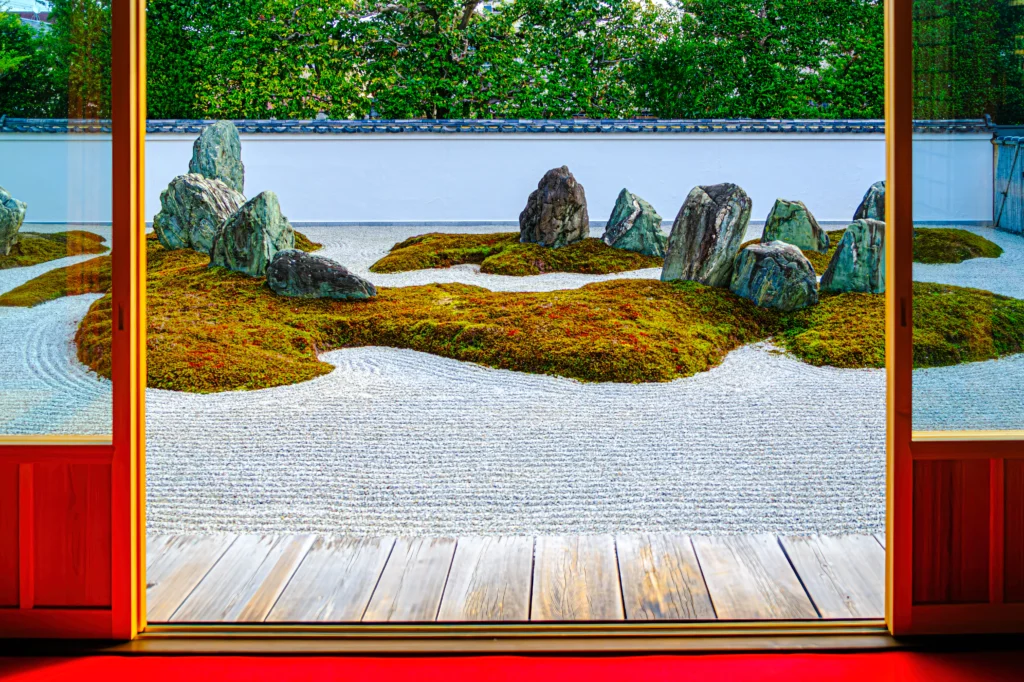
Zen architecture doesn’t conquer nature or exclude it—it dissolves the boundary between built and natural, creating environments where both interpenetrate.
Borrowed Scenery (Shakkei):
The most sophisticated Zen temples employ shakkei—”borrowed scenery”—incorporating distant mountains, forests, or skylines into garden compositions as if they were planted elements. Architecture frames these views with such precision that natural landscape becomes integral to built space.
Comprehensive guide : the shakkei technique of incorporating distant landscapes into composed views
Temple buildings position themselves, create openings, and orient spaces specifically to capture particular views. A doorway frames a mountain peak. A window captures morning light filtering through bamboo. Architecture becomes the instrument through which nature is experienced, not a barrier against it.
Permeable Boundaries:
Traditional Zen architecture uses sliding screens (shoji and fusuma) rather than solid walls wherever possible. During warm months, entire walls can slide open, dissolving the boundary between room and garden. A temple hall becomes a covered platform in nature rather than an enclosed interior.
Even when closed, shoji screens—translucent paper over wooden frames—transmit light and shadow. The play of branch shadows across shoji becomes living decoration, changing with sun angle and season. Interior space remains visually connected to exterior even when physically separated.
The Engawa:
The engawa—a wooden veranda running along the exterior of buildings—creates transition space between inside and outside. Neither interior nor exterior, it’s liminal territory where inhabitants sit observing gardens, where indoor and outdoor activities blend.
This architectural element embodies Zen’s teaching about the illusory nature of boundaries and categories. Where does “inside” end and “outside” begin? The engawa suggests such distinctions are conceptual rather than absolute.
Natural Materials and Aging:
Zen temples embrace materials that age gracefully, developing patina and character over time. Wood weathers to silver-gray. Copper roofs develop green patina. Clay walls accumulate marks of decades or centuries. Rather than fighting natural processes, architecture accepts them.
This acceptance of impermanence and change reflects fundamental Zen teachings. The temple itself demonstrates impermanence—constantly changing while maintaining identity, just like the self in Buddhist philosophy.
Related guide: Famous Zen Gardens in Kyoto: A Visitor’s Guide to Sacred Landscapes
3.Spaces for Meditation
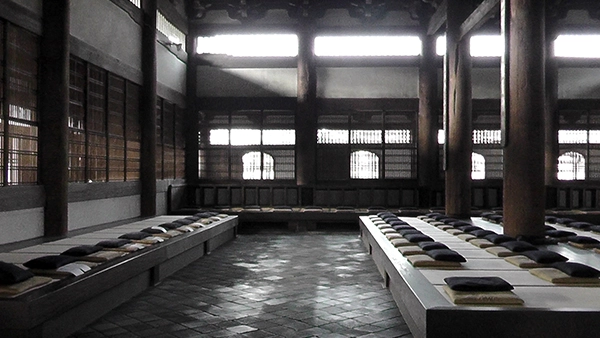
Unlike temples designed primarily for worship, Zen temples prioritize spaces supporting meditation practice. Every architectural decision serves this function.
The Zendo (Meditation Hall):
The zendo represents Zen architecture’s purest expression—a large, open room with tatami mat floors, minimal decoration, and carefully controlled light. Practitioners sit facing walls in two rows, creating maximum interior emptiness.
Ceiling heights balance spaciousness with intimacy. Too low feels oppressive; too high disperses attention. Proportions emerge from centuries of experimentation determining what best supports hours of seated meditation.
Natural light enters through high windows or translucent screens, providing illumination without glare or distraction. The quality of light changes through the day, marking time’s passage without requiring clocks. Architecture makes practitioners aware of natural cycles even while sitting motionless indoors.
The Hōjō (Abbot’s Quarters):
The hōjō—traditionally the head priest’s residence—typically faces the temple’s primary garden. This positioning isn’t coincidental. The hōjō’s main room functions as a space for contemplating the garden, creating a relationship between interior sitting space and exterior landscape composition.
Comprehensive guide : Zen gardens are designed specifically for viewing from the hōjō veranda
Architecture frames the garden view precisely, determining what is seen and from what angle. The building doesn’t just house viewers—it shapes the viewing experience itself.
Corridors as Kinhin Paths:
Long corridors (rōka) connecting temple buildings serve practical functions but also provide spaces for kinhin—walking meditation between sitting periods. Architecture supports practice not just through dedicated meditation halls but through circulation paths designed for mindful movement.
Wooden floors sometimes intentionally creak (like Kyoto’s famous “nightingale floors”), making silent movement impossible. This acoustic quality serves security functions but also keeps practitioners aware of each footstep—turning simple walking into meditation.
Acoustic Design:
Zen temples manage sound carefully. High ceilings and hard surfaces can make spaces reverberant—useful for chanting or bells, but problematic for meditation requiring silence. Architecture balances these needs through materials, proportions, and spatial arrangements that control acoustic quality.
Some temples position meditation halls away from entry gates and public areas, using distance and intervening structures to create quiet zones. Architecture itself becomes a filter, progressively reducing external noise as one moves deeper into the complex.
4.Symbolic Elements
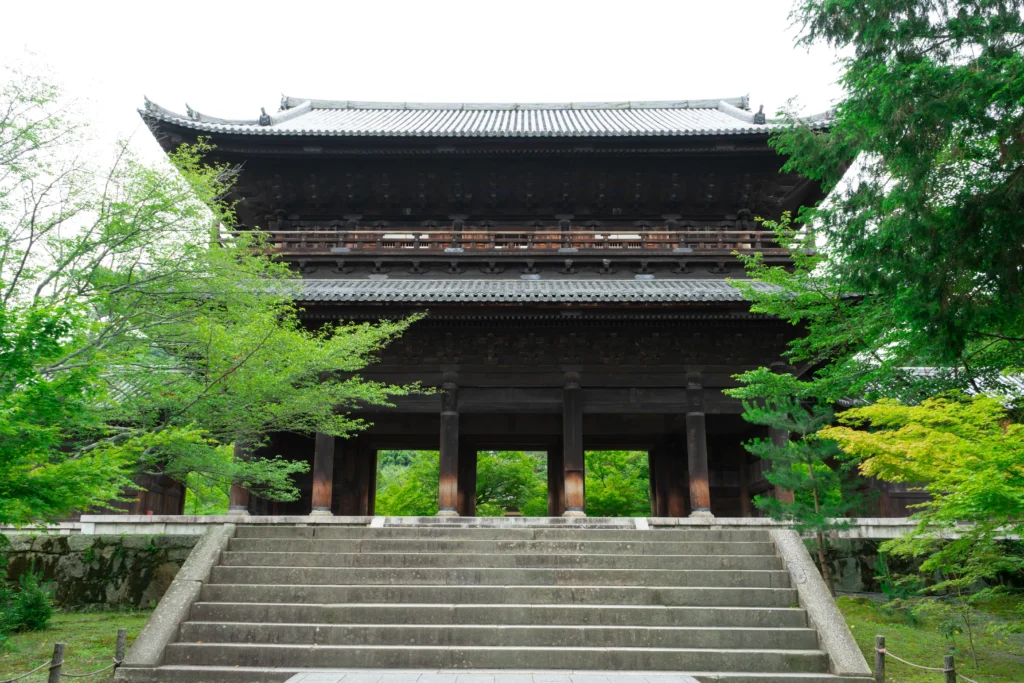
While Zen architecture emphasizes simplicity, certain elements carry deep symbolic meaning, creating layers of significance for those who understand them.
The Sanmon (Mountain Gate):
The sanmon—typically a large two-story gate at the temple entrance—marks passage from the secular world to sacred space. Passing through, practitioners symbolically leave behind ordinary concerns and enter a realm dedicated to awakening.
The gate’s name references mountains, connecting to Zen’s historical development in Chinese mountain monasteries. Even urban temples, far from actual mountains, maintain this nomenclature, suggesting that entering the temple means ascending spiritually.
Some sanmon house guardian figures or Buddhist imagery, though Zen versions typically remain more austere than gates at other Buddhist temples. The structure itself—monumental, requiring one to look upward while passing through—creates psychological shift from everyday consciousness.
The Tokonoma:
The tokonoma—a recessed alcove in the main room—serves as the spiritual and aesthetic focal point. Here hangs a single scroll (often calligraphy or ink painting), accompanied by a flower arrangement or special object. Nothing else.
This alcove embodies Zen aesthetics: maximum attention given to minimal elements. The scroll changes seasonally, ensuring the space remains dynamic rather than static. Architecture provides the frame; seasonal rotation provides the content.
Tatami Proportion:
Tatami mats—the traditional straw flooring—establish a modular system determining room dimensions throughout the temple. Rooms are measured in tatami count: a six-mat room, an eight-mat room.
This standardization creates harmonious proportions automatically. Rooms of different sizes maintain consistent relationships because all derive from the same basic unit. Architecture achieves proportion through repetition of a fundamental module—a mathematical approach to beauty.
Fusuma Paintings:
While Zen architecture minimizes decoration, sliding fusuma doors sometimes feature ink paintings by renowned artists. These aren’t arbitrary decoration but carefully chosen images reinforcing Zen teachings—simple bamboo suggesting flexibility, plum blossoms representing perseverance.
The paintings exist on movable screens rather than permanent walls, embodying impermanence. Screens can be reconfigured, creating different room divisions and revealing different images. Architecture remains flexible, adapting to changing needs.
Essential Architectural Elements
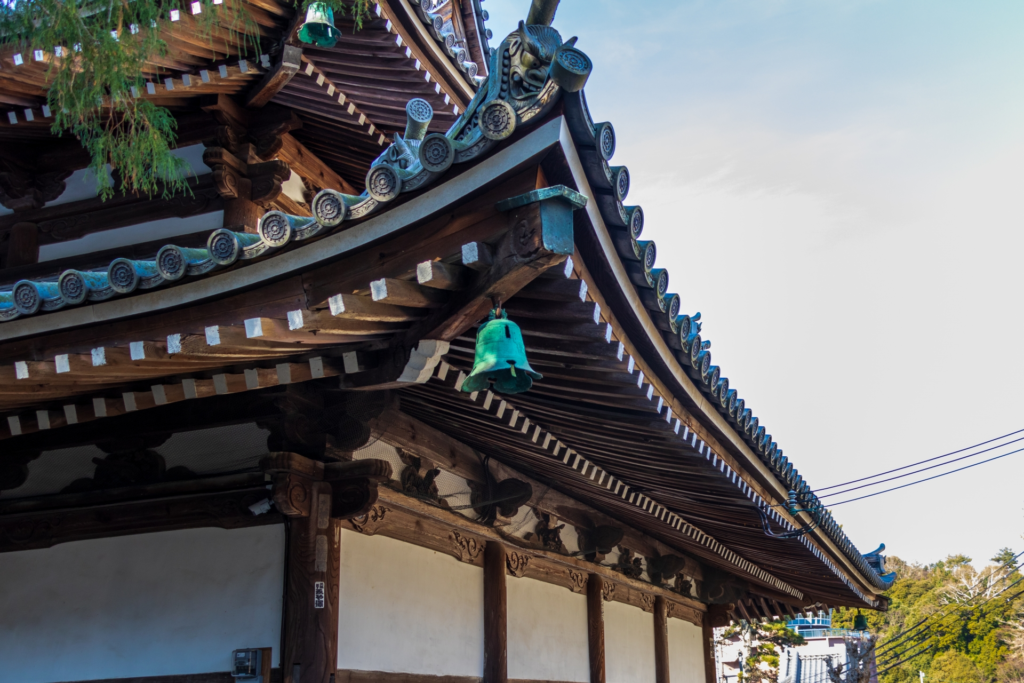
The Roof
Zen temple roofs extend dramatically beyond walls, creating deep eaves that protect wooden structures from rain while casting bands of shadow across facades. These proportions—roof to wall, overhang to building height—follow aesthetic principles refined over centuries.
Traditional roofs use ceramic tiles or cypress bark shingles. Both materials age beautifully, developing character over decades. The roof’s generous proportions give Zen temples their distinctive silhouettes—horizontal emphasis, graceful curves, buildings seeming to hover above the ground.
Post-and-Beam Construction
Zen architecture employs post-and-beam construction rather than load-bearing walls. Large wooden posts carry roof weight, allowing walls to be non-structural sliding screens. This system enables the flexible interior divisions characteristic of Japanese architecture.
The structural system remains visible, not hidden behind finishes. Massive posts and beams demonstrate the building’s structural logic clearly. Architecture becomes honest—showing rather than concealing how it stands.
The Relationship to Ground
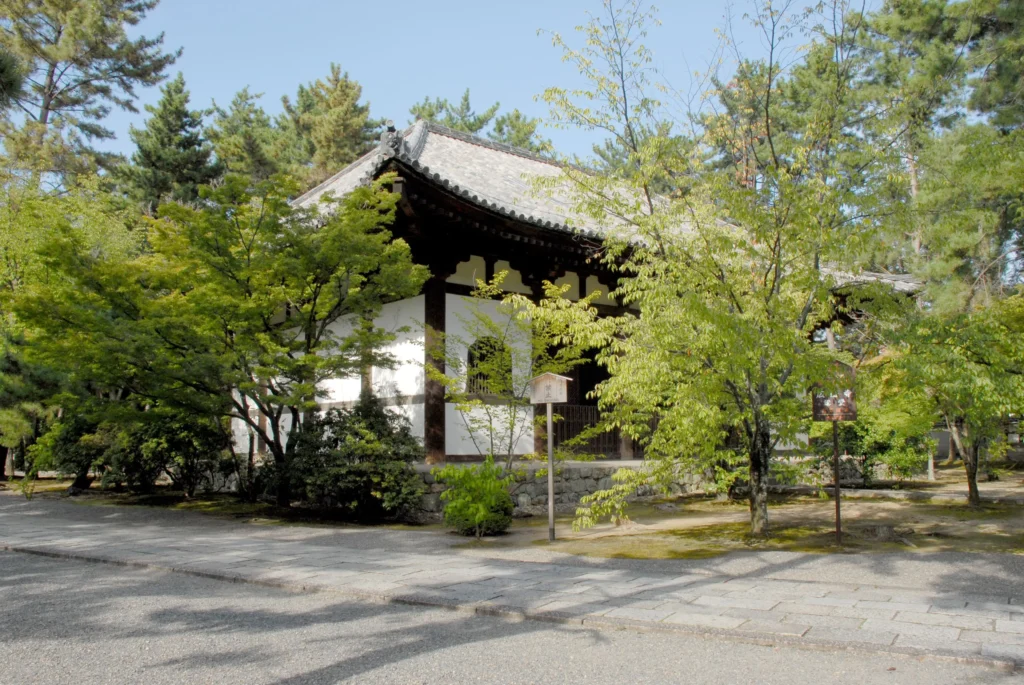
Zen temples typically elevate wooden floors above ground level on stone foundations. This separation protects wood from moisture while creating physical and symbolic distance from earth. The building rests on its foundation but remains independent from it—architectural non-attachment.
Stone steps lead to entrances, marking the ascent from ground to raised platform. This elevation, while practical, also creates hierarchical progression: ground level (ordinary), stone platform (transitional), wooden floor (sacred).
Masters of Zen Architecture
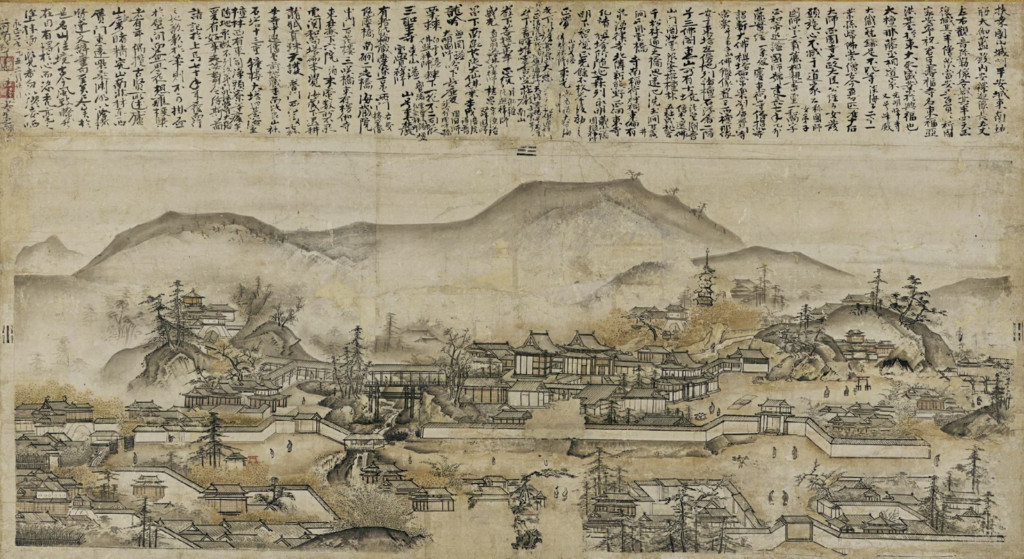
While Zen emphasizes non-attachment to individual ego, certain designers and builder-monks stand out for their contributions to the tradition.
Musō Soseki (1275-1351):
Musō Soseki, the Zen master who designed Tenryū-ji’s famous garden, also influenced temple architecture through his understanding of space and landscape relationship. Though primarily known for garden design, his holistic vision integrated buildings and grounds inseparably.
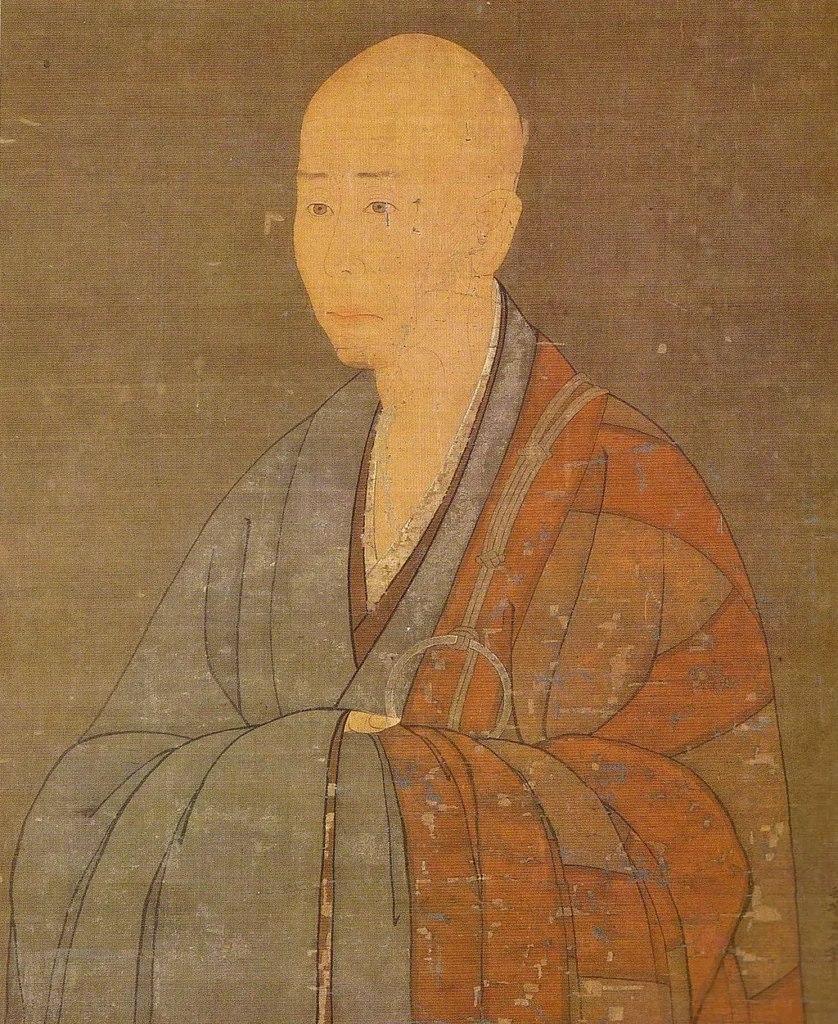
Comprehensive guide : Musō Soseki’s garden design philosophy
His work established principles still followed: buildings should frame and respond to landscape; architecture and nature should interpenetrate; design should serve meditation rather than decoration.
Kobori Enshū (1579-1647):
Kobori Enshū—tea master, garden designer, and architect—refined the integration of tea house architecture with Zen principles. His designs demonstrate how Zen architectural ideals could be distilled into the smallest structures, creating profound experiences in minimal space.
Modern Interpreters:
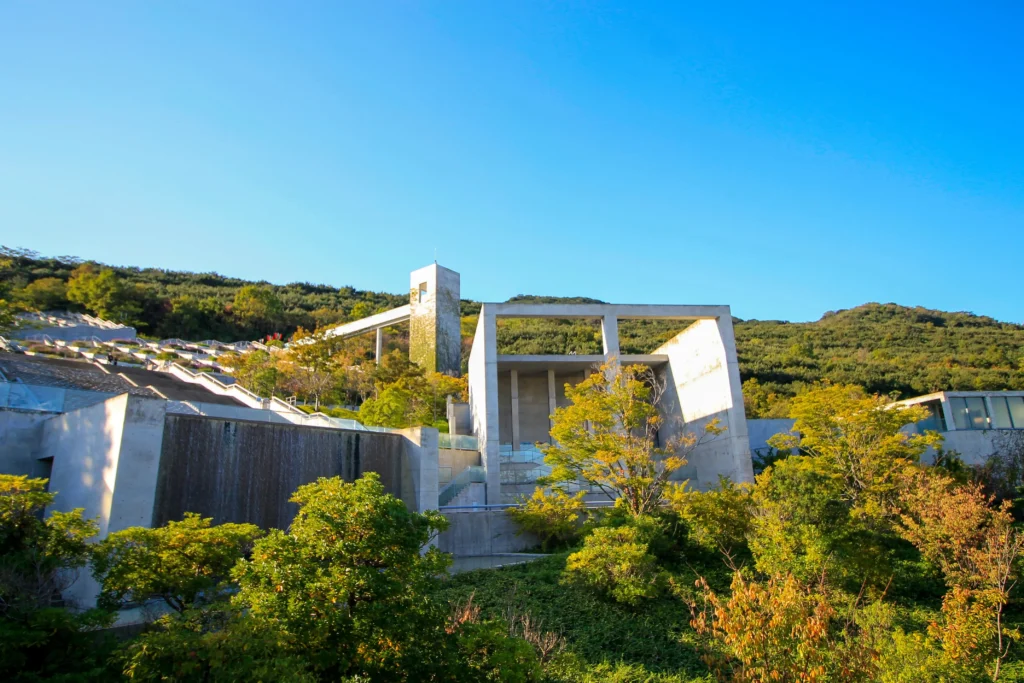
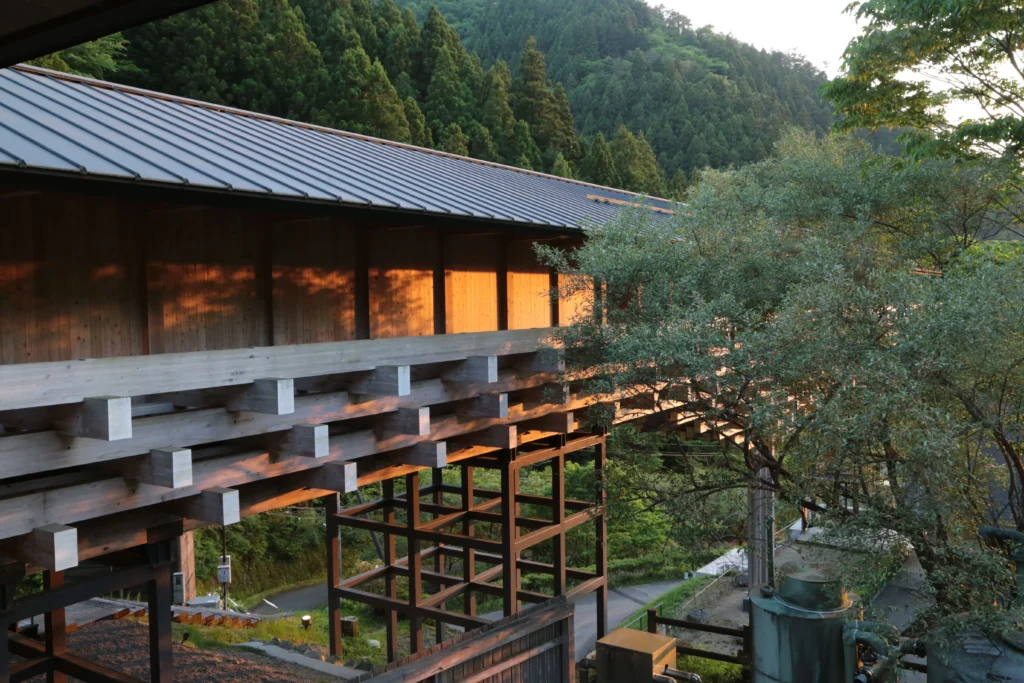
Contemporary architects continue exploring Zen architectural principles in new materials and contexts. Tadao Ando employs concrete to achieve Zen-like simplicity and spatial quality. Kengo Kuma works with natural materials in ways echoing traditional Zen restraint. These architects demonstrate the tradition’s continuing vitality beyond temple contexts.
Wabi-Sabi: The Aesthetic Foundation
Zen architecture embodies wabi-sabi aesthetics so completely that understanding one requires understanding the other.

Comprehensive guide : the seven core principles of wabi-sabi philosophy
Simplicity (Kanso):
Architecture reduced to essential elements. No decoration added for its own sake. Every element serves function or contributes to spatial quality.
Asymmetry (Fukinsei):
Zen temples avoid rigid symmetry, creating dynamic rather than static compositions. A building might sit slightly off-center in its grounds. Window placements might follow irregular rhythms. This asymmetry feels natural rather than arbitrary—organic growth rather than geometric perfection.
Naturalness (Shizen):
Materials appear as themselves—wood as wood, stone as stone, clay as clay. Structures respond to site topography rather than imposing geometric grids. Architecture feels inevitable rather than imposed.
Austerity (Koko):
Everything extra has been removed. What remains achieves power through refinement rather than accumulation. Space, proportion, and material quality become the architecture rather than applied decoration.
Tranquility (Seijaku):
The ultimate goal: spaces that cultivate stillness and presence. Architecture achieves this not through religious symbolism but through careful control of light, proportion, material, and relationship between elements.
Impermanence (Mujō):
Materials age, weather, change. Architecture accepts this, designing for graceful aging rather than fighting natural processes. The temple in 50 years will differ from today—not deteriorated but transformed, acquiring character through time.
Experiencing Zen Architecture
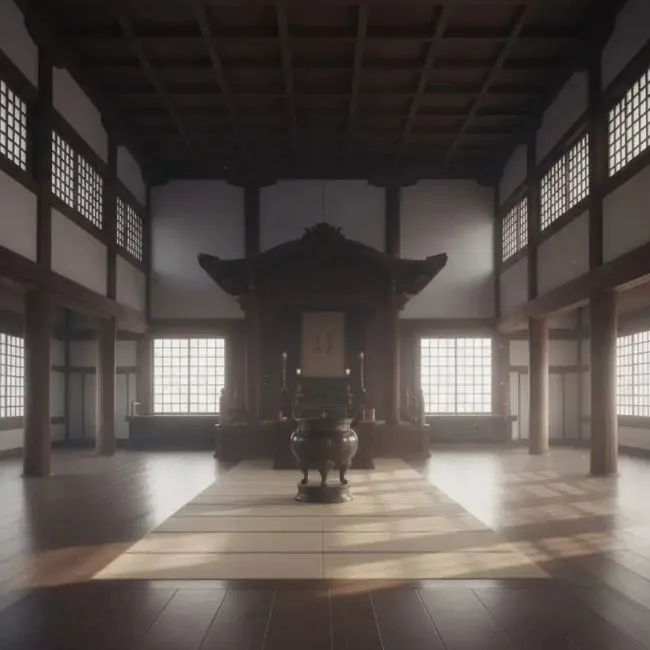
Understanding Zen architecture intellectually differs from experiencing it physically. The architecture reveals itself through:
Progression Through Space:
Zen temple complexes create sequential experiences—passing through the gate, crossing the courtyard, ascending steps, removing shoes, entering halls. Each transition marks a deeper movement from ordinary consciousness toward meditative awareness.
Sitting in the Space:
The architecture truly reveals itself when you sit still within it. Notice how light changes through the day. How sounds resonate or are absorbed. How sight lines frame particular views. The building becomes a meditation device—an instrument for cultivating presence.
Seasonal Transformation:
Return to the same temple in different seasons and you encounter different architecture. Summer’s open screens create different spatial experience than winter’s closed ones. Autumn light differs from spring. The building remains constant while constantly changing.
Related guide : Visit Kyoto’s greatest Zen temples to experience these principles firsthand
Applying Zen Architectural Principles
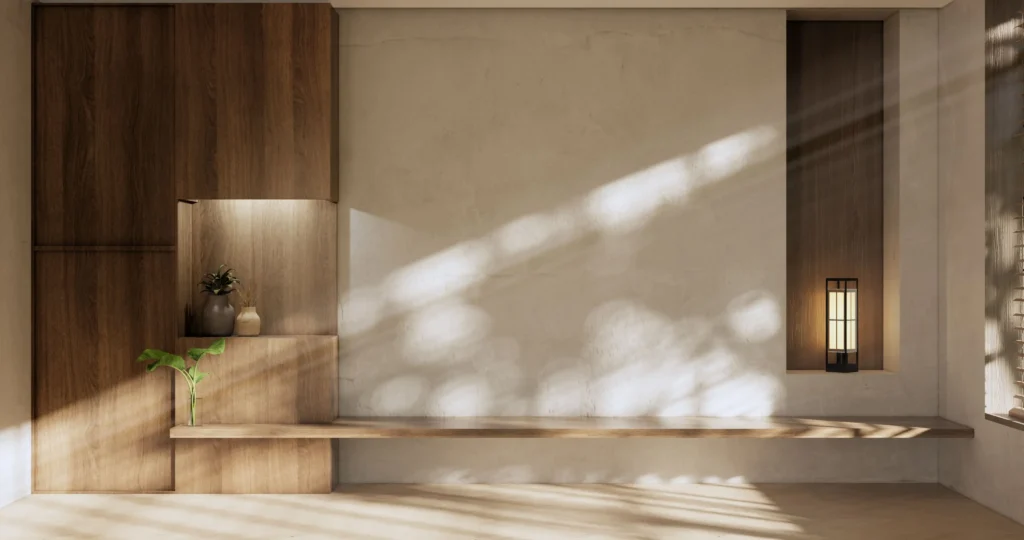
These principles extend beyond temple contexts, informing contemporary design and personal spaces.
For Your Home:
- Reduce to essential: Remove decoration that doesn’t serve function or bring genuine joy
- Natural materials: Choose wood, stone, clay, natural fibers over synthetic materials
- Quality over quantity: Better one excellent piece than many mediocre ones
- Light as design element: Consider natural light’s quality and movement through space
- Blur interior/exterior: Create visual or physical connections between inside and outside
- Embrace imperfection: Allow materials to age naturally rather than fighting wear
In Workspace Design:
- Minimize visual clutter: Clear surfaces support clear mind
- Natural elements: Incorporate plants, natural light, views of nature when possible
- Flexible space: Like fusuma screens, design for adaptability
- Acoustic quality: Control sound to support concentration
- Proportion and scale: Even small spaces can embody Zen principles through careful proportion
Frequently Asked Questions
Q: How does Zen architecture differ from other Japanese architecture?
A: While all traditional Japanese architecture shares certain characteristics (wood construction, sliding screens, tatami), Zen architecture emphasizes even greater simplicity, restraint in decoration, and spaces specifically designed for meditation practice. Zen temples avoid the ornate decoration common in Pure Land Buddhist temples or Shinto shrines, focusing instead on proportion, material quality, and spatial experience.
Q: Can modern buildings embody Zen architectural principles?
A: Absolutely. Zen architectural principles—simplicity, natural materials, integration with nature, honest structure—transcend specific building types or historical periods. Contemporary architects like Tadao Ando and Kengo Kuma demonstrate how these principles can be expressed through modern materials like concrete and glass while maintaining the essential qualities of Zen space.
Q: Why do Zen temples use such expensive natural materials if Zen emphasizes non-attachment?
A: The use of quality natural materials reflects different values than luxury or ostentation. These materials—hinoki cypress, keyaki zelkova, quality stone—age gracefully and last centuries, embodying Buddhist teachings about right livelihood and mindful use of resources. The materials also honestly express their nature rather than pretending to be something else, aligning with Zen values of authenticity.
Q: What’s the relationship between Zen architecture and Zen gardens?
A: Zen gardens and architecture form inseparable wholes
Architecture and gardens function as unified designs at great Zen temples. Buildings frame garden views, gardens provide contemplation subjects from interior spaces, and both employ the same aesthetic principles. Neither exists independently—they create meditation environments together.
Q: How can I experience authentic Zen architecture?
A: Visit Zen temples in Japan, particularly in Kyoto where many historically significant examples survive. Beyond simply touring, try participating in meditation sessions offered at temples like Shōkoku-ji or Kennin-ji. Sitting in these spaces for extended periods reveals architectural qualities invisible during brief visits.
Related guide : our complete guide to visiting Kyoto’s essential Zen temples
Q: Why do Zen temples feel so peaceful?
A: The peacefulness emerges from multiple architectural factors: controlled light that avoids glare or harsh shadows; acoustic design that reduces external noise; proportions refined over centuries to feel harmonious; minimal visual clutter; natural materials that feel warm rather than industrial; integration with nature that provides connection to larger cycles. These elements work together creating environments genuinely conducive to calm and presence.
Conclusion
Zen architecture represents one of humanity’s most refined attempts to create sacred space through fundamental means: proportion, material, light, and relationship. Where other religious architectures employ symbols, ornament, and iconography to indicate sacredness, Zen architecture achieves spiritual power through restraint, honesty, and deep understanding of how built environments shape consciousness.
These temples don’t tell you what to think or feel. They create conditions supporting presence, awareness, and insight. The architecture gets out of the way, directing attention not toward itself but toward the quality of your own experience within it.
Comprehensive guide : Understanding core Zen Buddhist teachings
This philosophy finds expression in every detail: a post-and-beam joint revealing structural honesty, a shoji screen filtering light gently, an engawa veranda dissolving inside/outside boundaries, a garden view framed with precision by architectural openings. Each element serves the larger purpose—creating environments supporting awakening.
Whether you visit temples in Kyoto, design your own space, or simply look at buildings differently, these principles offer profound wisdom: simplicity contains more than complexity, restraint can be more powerful than abundance, and the best architecture supports presence rather than demanding attention.
The Zen temple stands as it has for centuries—simple, honest, integrated with nature, aging gracefully. It asks nothing but offers everything: a space to sit, breathe, and be present. In the end, that’s all architecture can truly provide—and all any sacred space requires.