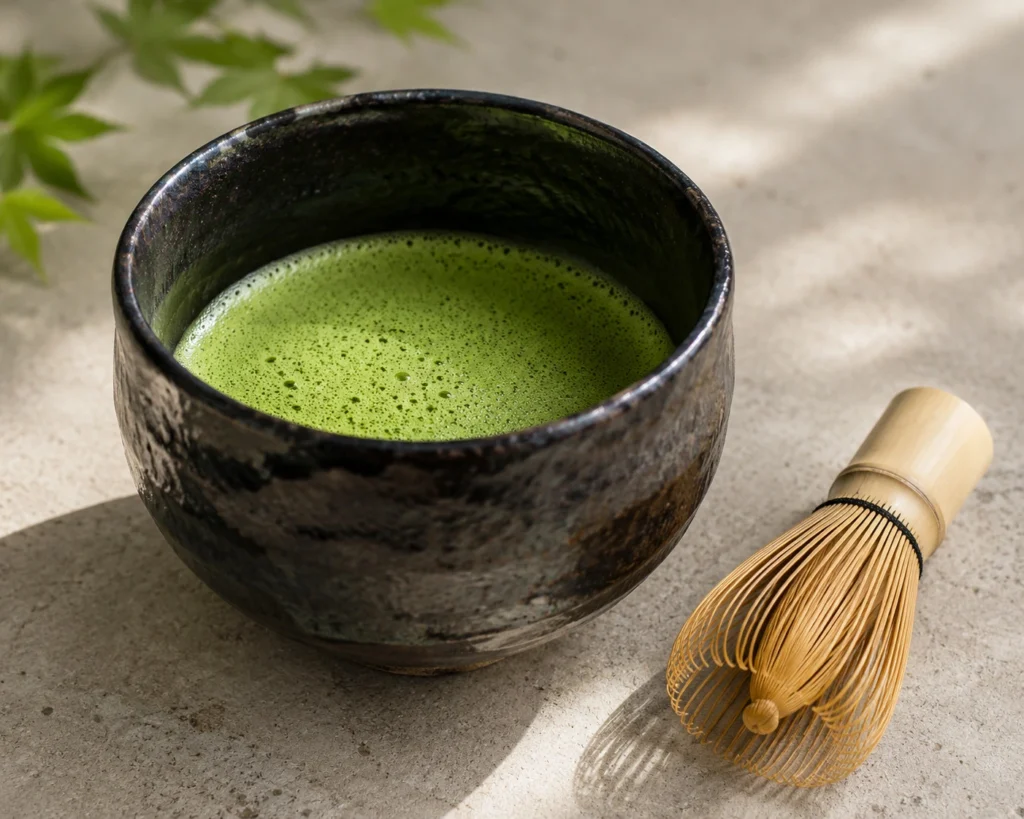
Ninety Seconds of Silence
It takes approximately ninety seconds to make a bowl of matcha. Boil water. Sift powder. Pour. Whisk. Drink.
In those ninety seconds, if you are paying attention, something shifts. The sound of the whisk against the bowl—a rapid, rhythmic scratching—fills your hearing. The bright green color of the foam fills your sight. The vegetal, slightly bitter fragrance fills your nose. For ninety seconds, your senses are fully occupied by a single activity, and the cascade of thoughts that normally fills your mind has nowhere to land.
This is not an accident. It is the design. Matcha was adopted by Zen monks in the twelfth century specifically because the preparation demands the kind of focused, present-moment attention that meditation cultivates. The monks did not drink matcha for the caffeine—though it has plenty. They drank it because making matcha is itself a form of meditation, disguised as a cup of tea.
Comprehensive guide: How to Practice Zazen meditation at Home:Step-by-Step Guide for Beginners
This guide teaches you how to make matcha at home—not as a recipe but as a practice. The tools, the technique, and the philosophy that transforms ninety seconds of tea preparation into the quietest moment of your day.
What Makes Matcha Different
All Japanese tea comes from the same plant—Camellia sinensis. What makes matcha unique is not the plant but the process.
Three weeks before harvest, the tea bushes are covered with shade structures that block most sunlight. The plants respond by producing more chlorophyll and amino acids—particularly L-theanine, the compound responsible for matcha’s distinctive calm alertness. The shaded leaves are deeper green, softer, and more chemically complex than sun-grown tea.
After harvest, the leaves are steamed, dried, and stripped of stems and veins. What remains is called tencha (碾茶)—the raw material of matcha. Tencha is ground on granite stone mills into an extraordinarily fine powder—so fine that it takes one hour to produce thirty grams. This slow grinding prevents heat buildup that would damage the flavor compounds.
The result is a tea that you do not steep. You suspend it. When you whisk matcha powder into hot water, the powder does not dissolve—it disperses, creating a suspension of microscopic leaf particles in water. You drink the leaf itself, not an infusion of it. This is why matcha delivers more of the plant’s compounds than any other tea preparation: you consume everything the leaf contains.
This is also why matcha preparation is physical in a way that steeping a teabag is not. The powder must be sifted (it clumps). The water must be the right temperature (too hot destroys the flavor). The whisking must be vigorous and precise (too slow produces no foam; too aggressive produces bitterness). Every step requires your hands and your attention. There is no way to make matcha while checking your phone.
The Tools: Five Objects, One Practice
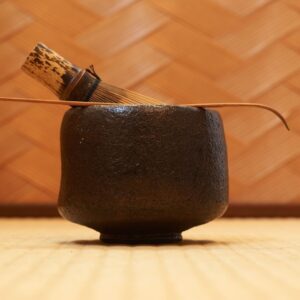
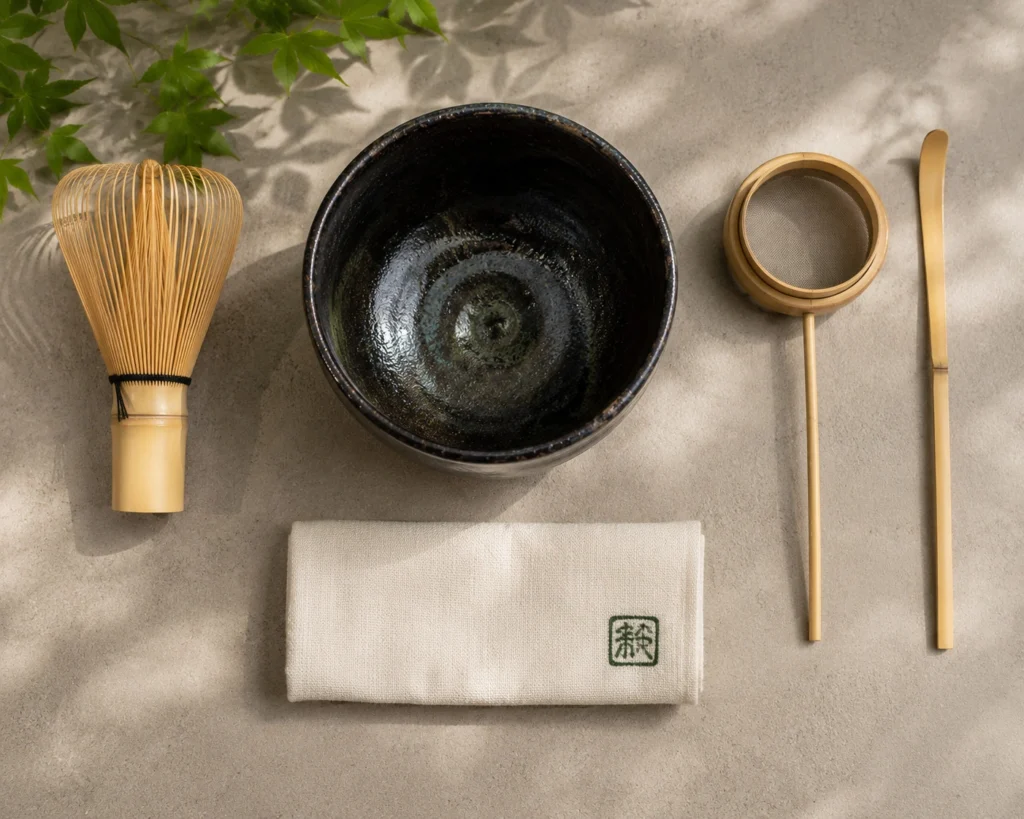
The traditional matcha set (chadōgu, 茶道具) consists of five objects. Each has been refined over centuries to serve a specific function—and each, in its simplicity, is beautiful enough to deserve attention.
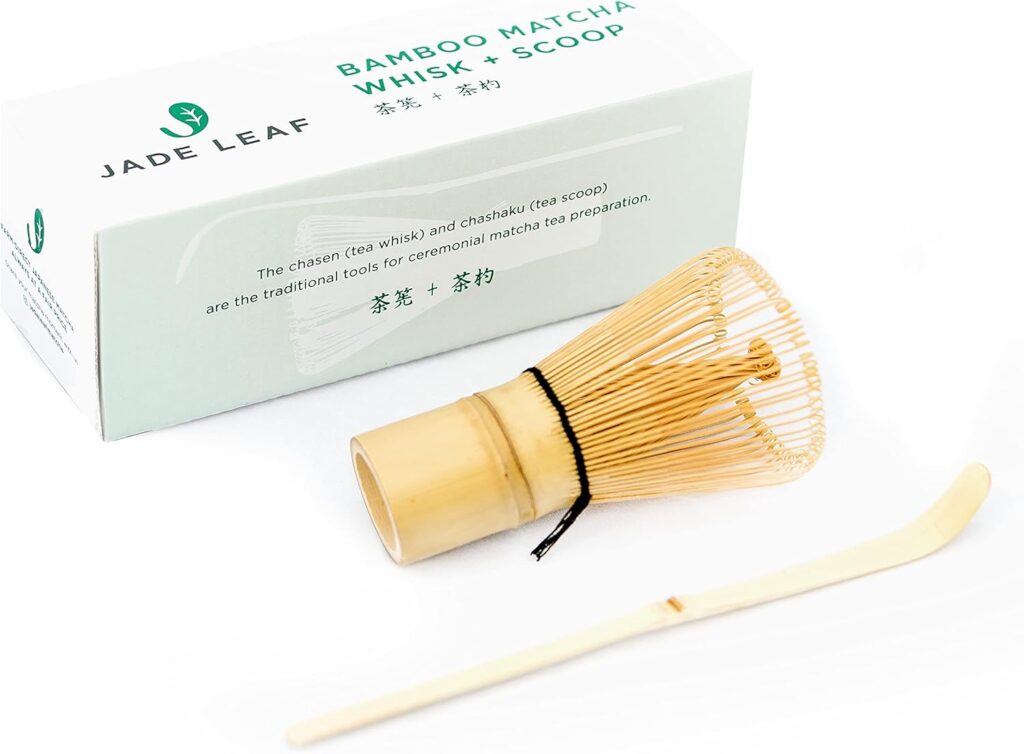
Chasen (茶筅) — The Bamboo Whisk
The most essential and most distinctive tool. A chasen is carved from a single piece of bamboo, split into 80 to 120 fine tines that fan out like a broom. The tines flex against the bottom of the bowl during whisking, incorporating air into the tea and creating the characteristic layer of fine foam (crema) on the surface.
A good chasen transforms the quality of your matcha. Machine-made whisks exist, but handmade bamboo chasen—carved by artisans using techniques unchanged for centuries—produce a finer, more consistent foam and last longer with proper care. Soak the tines in warm water for thirty seconds before each use to soften them and prevent breakage.
Chawan (茶碗) — The Tea Bowl
The bowl you drink from matters more than you might expect. A proper matcha bowl is wider than a coffee mug, with a broad interior that gives the chasen room to move. The walls are thick—they retain heat and feel substantial in the hands. The best chawan are handmade ceramics with slight irregularities that make each one unique.
Related guide: Raku Pottery: The Zen Art of Imperfect Tea Bowls
You do not need a raku tea bowl to start—any wide, thick-walled ceramic bowl will work. But as your practice deepens, you may find that the bowl you choose begins to matter, not because it affects the flavor (though it does, subtly) but because holding a bowl you have chosen with care is itself an act of attention.
Chashaku (茶杓) — The Bamboo Scoop
A slender, curved bamboo spoon used to measure matcha powder. One scoop equals approximately one gram—the standard amount for a bowl of usucha (thin tea). The chashaku’s gentle curve cradles the powder without compressing it, and its length keeps your fingers away from the fine particles.
Furui (篩/ふるい) — The Sifter
A fine-mesh strainer used to sift the matcha powder before whisking. This step is non-negotiable—matcha powder clumps, and unsifted clumps produce a gritty, uneven bowl. Two or three taps of the sifter break every clump into individual particles, ensuring a smooth suspension when whisked.
Chakin (茶巾) — The Linen Cloth
A small white linen cloth used to wipe the bowl before and after preparation. In formal tea ceremony, the chakin is folded in a specific pattern and handled with deliberate movements. In daily home practice, it serves a simpler purpose: keeping the bowl clean and dry, and providing a moment of care before the preparation begins.

How to Make Matcha: Step by Step
1. Heat the Water
Bring fresh water to a boil, then let it cool for two to three minutes. The target temperature is 70–80°C (158–176°F)—hot enough to release the flavor compounds, cool enough to preserve the L-theanine and prevent bitterness. If you do not have a thermometer, boil the water, pour it into a cup, wait two minutes, then pour again into the bowl. Each transfer cools the water by approximately 10°C.
The Zen of this step: Waiting for water to cool is the first act of patience. The practice begins before the tea does.
2. Warm the Bowl
Pour some of the hot water into your chawan and swirl it gently. This warms the ceramic so that it does not steal heat from the tea. Discard the water and dry the bowl with the chakin.
The Zen of this step: Preparing the vessel. You are creating the conditions for something to happen—clearing the space, warming the container, making it ready.
3. Sift the Powder
Place the sifter over the bowl. Measure one to two scoops of matcha (approximately 1–2 grams) into the sifter. Tap gently until all the powder passes through. The sifted powder will sit in the bottom of the bowl as a fine, even layer—no clumps, no lumps.
The Zen of this step: Refinement. Removing what is coarse so that what remains is pure. The same principle that governs the composition of a Zen garden or the editing of a haiku.
4. Pour the Water
Add approximately 70ml of hot water (about one-third of a cup). Pour slowly, in a thin stream, to one side of the powder rather than directly onto it. This prevents the powder from scattering.
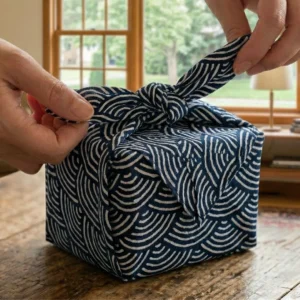
The Zen of this step: Gentleness. The water meets the powder without force—the same principle as furoshiki wrapping or calligraphy: control without aggression.
5. Whisk
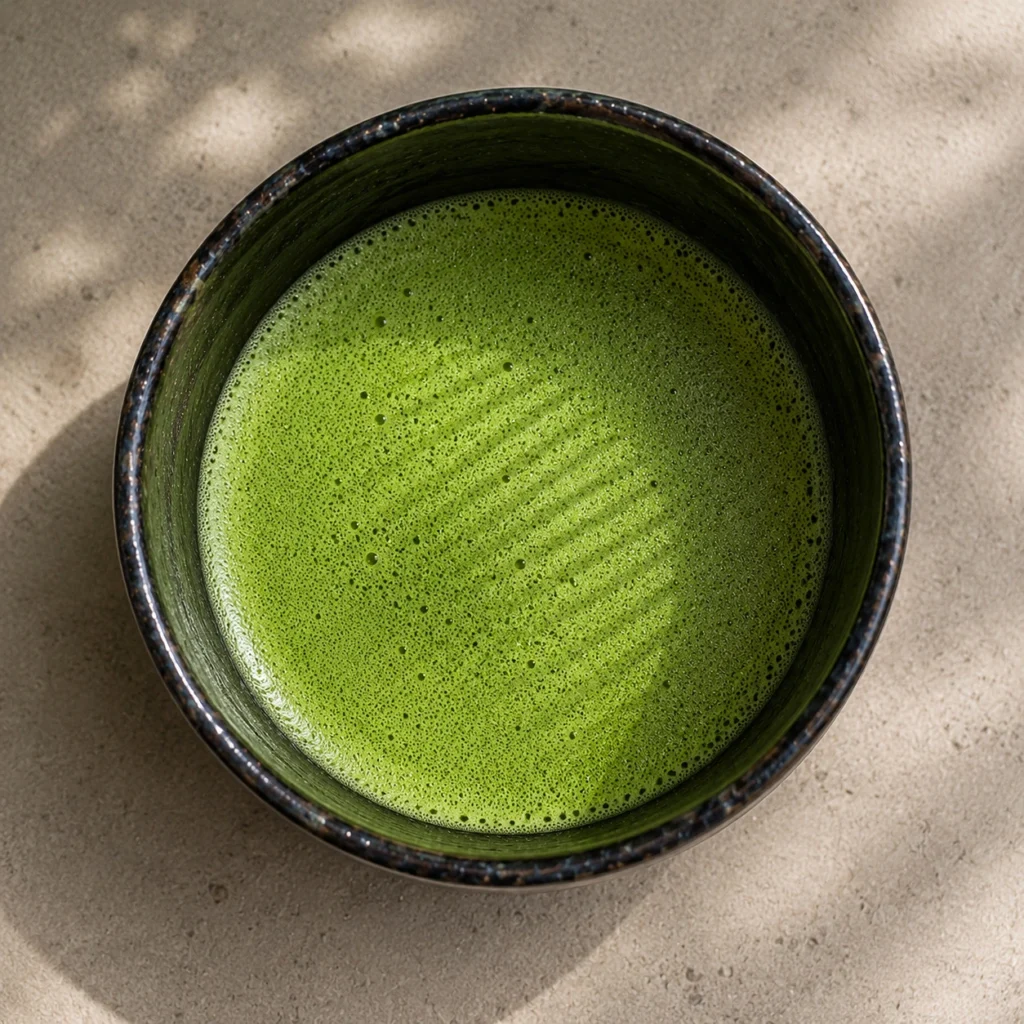
Hold the chasen vertically in one hand and the bowl steady with the other. Whisk rapidly in a W-shaped or M-shaped motion (not circular), moving the chasen back and forth through the center of the bowl. The motion comes from the wrist, not the arm. Whisk vigorously for fifteen to twenty seconds until a layer of fine, even foam covers the surface.
As the foam develops, slow the whisking and bring the chasen gradually to the surface, breaking any large bubbles with the tip of the tines. Lift the chasen from the center of the foam.
The Zen of this step: This is the core of the practice. For fifteen seconds, your attention has nowhere to go except into the motion of the whisk—the sound, the resistance of the liquid, the emerging foam. Fifteen seconds of complete absorption in a single physical action. This is zazen with your hands.
6. Drink
Hold the bowl in both hands. Feel its warmth. Look at the color—a vibrant green that exists nowhere else in the culinary world. Drink in three slow sips. The first sip is the sharpest—vegetal, slightly bitter, intensely alive. The second sip softens. The third sip is smooth, sweet, and lingering.
The Zen of this step: Receiving what you have made. Not gulping—receiving. The tea was prepared with care. It deserves to be consumed with the same quality of attention.
Matcha as Daily Zen Practice
The Ninety-Second Meditation
You do not need a meditation cushion or a thirty-minute block of free time to practice Zen. You need a bowl, a whisk, and ninety seconds.
Related guide: Tea Ceremony: History, Philosophy & How to Experience It
The matcha preparation sequence—heat, warm, sift, pour, whisk, drink—is a complete cycle of attention. Each step requires a different quality of focus: patience (waiting for water to cool), precision (sifting), gentleness (pouring), vigor (whisking), receptivity (drinking). In ninety seconds, you move through the full range of attentional states that formal meditation takes thirty minutes to traverse.
This is why Zen monks adopted matcha. Not because it was exotic or delicious—though it is both—but because the preparation demands the quality of mind that monks spend years cultivating. You cannot make good matcha while distracted. The foam tells the truth: uneven foam means uneven attention. A perfectly frothy bowl is evidence that, for fifteen seconds at least, your mind was exactly where your hands were.
Morning Practice
The most natural time for matcha is first thing in the morning—before checking email, before the day’s demands begin. The L-theanine in matcha produces alert calm rather than the jittery energy of coffee: you are awake and clear, but not anxious. The ritual of preparation—the deliberate sequence of small, careful actions—sets the tone for the hours that follow.
Related guide: Ichigo Ichie: The Japanese Art of Living in the Unrepeatable Moment
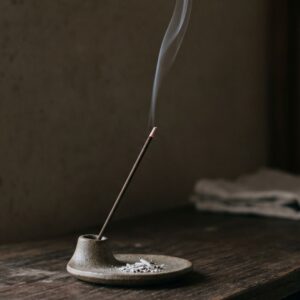
Light a stick of incense if you have one. Prepare the matcha in silence. Drink it sitting down, with nothing else competing for your attention. Then begin your day.
Related guide: Japanese Incense and Kōdō: The Ancient Art of Listening to Fragrance
Choosing Your First Matcha
Ceremonial Grade vs Culinary Grade
Ceremonial grade (ten-cha, 碾茶) is the highest quality—intended for drinking as whisked tea. It is made from the youngest, most tender leaves, stone-ground to the finest powder. The color is vivid green. The flavor is smooth, sweet, and complex, with minimal bitterness. This is what you want for daily practice.
Culinary grade is made from older leaves and ground more coarsely. It is designed for cooking and baking—matcha lattes, ice cream, smoothies. It is less expensive but too bitter and astringent for whisking as traditional tea.
Origin Matters
The three most respected matcha-producing regions in Japan are:
Uji (宇治), Kyoto Prefecture. The oldest and most prestigious matcha region. Uji matcha is generally considered the benchmark for quality—complex, layered, with a sweetness that balances the vegetal notes.
Nishio (西尾), Aichi Prefecture. Japan’s largest matcha producer by volume. Nishio matcha offers excellent quality at more accessible prices—a strong choice for daily practice.
Yame (八女), Fukuoka Prefecture. Known for producing some of the sweetest matcha available, with a rich, almost creamy character.

FAQ
Q: How much caffeine is in matcha?
A: A standard bowl of matcha (1–2g of powder) contains approximately 30–70mg of caffeine—roughly half the caffeine in a cup of coffee. However, matcha’s caffeine is accompanied by high concentrations of L-theanine, an amino acid that promotes calm focus without the jittery effects associated with coffee. The result is a sustained, even alertness rather than a spike and crash.
Q: Can I drink matcha every day?
A: Yes. One to two bowls of matcha per day is a standard practice in Japan and is well within safe caffeine limits. The antioxidant content (particularly EGCG catechins) makes matcha one of the most nutrient-dense beverages available. Some practitioners drink matcha daily for decades—Zen monks have been doing so for eight hundred years.
Q: What is the minimum I need to start?
A: A bamboo chasen (whisk) and ceremonial-grade matcha powder. Everything else can be improvised—a cereal bowl instead of a chawan, a fine-mesh kitchen strainer instead of a dedicated sifter, a teaspoon instead of a chashaku. The chasen is the one tool that cannot be substituted; a fork or milk frother will not produce the same quality of foam or the same meditative rhythm.
Q: Why does my matcha taste bitter?
A: The three most common causes of bitterness are: water that is too hot (use 70–80°C, not boiling), powder that is not sifted (clumps produce concentrated bitter spots), and culinary-grade powder being used for drinking (switch to ceremonial grade). If all three are correct and the matcha is still bitter, the powder may be stale—matcha degrades quickly after opening. Store in an airtight container in the refrigerator and use within four to six weeks.
Q: Do I need to follow the formal tea ceremony to enjoy matcha?
A: No. The formal tea ceremony (chanoyu) is a complete aesthetic and philosophical practice with its own rules, etiquette, and years of study. Making matcha at home is a simpler act—but it can carry the same quality of attention if you bring it. The monks who first adopted matcha were not performing ceremonies. They were making tea with care, and that care itself was the practice.
The Bowl Is Waiting
The most common objection to a daily practice—any practice—is time. There is not enough of it. The morning is already full. There is no room for one more thing.
But matcha takes ninety seconds. Not thirty minutes. Not an hour. Ninety seconds—less than the time it takes to scroll through a social media feed, less than the time spent waiting for a coffee machine to brew, less than the silence between two songs on a playlist.
In those ninety seconds, you are doing only one thing. You are heating water, warming a bowl, sifting powder, pouring, whisking, drinking. Each action is simple. Each action is physical. Each action requires just enough attention to prevent your mind from wandering to the day’s anxieties.
And when you finish—when the bowl is empty and the foam has settled into a thin green film on the ceramic walls—you will notice that something has changed. Not dramatically. Subtly. The way light changes when a cloud moves. You are a little more present. A little more settled. A little more ready for whatever the day brings.
Comprehensive guide: Wabi Sabi : The Japanese Philosophy of Finding Beauty in Imperfection
That is the teaching of the bowl. Not grand. Not mystical. Just green tea, whisked with care, drunk in silence.
Begin tomorrow morning.
References
- Okakura, K. (1906). The Book of Tea. Putnam’s Sons.
- Heiss, M. L., & Heiss, R. J. (2007). The Story of Tea: A Cultural History and Drinking Guide. Ten Speed Press.
- Ukers, W. H. (1935). All About Tea. The Tea and Coffee Trade Journal Company.
- Tanaka, S. (1998). The Tea Ceremony. Kodansha International.
- Suzuki, D. T. (1959). Zen and Japanese Culture. Princeton University Press.
- Juniper, A. (2003). Wabi Sabi: The Japanese Art of Impermanence. Tuttle Publishing.