
The Feeling Before the Feeling
You meet someone. Nothing has happened yet. No confession, no first date, no defining moment. You have exchanged only words—perhaps only a few minutes of conversation—and yet somewhere beneath the surface of ordinary interaction, something has shifted. A quiet certainty has settled in, uninvited and unexplained: this person is going to matter to me.
You are not in love. You may not even be attracted in any way you can articulate. What you feel is not an emotion but a recognition—a sense that the connection forming between you and this person has a weight and a direction that will carry it somewhere significant. You do not know where. You do not know when. But you know.
Most languages do not have a word for this. English certainly does not. The closest attempts—”chemistry,” “a spark,” “a connection”—describe what you feel in the present. They do not capture the temporal quality of the experience: the sense that you are perceiving not what is but what will be.
Japanese has a word for it. It is koi no yokan (恋の予感).
What Koi no Yokan Means
Koi no yokan (pronounced koy noh yoh-kahn) consists of two elements:
恋 (koi) — romantic love, but specifically the passionate, longing variety. Japanese distinguishes between koi (恋, passionate love, desire, yearning) and ai (愛, deep, unconditional love). Koi carries heat. It is the love that pulls you toward someone—restless, alive, and not yet settled.
予感 (yokan) — premonition, presentiment, foreboding. The character 予 means “beforehand” and 感 means “feeling.” Yokan is a feeling that arrives before the event it refers to—the emotional knowledge of something that has not yet happened.
Together, koi no yokan means “the premonition of love”—the sense, upon meeting someone, that falling in love with them is inevitable. Not that you have fallen. Not that you are falling. But that you will fall—and that you already know it.
The concept is sometimes translated as “the feeling that you are going to fall in love with someone.” But this misses the most important quality: the certainty. Koi no yokan is not a hope that love might develop. It is not a wish. It is a quiet, bodily knowledge that something has already been set in motion—that the future has, in some way, already arrived in the form of a feeling.
Koi no Yokan Is Not Love at First Sight
The distinction between koi no yokan and love at first sight (hitomebore, 一目惚れ) is fundamental—and misunderstanding it flattens the concept into something it is not.
Hitomebore (一目惚れ) is instantaneous. It happens in the present tense. You see someone and you are struck—the emotional response is immediate, overwhelming, and complete. Love at first sight is an arrival. It says: I am in love, right now, with this person I have just seen.
Koi no yokan is anticipatory. It happens in the future tense, experienced from the present. You meet someone and you sense—not with your eyes but with something deeper—that love is on its way. Koi no yokan is not an arrival. It is the awareness of an approaching arrival. It says: I am not yet in love, but I will be.
The difference is temporal, but it is also experiential. Hitomebore is dramatic—a lightning strike, a sudden loss of composure. Koi no yokan is quieter. It does not disrupt you. It settles into you, like a change in atmospheric pressure that you feel in your body before the weather turns. You continue your conversation. You pour another cup of tea. And beneath the ordinary surface of the encounter, you carry a knowledge that was not there five minutes ago.
This subtlety is what makes koi no yokan so distinctly Japanese. Japanese aesthetic culture has always valued the understated over the dramatic, the approaching over the arrived, the bud over the full bloom. A feeling that exists in anticipation—that derives its beauty from what has not yet happened—belongs naturally in the same tradition that finds beauty in falling cherry blossoms and the first cold wind of autumn.

The Zen of Knowing Before Knowing
Direct Perception
There is a quality of knowledge that arrives without reasoning. You walk into a room and sense tension before anyone speaks. You meet someone’s eyes and understand something about them that no introduction could convey. You read the first page of a book and know—without evidence, without argument—that this book will change how you think.
Zen Buddhism has a name for this kind of knowing. It is chokkan (直感)—direct intuition, the perception that bypasses analysis and arrives whole. Zen training does not dismiss analytical thought, but it cultivates something that analytical thought cannot produce: the capacity to perceive directly, to understand before understanding, to know before knowing.
Comprehensive guide: What Is Zen Buddhism?
Koi no yokan is chokkan applied to human connection. It is the direct perception of a relationship’s potential—not calculated from shared interests, compatible backgrounds, or physical attraction (though these may be present), but apprehended whole, in a single impression, the way you apprehend the mood of a piece of music in its first three notes.
Ichigo Ichie: The Moment That Opens the Door
Koi no yokan is intimately related to ichigo ichie (一期一会)—the principle that every encounter is unrepeatable. Ichigo ichie says: this meeting, with this person, in this place, at this moment, will never happen again. Koi no yokan adds a layer: and in this unrepeatable meeting, I recognize something that will unfold beyond this moment.
Relsted guide: Ichigo Ichie: The Japanese Art of Living in the Unrepeatable Moment
If ichigo ichie is the awareness that the door is open only now, koi no yokan is the awareness of what lies beyond the door. One is about the present moment. The other is about the future arriving in the present. Together, they describe the full experience of a significant encounter: the recognition that this is happening once, and the recognition that it will lead somewhere that matters.
The tea ceremony—where ichigo ichie was born—is the perfect setting for this kind of perception. Two people sit together in a small room. They share tea. The room is simple. The conversation may be sparse. But between them, in the quality of attention they bring to the encounter, something is communicated that words do not carry. The host who prepares tea with complete care is saying, without words: I recognize you. This meeting is not ordinary.
Related guide: Tea Ceremony: History, Philosophy & How to Experience It
A Language That Names What Others Feel
Koi no yokan belongs to a family of Japanese concepts that share a remarkable quality: they name emotional experiences that exist in every culture but that most languages leave unnamed.
Mono no aware (物の哀れ) names the bittersweet beauty of things that are passing away—the tender ache you feel watching cherry blossoms fall or hearing the last notes of a piece of music.
Related guide: Mono no Aware: The Japanese Philosophy of Bittersweet Beauty
Ichigo ichie names the awareness that every encounter is happening for the only time it will ever happen.
Wabi-sabi (侘び寂び) names the beauty found in imperfection, incompleteness, and the natural process of aging.
Comprehensive guide: Wabi Sabi : The Japanese Philosophy of Finding Beauty in Imperfection
And koi no yokan names the quiet certainty that a particular connection will deepen into love.
These are not obscure or archaic terms used only by philosophers. They are part of ordinary Japanese emotional vocabulary—words that Japanese speakers reach for naturally when describing experiences that English speakers must approximate with long explanations. The existence of these words does not mean Japanese people feel things that others do not. It means that Japanese culture considered these feelings important enough to name—and in naming them, made them easier to notice, to honor, and to discuss.
This is the power of naming. An unnamed feeling is experienced but not examined. A named feeling becomes an object of attention—something you can recognize when it arrives, something you can share with others, something you can deliberately cultivate the sensitivity to perceive.
Where Koi no Yokan Lives
Koi no yokan is most commonly associated with romantic love—and this is its original and primary meaning. But the quality of perception it describes—the intuitive recognition that a connection will deepen—is not limited to romance.
Friendship. You meet someone at a dinner party, a workshop, a chance encounter on a train. The conversation is easy in a way that first conversations rarely are. You exchange numbers. You both know, without saying so, that this is the beginning of something. Not romance—but a friendship that will prove to be one of the important ones.
A place. You arrive in a city or a town you have never visited. You walk the streets. Something about the light, the pace, the sound of the language, the smell of the food tells you: I will come back here. This place is not finished with me. Travelers know this feeling—the immediate, unexplained sense that a particular place holds something for them that will take more than one visit to discover.
A book. You read the first paragraph of a novel, an essay, a philosophical work. You do not yet know the argument or the story. But the quality of the sentences—their rhythm, their precision, their particular way of seeing—tells you that this book will change something. You settle in. You clear your schedule. You know what is coming.
Related guide: Tsundoku: The Japanese Art of Letting Books Pile Up (and Why It Matters)
A teacher. You hear someone speak—a lecture, a conversation, a casual remark—and you recognize a quality of understanding that you want to learn from. The teaching has not yet happened. The transformation has not yet occurred. But you sense it approaching, the way you sense rain in the weight of the air.
In each of these cases, the structure is the same: an encounter that has not yet developed reveals, in its first moments, the direction it will take. The perception is not rational. It is not based on evidence. It is the body’s intelligence, operating below the threshold of conscious thought, reading signals that the analytical mind has not yet processed.
FAQ
Q: What does koi no yokan mean?
A: Koi no yokan (恋の予感) is a Japanese concept meaning “the premonition of love”—the intuitive sense, upon meeting someone, that falling in love with them is inevitable. Unlike love at first sight (hitomebore, 一目惚れ), which describes an instant emotional response, koi no yokan describes the anticipation of a love that has not yet arrived but is already felt as certain. It is a future emotion experienced in the present tense.
Q: How do you pronounce koi no yokan?
A: Koi no yokan is pronounced koy noh yoh-kahn. “Koi” rhymes with “boy.” “No” is a short, flat syllable (the Japanese possessive particle). “Yokan” has two syllables with even stress: yoh-kahn. The final “n” is soft, almost nasal—similar to the “n” in the French word “bon.”
Q: What is the difference between koi no yokan and love at first sight?
A: Love at first sight (hitomebore) is immediate—you see someone and fall in love in that instant. Koi no yokan is anticipatory—you meet someone and sense that love is approaching, but it has not yet arrived. Hitomebore is a lightning strike; koi no yokan is the atmospheric pressure drop before a storm. One is about what you feel now; the other is about what you know is coming.
Q: What is the Deftones album Koi No Yokan?
A: Koi No Yokan is the seventh studio album by the American rock band Deftones, released in 2012. The band chose the title because they felt the concept—the premonition that something significant is about to happen—reflected the album’s emotional atmosphere. The album’s adoption of the phrase helped introduce koi no yokan to a wider English-speaking audience, though the concept itself is much older and belongs to the broader landscape of Japanese emotional vocabulary.
Q: Is koi no yokan popular as a tattoo?
A: Yes. Koi no yokan has become a popular tattoo choice because it expresses a universal emotional experience in beautiful Japanese characters (恋の予感). The four characters are visually elegant and carry a meaning that resonates across cultures—the willingness to remain open to love before it arrives, and the trust in one’s own intuitive perception. Like ichigo ichie (一期一会) and mono no aware (物の哀れ), it belongs to a family of Japanese phrases that have entered global tattoo culture as expressions of philosophical depth in compact form.
Trusting What You Know

Koi no yokan asks something difficult of you. It asks you to trust a perception that has no evidence, no logic, no proof. It asks you to take seriously a feeling that arrives before the facts that would justify it. In a world that privileges data over intuition and certainty over sensing, this is an act of quiet courage.
But Zen has always taught that the deepest knowing is pre-verbal—that the most important truths are apprehended not through analysis but through direct perception, in the moment before the thinking mind organizes experience into categories and conclusions. The monk who sits in zazen is not thinking about enlightenment. The tea master who pours water is not analyzing the guest. They are perceiving—openly, directly, without the filter of expectation.
Comprehensive guide: How to Practice Zazen meditation at Home:Step-by-Step Guide for Beginners
Koi no yokan is this same quality of perception, applied to the most intimate domain of human experience. It is the moment when you stop analyzing whether this person is right for you—whether they meet your criteria, whether the timing works, whether the circumstances align—and simply know. The knowing is not a thought. It is a sensation. It lives in the body, not the mind. And it asks you not to prove it but to follow it.
Not every premonition comes true. Koi no yokan is not a guarantee. It is a perception—and like all perception, it can be wrong. But the willingness to feel it, to honor it, to let it exist without immediately demanding proof—this is itself a practice. It is the practice of remaining open to what is arriving, even when you cannot yet see its shape.
The Japanese gave this feeling a name because they believed it mattered—because they understood that the moment before love is itself a kind of beauty, and that beauty deserves to be noticed, named, and held with care.
Notice it when it comes. Trust what you feel before you understand it.
The rest will arrive on its own.
References
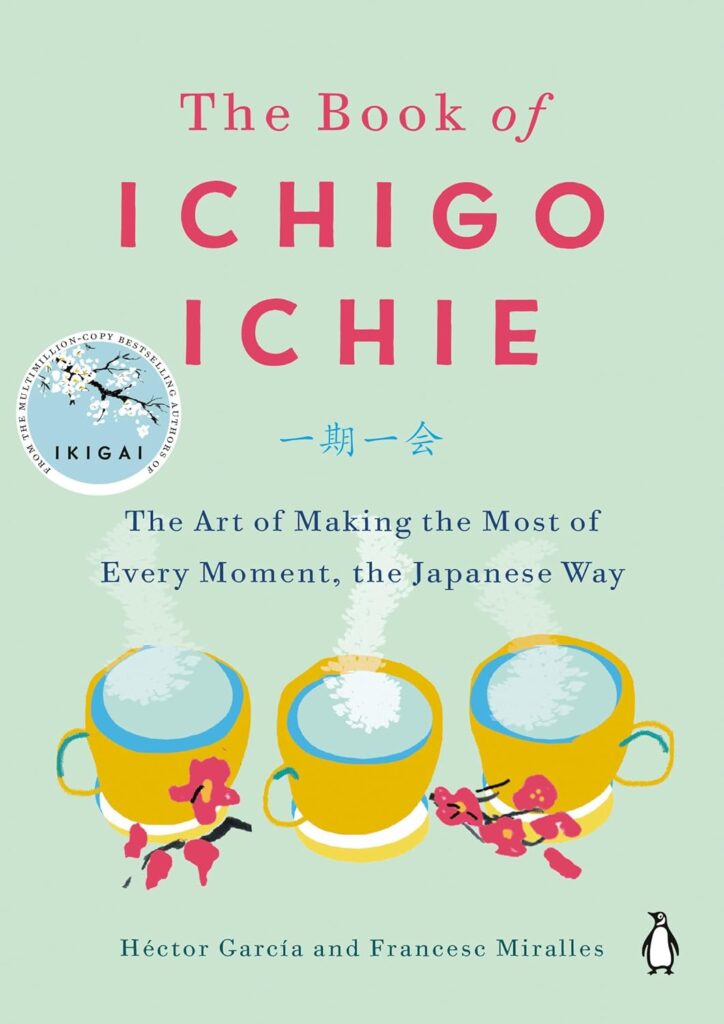
- García, H., & Miralles, F. (2019). The Book of Ichigo Ichie: The Art of Making the Most of Every Moment, the Japanese Way. Penguin Life.
- Mogi, K. (2018). The Way of Nagomi: The Japanese Art of Finding Balance and Peace in Everything You Do. Quercus.
- Lomas, T. (2016). “Towards a positive cross-cultural lexicography: Enriching our emotional landscape through 216 ‘untranslatable’ words pertaining to well-being.” The Journal of Positive Psychology, 11(5), 546-558.
- Suzuki, D. T. (1959). Zen and Japanese Culture. Princeton University Press.
- De Mente, B. L. (2004). Japan’s Cultural Code Words. Tuttle Publishing.